Fed's Hammack says “now” is the time to tackle inflation
The Cleveland Fed President Beth Hammack crossed the wires on CNBC on Thursday as the Jackson Hole Symposium, begins.
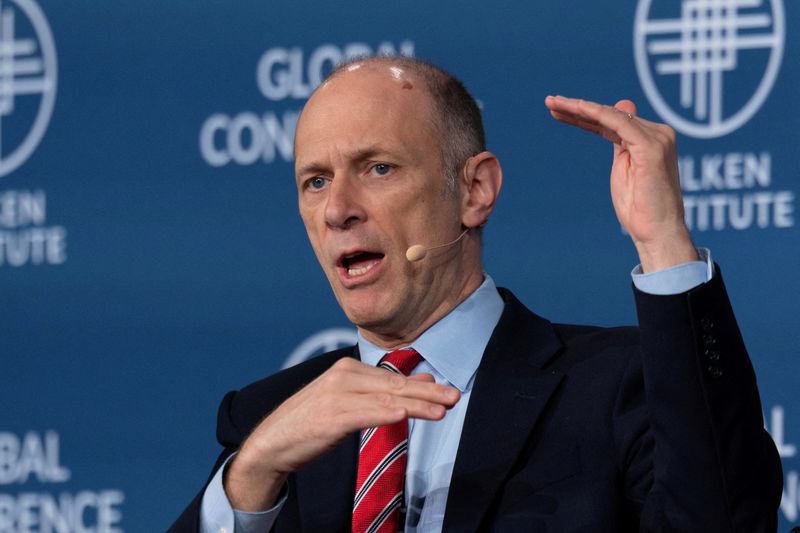
On Thursday, the President of the Cleveland Federal Reserve, Beth Hammack, expressed her hawkish stance during the outset of the Jackson Hole Symposium, which was reported by CNBC. She acknowledged the recent inflation figures as expected, but stressed the urgency of addressing persistent inflation and affirmed that the current economic situation in the United States (US) is not restrained by monetary policy.
Hammack emphasized that the inflation observed is above the target, persisting even with questions about how shocks might unfold.
The main concern highlighted by Hammack is the potential loss of public confidence in the assurance that inflation will return to the 2% target. Amidst growing worries about inflation and rising living expenses, some contacts are deeply concerned that an inflationary mindset may be taking hold. Hammack herself posits that a neutral monetary policy can be identified once it is observed, with her own projection of the neutral rate positioned at the upper end of the range suggested by the committee.
While the US Dollar proved to be the strongest against the British Pound in today's report, the USD also stood out as the strongest against other major currencies. The heat map provided allows for a visual representation of the percentage changes between major currencies, with USD serving as the base currency in the majority of these comparisons.
The Federal Reserve's (Fed) dual mandate involves maintaining price stability while fostering full employment, with interest rate adjustments serving as its primary tool to achieve these objectives.
When inflation rates rise quickly and exceed the Fed's 2% target, the Fed typically raises interest rates, which, in turn, strengthens the US Dollar (USD) by making the country a more appealing destination for international investment. Conversely, when inflation falls below 2% or the Unemployment Rate becomes excessively high, the Fed might lower interest rates to stimulate borrowing and lessen the impact on the Greenback.
The Federal Reserve convenes eight meetings annually to discuss economic conditions and make crucial monetary policy decisions through the Federal Open Market Committee (FOMC). The FOMC consists of twelve officials, including the seven members of the Board of Governors, the President of the Federal Reserve Bank of New York, and four rotating members from the other eleven regional Reserve Bank presidents.
Extreme situations may warrant the use of Quantitative Easing (QE), a non-standard policy measure employed during crises or periods of extremely low inflation. Introduced during the Great Financial Crisis of 2008, QE involves the Fed increasing the money supply and purchasing high-grade bonds from financial institutions, which ultimately weakens the US Dollar.
In a contrasting note, the British Pound (GBP) against the US Dollar (USD) experienced a drop to fresh six-day lows but later showed signs of recovery, trading just below the 1.3600 barrier on Thursday. The cautious market sentiment continued to support the Greenback ahead of Friday's data releases and Fed Chair Kevin Warsh's speech at the Jackson Hole Symposium.
Gold prices traded near their weekly lows, hovering around $4,570 per troy ounce, despite the prevailing cautious tone and the lack of a clear direction for the US Dollar. Cryptocurrency prices, on the other hand, were generally on an upward trajectory, with Bitcoin nearing $80,000, followed by Ethereum surpassing $2,500 and Ripple surpassing its key $1.40 support.
The Oil market, although relatively calmer compared to previous months, experienced a notable surge in the US diesel crack spread, which reached an intraday record of over $102.00. As Federal Reserve Chair Kevin Warsh prepares to deliver his first Jackson Hole speech on Friday, expectations extend beyond potential rate adjustments in September.
Written by urgent.news from FXStreet's reporting — not their text. Machine-written — may contain errors; check the original before relying on it.