Explained: Why Red Bull has F1's top-ranked engine – and what it reveals about ADUO
Based on the first two assessment periods, Red Bull Ford is the only F1 manufacturer not to receive a development opportunity. What explains that surprising ranking, and does the system need an overhaul for the future?
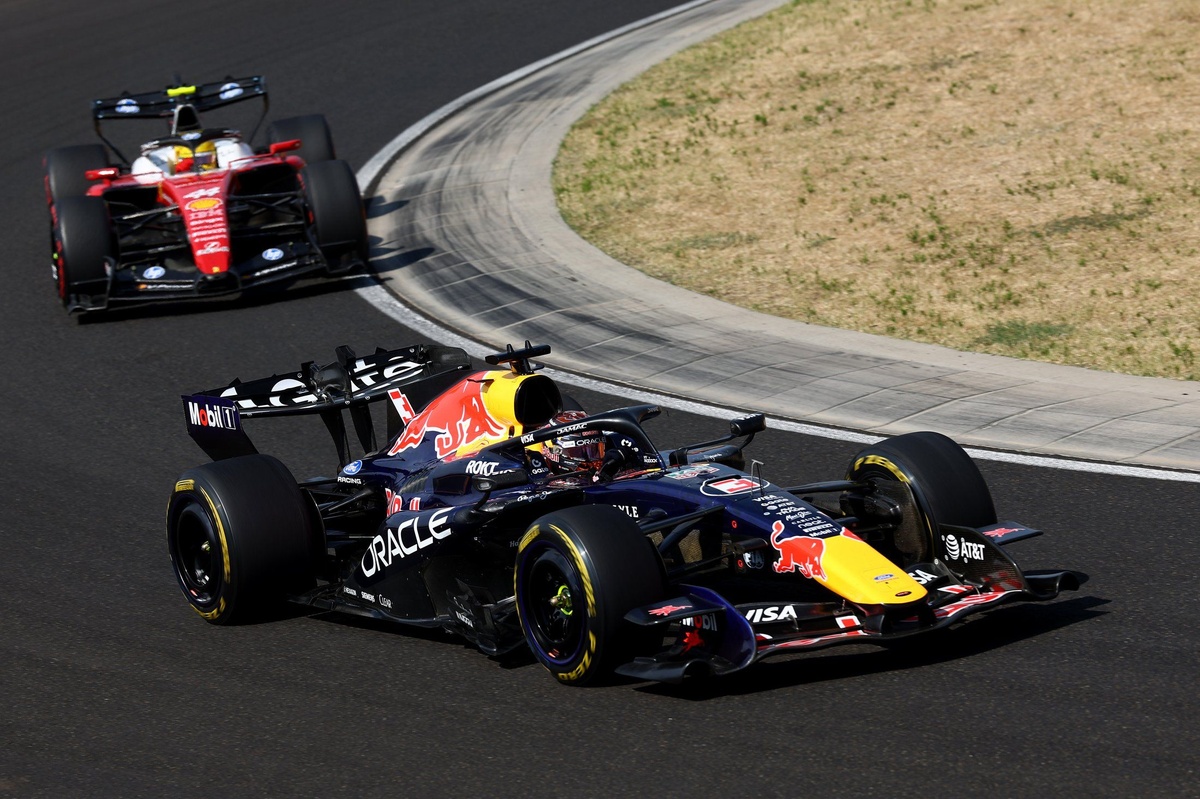
The FIA's ADUO announcement, revealing Additional Development and Upgrade Opportunities for Formula 1 power units, had been anticipated for a considerable time. The announcement, as shared with all teams and manufacturers at the Monaco Grand Prix, included a detailed press release, save for a single sentence about the second period.
The delay stemmed from Red Bull's dissatisfaction with the first period's outcome, with even Oliver Mintzlaff involved. However, Red Bull's options for challenging the result were limited. Red Bull Ford Powertrains could only request a factual review, which, nonetheless, failed to alter the result. FIA single-seater director Nikolas Tombazis asserted that the governing body's measurements were accurate, despite Red Bull team principal Laurent Mekies claiming no data point supported Red Bull having the best engine.
Red Bull highlighted its disadvantage at power-sensitive tracks, such as Monaco and the Hungaroring, where the power units' significance was lessened. However, this discrepancy was due to energy management at energy-constrained tracks and the efficacy of the power unit under such conditions. These factors were not considered by the FIA, as the ADUO ranking solely assesses the power output of the internal combustion engine.
The FIA cannot disclose the exact measurement methods and data due to their confidential nature and intellectual property implications. Consequently, the press release merely stated Mercedes falls into the 2%-4% deficit category, granting it one upgrade opportunity in 2026 and another in 2027. Ferrari, Audi, and Honda all fall into the plus-4% deficit category, earning them two new homologations—this season and two more next year.
Mercedes High Performance Powertrains receives a cost cap allowance of up to $3m, while Ferrari can access up to $4.65m. Additionally, a safety net has been introduced for manufacturers significantly trailing behind. Honda, despite not meeting the criteria for a back-up allowance, can still cope with the FIA's analysis outcome. Red Bull may receive one of two outcomes: either it remains the top-ranked ICE, or its deficit is less than 2%.
The ranking and gaps between manufacturers remain largely unchanged, indicating Red Bull Ford Powertrains is deemed by the FIA as possessing the best internal combustion engine in F1. Mercedes team principal Toto Wolff acknowledged the Silver Arrow's superior power unit but acknowledged ADUO only considers the internal combustion engine, overlooking the electrical components, which ultimately benefits Mercedes.
Red Bull's electrical inadequacies remain a concern, but its superior ICE allows little room for improvement. This demonstrates the ADUO system's weakness, as it does not account for the championship standings, a factor Red Bull opposed. The system's design, including aspects such as turbo size, was deemed acceptable by the FIA, despite insiders' desire for more parameters to be considered.
Written by urgent.news from Yahoo Sports's reporting — not their text. Machine-written — may contain errors; check the original before relying on it.
This story
This is one outlet's version. Read the fullest account.
- Explained: Why Red Bull has F1's top-ranked engine – and what it reveals about ADUO motorsport.com
- FIA confirms ADUO recipients, with Red Bull-Ford as benchmark sbnation.com
- Formula One leader Mercedes granted engine upgrade under ADUO system japantimes.co.jp
- Red Bull still have F1's most powerful engine bbc.co.uk