China's workers worry over being replaced as they adapt to growing impact of AI on jobs
Computer programmer Fei Zhaojun's boss asked him if artificial intelligence could soon replace humans in coding jobs. Two weeks later, he was laid off from his job in Beijing, together with about 160 of his colleagues.
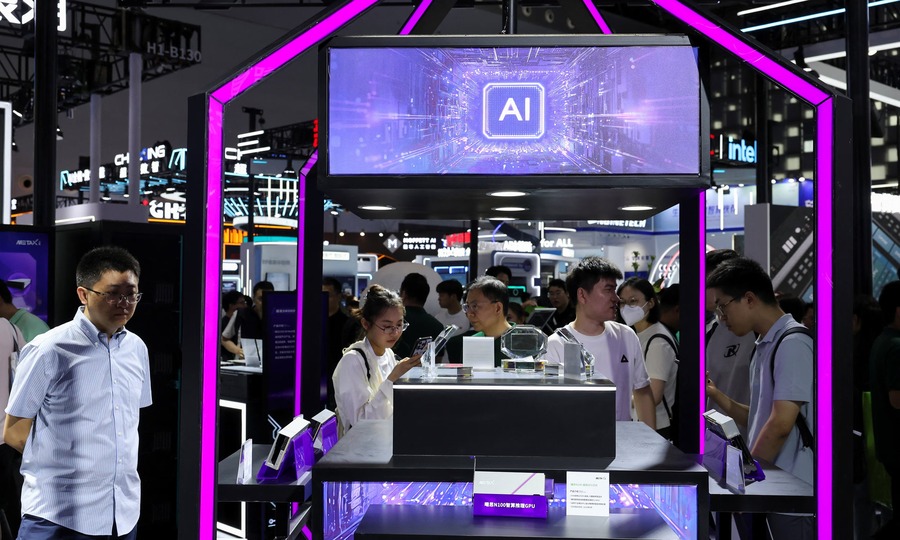
China's workforce is grappling with the growing influence of artificial intelligence (AI) in the job market, with many fearing they may be replaced by AI-enabled technologies. Government policies have encouraged rapid adoption of AI across various sectors, from computer programming to physical tasks. While some individuals find ways to adapt, such as creating AI-powered translation tools, others face job displacement.
For instance, a former programmer named Fei has shifted to making vlog-style videos during a career break, hoping to help others despite not making a living from his content. Du Qinchun, a translator, has been assisting in training an AI model for translations, which has temporarily increased his workload. However, the pay in the industry has been cut by more than half compared to a few years ago.
AI-powered short dramas have seen a 75% decline in live-action series in the first quarter of the year, indicating the potential threat to film and television workers. Women are particularly vulnerable to job loss due to AI, as they often work in areas more susceptible to automation. Some experts believe that AI could lead to a decrease in unemployment rates due to an aging and shrinking Chinese population, but concerns remain about the impact on social stability.
Written by urgent.news from VnExpress International's reporting — not their text. Machine-written — may contain errors; check the original before relying on it.