Can Trump Claim an Ocean? The Legal Limits of a President's Renaming Power
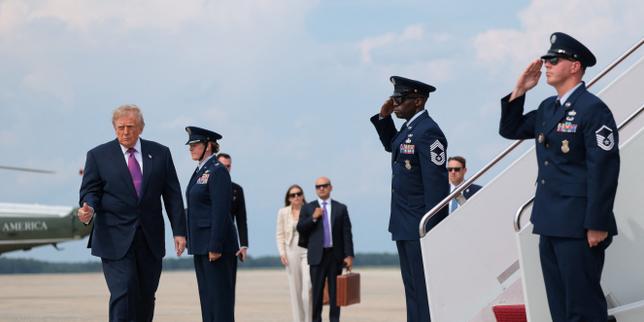
Trump joked about renaming the Pacific and Atlantic oceans, or both, on Thursday when renaming Lake Ontario.
President Donald Trump's recent executive order to rename Lake Ontario as "Lake America" has brought up discussions regarding the extent of a president's authority to alter maps, geographic names, and international conventions. The order, issued on August 27, commands the federal government to rename Lake Ontario in official U.S. records, databases, and maps.
However, this change is limited to the United States, with no obligation for Canada, international organizations, or mapmakers to adopt the new name. In a broader context, Trump has previously suggested that even larger bodies of water, such as the Atlantic and Pacific oceans, could potentially be renamed. While a president could direct federal agencies to use a different name in official documents, maps, and databases, the international recognition of such changes would be limited.
The U.S. Board on Geographic Names aims to maintain consistency across federal agencies, but renaming an ocean would be largely symbolic as no country holds sovereignty over the Atlantic or Pacific Oceans. Under international law, coastal nations maintain sovereignty over territorial waters and Exclusive Economic Zones, leaving vast international waters under shared global management.
Thus, even if the United States renamed an ocean, foreign governments, international organizations, and private mapmakers would not be obliged to follow suit. This underscores that a president's ability to influence naming conventions is confined to the domestic realm, and altering internationally recognized names remains a challenging endeavor.
Written by urgent.news from Newsweek's reporting — not their text. Machine-written — may contain errors; check the original before relying on it.