Beyond the GH¢500bn Target: The silent workforce blind spots in Ghana’s AI strategy (Part I)
The ambition driving Ghana’s digital policy landscape is clear. The Ministry of Communication, Digital Technology and Innovations recently unveiled the Republic of Ghana National Artificial Intelligence Strategy (2025–2035), projecting a target to inject GHc500 billion into our national economy over the next decade.
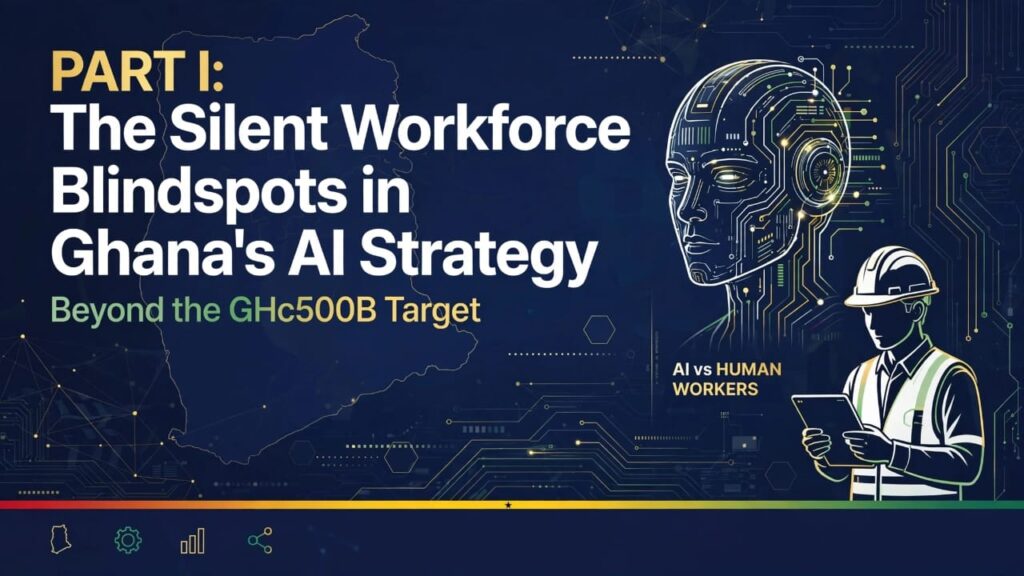
Ghana's digital policy aims to invest GHc500 billion in its national economy over the next decade through the Republic of Ghana National Artificial Intelligence Strategy (2025–2035). However, beneath this enthusiasm lies a significant macroeconomic paradox. While individual firms may benefit from AI efficiency, the broader economic impact could be disastrous due to widespread displacement of workers.
As the corporate sector increasingly automates tasks, there arises a risk of succumbing to an "AI Layoff Trap"—a cycle where short-term corporate gains lead to long-term economic weakness.
Traditionally, technological advancements have automated manual labor while expanding opportunities in white-collar management. However, today's generative workflows are aiming directly at routine cognitive tasks such as basic legal research, entry-level bookkeeping, front-end software debugging, and customer service operations.
In Ghana, these roles make up the initial intake pipeline for the thousands of young graduates entering the labor market every year. When companies eliminate these entry-level positions under the guise of productivity, they inadvertently create 'Diamond-Shaped Organizations' – firms where senior leaders dominate but the foundational workforce is significantly reduced.
This not only disrupts the natural learning and mentorship that typically helps graduates advance in their careers but also reduces domestic purchasing power, ultimately threatening the profitability of the very consumer-facing businesses that are being automated. The National AI Strategy focuses on infrastructure expansion and computational power but overlooks three key structural blindspots.
Firstly, it fails to address the PAYE (Pay-As-You-Earn) revenue collapse, as state revenue planners incorrectly assume GDP growth will automatically lead to increased tax receipts. PAYE income taxes from formal white-collar workers form a reliable source of public revenue, and replacing these workers with AI could shrink the domestic income tax base.
Secondly, the strategy neglects invisible foreign exchange capital flight. By relying on external AI foundation models, Ghanaian businesses expose themselves to recurring foreign payments through API calls and monthly user licenses, accelerating money leaving the country and creating pressure on the Cedi. Lastly, the strategy assumes that basic software coding training, such as that provided by the 'One Million Coders Programme', will guarantee future employment.
However, generative AI models are highly efficient at automating such tasks, leaving non-automatable, tactile, and service-based sectors underfunded and underdeveloped. In the next part, we will delve into a four-point legislative blueprint that Parliament must enact to address these gaps and safeguard the interests of Ghanaian workers.
Written by urgent.news from MyJoyOnline Ghana's reporting — not their text. Machine-written — may contain errors; check the original before relying on it.