A Historic Alabama Hotel Linked to the Civil Rights Movement Is Falling Apart. Can the Conservationists Fighting to Save It Turn the Tide?
Selma's Edistone Hotel has witnessed pivotal chapters in American history, from Reconstruction to "Bloody Sunday." Now, after years of neglect and a recent wall collapse, the Conservation Fund is working to secure its future
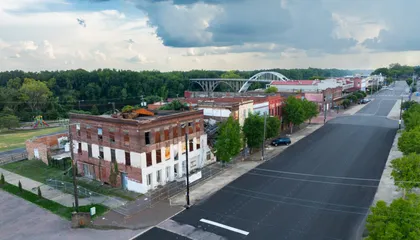
Efforts to preserve the historic Edistone Hotel in downtown Selma, Alabama, have intensified following a recent collapse of part of the building’s exterior. The landmark, situated in a site that previously housed a major market for enslaved individuals, has been in a state of disrepair for years due to lack of a secure roof. This collapse underscores the urgency to stabilize the structure and prevent further deterioration, as the loss of such historic sites also means losing the stories they embody.
Phillip Howard, director of the Legacy Places Initiative at the nonprofit Conservation Fund, which owns the property, emphasized this urgency, stating that they are "in a race against time to save these spaces."
Constructed in 1855, the three-story brick Edistone Hotel was initially part of a system that housed the largest market for enslaved people in Dallas County. Following the Civil War, it served as a local office for the Freedmen’s Bureau, a federal agency dedicated to assisting formerly enslaved individuals and those affected by the conflict.
During the civil rights movement, the hotel became a gathering place for activists and provided lodging for demonstrators, standing just a few blocks from the Edmund Pettus Bridge where around 600 marchers were brutally attacked by law enforcement on Bloody Sunday (March 7, 1965).
However, by the late 20th century, as Selma faced economic decline and population loss, the hotel fell into disrepair. Its last occupant, a barbershop, left when the roof began to leak, and it was listed on the Alabama Historical Commission and Alabama Trust for Historic Preservation’s Places in Peril list in 2022. Thanks to the Conservation Fund's acquisition of the hotel last year, its fate has been salvaged.
Phillip Howard expressed his relief, saying, "It's unfathomable that the Edistone Hotel, a place so rich in American history, came so close to being lost forever."
The hotel is now the focus of a larger effort to preserve America's history, from Civil War battlefields to monuments honoring figures like Harriet Tubman. The Conservation Fund is collaborating with the City of Selma, MASS Design Group, and other partners to give the hotel a new purpose. Potential future uses include a museum, a co-working space, and a grocery store.
Howard noted that the building could tell a compelling story from the Civil War to the civil rights movement, emphasizing that "you have this beautiful historical connection."
The Conservation Fund does not intend to be the long-term owner of the building, instead focusing on immediate stabilization. Once the structure is secured, they plan to facilitate the next steps, allowing others to decide on design and the ultimate use of the space. A structural engineer’s assessment will guide the restoration work, but Sarah Aghedo, the executive director of the Selma Redevelopment Authority, remains optimistic.
She hopes that the building’s most significant historic features, such as the main frame and façade, can be preserved even if the interior is altered.
Written by urgent.news from Smithsonian's reporting — not their text. Machine-written — may contain errors; check the original before relying on it.