400-year-old Polish grave reveals a young woman buried to prevent her return
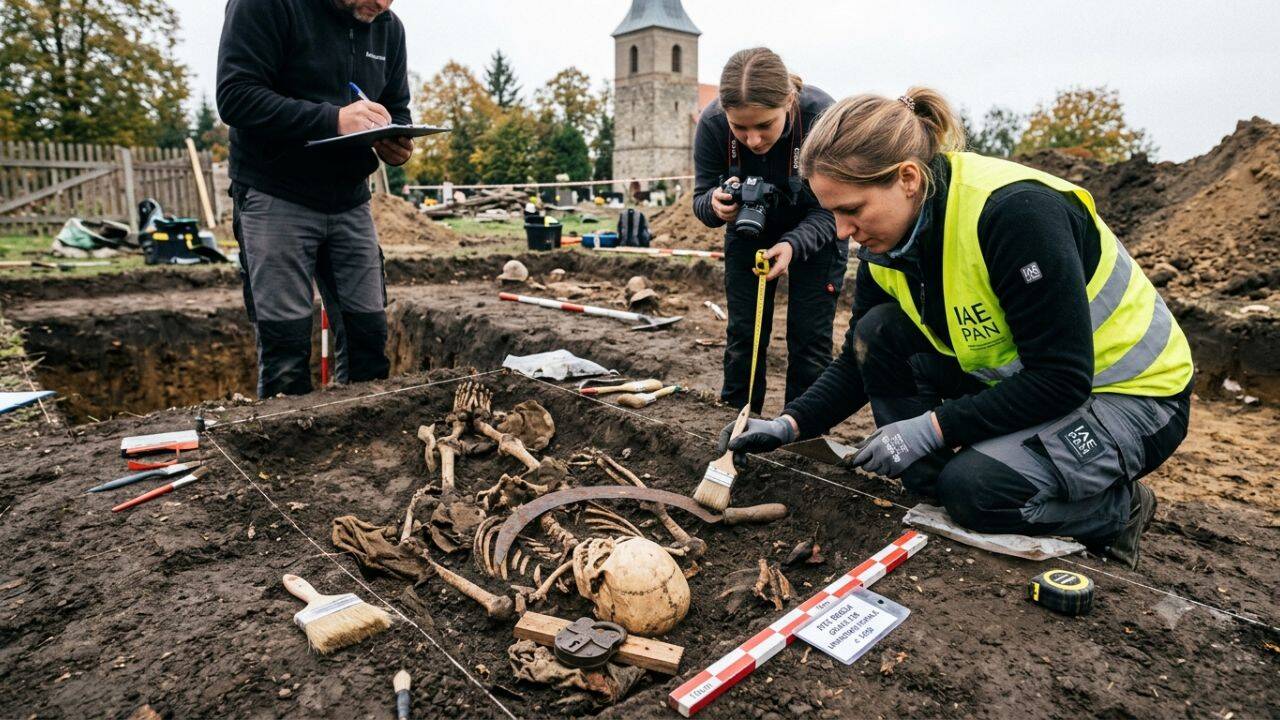
In a Polish cemetery dating back over four centuries, archaeologists uncovered Grave 75, which revealed that a young woman was not left to rest in the ordinary manner. Evidence discovered at the site suggests her burial had been altered after her death, with an iron sickle placed across her neck and a padlock fastened to her toe. This unusual arrangement appears to have been intended to prevent her from leaving the grave or harming the living, although her story is more complex than the objects suggest.
The young woman, likely between 17 and 19 years old at the time of her death, was buried with expensive silver and gold decorations, indicating she may have come from a relatively prosperous household. Traces of silver and gold-gilded wire in textile accessories suggest her burial items were costly, especially during a time when precious metals were not common.
Her teeth and bones indicate she consumed relatively little animal protein, suggesting periods of food scarcity or limited access to certain foods. Chemical analysis of her remains also suggests her childhood was spent locally, in the area around Pień.
Radiocarbon dating places her death between 1620 and 1674. DNA testing revealed her maternal lineage belonged to haplogroup J1c2c1, which has Scandinavian roots and is uncommon among Slavic populations. This combination is intriguing, as it indicates she may have had Scandinavian ancestry, despite the local origin of her family.
However, her burial was disturbed after she was initially placed in the grave. Parts of her skeleton had shifted, and traces of soft tissue indicate the body was still intact when the grave was reopened. This suggests the unusual burial arrangement was added later, perhaps to prevent her from rising from the grave or causing harm.
Sickles in burials from Central and Southeastern Europe have been used to keep restless or dangerous dead from leaving their graves. The sickle placed across her neck at Grave 75 fits this pattern, while the padlock on her toe provides an additional means of restraint. These actions were likely tied to beliefs about dangerous or restless dead, particularly in communities experiencing disease, food shortages, and social disruption.
Despite the unusual burial, there is no evidence that the woman had been accused of anything during her lifetime. The archaeological findings show what was done to her after burial, leaving her own life story unclear. The combination of expensive decorations and a burial meant to prevent her return reflects the fears and uncertainties of the time, where even the dead could be viewed with suspicion.
Written by urgent.news from Times of India's reporting — not their text. Machine-written — may contain errors; check the original before relying on it.