'Unlike anything seen before': Archaeologists unearth a unique, 11,000-year-old statue of a person riding a leopard from one of the world's earliest settlements
Archaeologists in southern Turkey discovered a unique statue of a person on the back of a leopard.
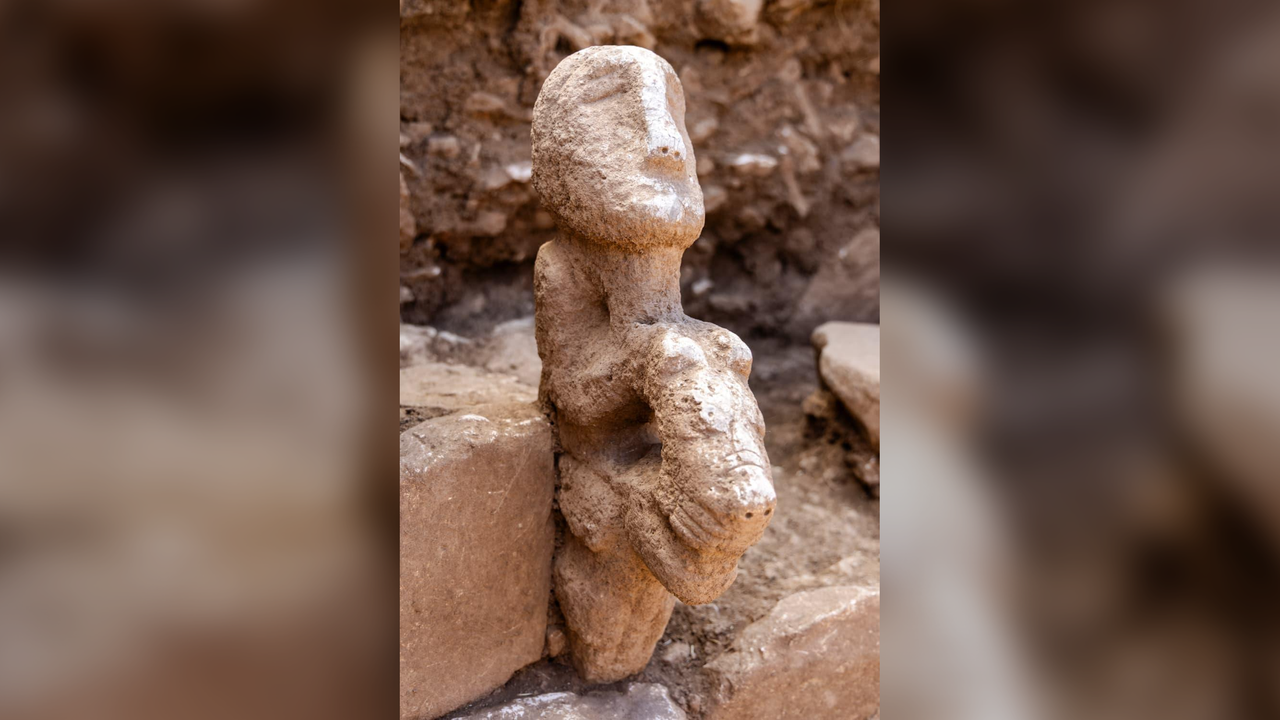
Archaeologists have unearthed a 11,000-year-old statue in Turkey that depicts a person riding a leopard, a unique find unlike anything previously seen. The statue, discovered at the Neolithic site of Karahan Tepe in southern Turkey, measures approximately 28 inches tall and was found on a platform along the wall of a round structure.
Karahan Tepe is one of the world's oldest known villages, established around 9750 B.C. in Turkey's Urfa province, where other early settlements like Göbekli Tepe were also found. The unique statue, which experts suggest may reflect the culture's fascination with virility and masculinity, appears to be a mirrored version of a previously discovered animal-mounted-on-human sculpture.
Neolithic archaeologist Jens Notroff believes the new discovery could provide important insights into the earliest human settlements in the region and the symbolic meaning behind such animal-mounted motifs.
Written by urgent.news from Live Science's reporting — not their text. Machine-written — may contain errors; check the original before relying on it.