Trump’s high-tariff regime revives Japanese investment in India
By Subrata Majumder In the post Japanese Yen appreciation era, Japanese overseas investment shifted to China and ASEAN for low-cost manufacturing, leaving India behind. The trajectory is now witnessing movement in the reverse gear, owing to US President Trump’s high reciprocal tariff. Japanese investment has surged in India, leaving China and ASEAN behind. While Japanese […] The article Trump’s…
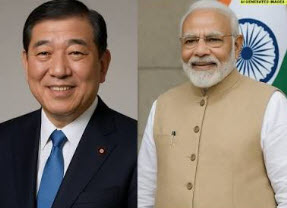
The Japanese Yen's appreciation led to a shift in Japanese overseas investment from India to China and ASEAN for low-cost manufacturing. However, this trend has now reversed due to US President Trump's high reciprocal tariffs. Japanese investments in India surged by 37.1 percent in 2025, while they decreased by 29.1 percent in China and 48.9 percent in ASEAN. Japanese investors now prioritize domestic demand and low-cost supply chains instead of manufacturing and exports.
India has emerged as a strong contender in attracting foreign investment due to its high GDP growth rate of 7.9 percent in 2025-26, driven by domestic demand and a robust middle-class population. This growth trajectory is expected to continue in the coming years. China's domestic consumption is lagging behind India's, which has a larger middle-aged and affluent population segment.
The surge in Japanese investments in India has been primarily in the financial services sector, such as automobile, electronics, drugs, and pharmaceuticals. Major Japanese financial institutions, like Sumitomo Mitsui Banking, Mizuho Securities, and MUFG Bank, have made substantial investments in Indian companies like Yes Bank, Avendus Capital, and Shri Ram Finance. These investments reflect a shift towards the expanding domestic consumer market and the growth of credit markets.
India's strong performance in attracting Japanese investments, despite not being a part of the RCEP, can be attributed to the legacy of former Japanese Prime Minister Shinzo Abe's vision. The FOIP (Free and Open Indo-Pacific) initiative, led by Japan, aims to counterbalance China's growing influence in Southeast Asia. This effort is a significant milestone for India's Viksit Bharat, fostering a stronger economic foundation.
Written by urgent.news from Arabian Post's reporting — not their text. Machine-written — may contain errors; check the original before relying on it.