The network becomes the computer as Cisco and Nvidia accelerate AI factory rack-scale
The first phase of the generative artificial intelligence infrastructure boom was defined by a race for graphics processing units. The next phase will be defined by what happens after those GPUs arrive. As the AI infrastructure buildout continues to advance rapidly the building and deploying massive accelerated-computing systems, and the challenge is shifting from acquiring […] The post The…
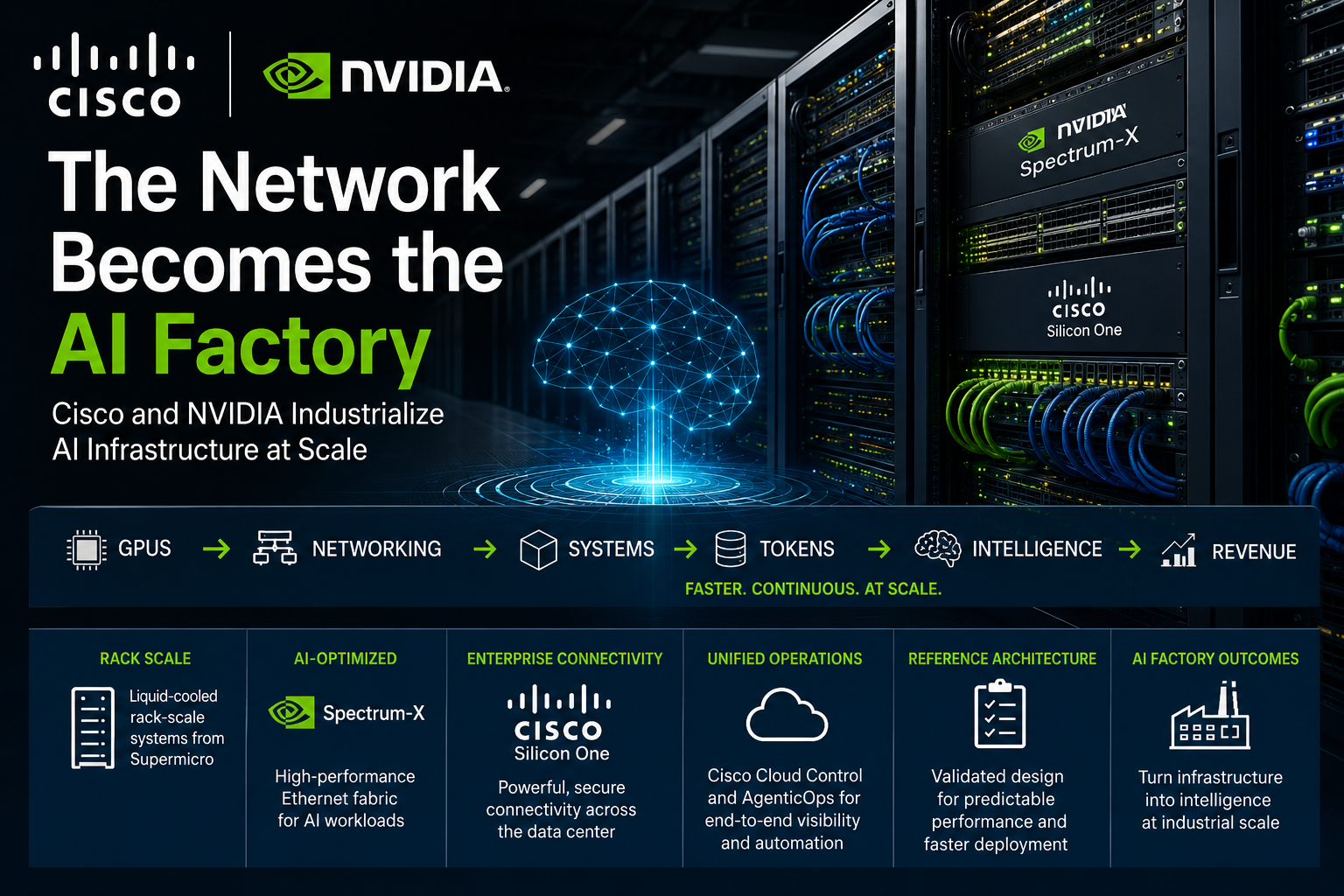
The AI infrastructure boom is transitioning from a focus on graphics processing units (GPUs) to a more comprehensive approach that treats the entire system as a single, productive machine. As companies like Nvidia and Cisco work together, they are building what they call an AI factory. This new concept includes not just thousands of GPUs, but also switches, storage systems, software components, and networking.
In a statement exclusive to theCUBE, senior networking executives from Nvidia and Cisco outlined the architecture and economics behind their expanded Cisco Secure AI Factory with Nvidia. The partners are combining Nvidia's accelerated-computing capabilities with Spectrum-X architecture and Cisco's networking, software, management, and enterprise operating expertise.
The goal is to create a liquid-cooled, rack-scale system that can operate as a single, efficient machine. This shift in focus from hardware acquisition to system optimization is a critical aspect of the AI infrastructure growth. Without a coordinated, end-to-end approach, optimizing an AI factory becomes nearly impossible. Nvidia emphasizes the importance of treating compute, networking, and storage as interdependent components within a five-layer cake of physical data centers, chips, AI infrastructure, models, and applications.
This end-to-end design is crucial for maximizing performance and efficiency, as workloads may need to traverse multiple networking domains. Cisco's extensive enterprise networking footprint and operating systems also play a vital role in bridging the gap between Nvidia's accelerated-computing architecture and existing enterprise infrastructure.
By integrating Spectrum-X, an Ethernet architecture designed specifically for AI workloads, with Cisco's managed services and management infrastructure, the companies are creating a seamless, integrated solution. This not only simplifies the deployment process for enterprises but also enables them to leverage Nvidia's AI expertise within their existing network infrastructure.
The strategic significance of this partnership extends beyond simply selling networking equipment; it represents a pivotal shift in how AI infrastructure is designed, tested, and operated. Nvidia's Cloud Partner Reference Architecture and Cisco's validated designs and services aim to make this AI factory architecture repeatable across various customer environments, reducing the need for bespoke solutions.
Written by urgent.news from SiliconANGLE's reporting — not their text. Machine-written — may contain errors; check the original before relying on it.
This story
This is one outlet's version. Read the fullest account.