The Delivery Race: What comes next for Qatar’s food delivery market?
In Qatar, ordering dinner no longer requires much persuasion. The habit has already been formed. A highly connected population, an extraordinarily diverse restaurant scene and the convenience of havin...
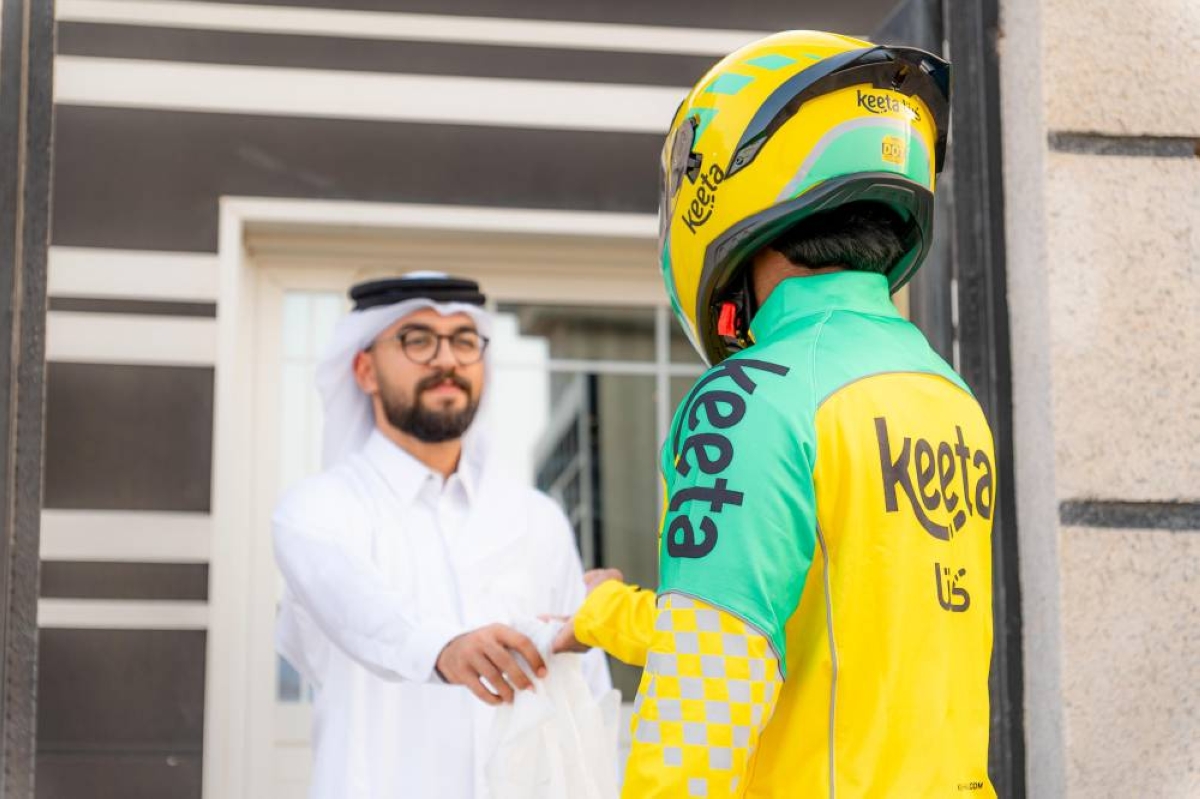
In Qatar, ordering dinner through delivery has become an ingrained habit. With a highly connected population, a diverse restaurant scene, and the convenience of having anything delivered, people now order from various platforms on a daily basis. The question now is which platform will be chosen, how often customers will return, and what sets one service apart from another.
Geographically, Qatar's market is compact, while commercially, it is diverse. Established regional and homegrown platforms serve a relatively small customer base, while many restaurants operate on multiple applications simultaneously. Despite the concentration, the industry continues to grow. Keeta's arrival in Qatar last year highlights how competition is evolving, even in a market where delivery has become ingrained.
Keeta entered a market with established ordering habits and restaurants that understand aggregators. The challenge was not to introduce a new way of ordering food but to find relevance within existing habits. One committed customer placed over 1,500 orders in the year, while others ordered from more than 250 restaurants and tried various options across Qatar's culinary landscape.
Delivery has moved beyond occasional evening use and now extends to breakfast, office lunches, afternoon coffees, family dinners, and late-night cravings. Choice has created a contradiction, with customers becoming discovery platforms for smaller businesses. More than 60% of Keeta's orders went to small and medium-sized restaurants, allowing them to reach customers across the city.
Regulators have responded to the sector's evolution, introducing guidelines for delivery activities through digital platforms, focusing on transparency, fair competition, efficiency, and the sustainability of SMEs. As the market matures, competition is shifting. Keeta's delivery network has been tested against high demand, showing the operational scale required to maintain service consistency.
The challenge now is to make the delivery process seamless, with quick response times and reliable service. This requires a diverse rider network, supported by an efficient operation. The expectation remains simple: reliable and on-time delivery. Behind this promise is a sizeable rider network, with an operation that maintains a strong on-time completion rate even as demand grows.
The question of the future lies in efficiency. Keeta's General Manager Jane Liu suggests that autonomous vehicles and drone delivery could be part of the next generation of food delivery. Although futuristic, the technology is already being deployed commercially in China. For Qatar, this could be an intriguing area to explore, taking advantage of the country's compact geography, modern infrastructure, and considerable investment in technology.
However, this does not necessarily mean the disappearance of riders from Doha's roads. The future may involve a mix of delivery methods, with automation taking on specific routes or environments while riders remain vital in other areas. Food itself could also become only one part of the competition, with consumers gradually incorporating groceries, pharmacy products, and everyday necessities into their ordering habits.
Written by urgent.news from Gulf Times's reporting — not their text. Machine-written — may contain errors; check the original before relying on it.