S'pore must create more value from what we have for next growth phase: Tan See Leng
Singapore needs to strengthen its economic resilience to create good opportunities for Singaporeans, he said.
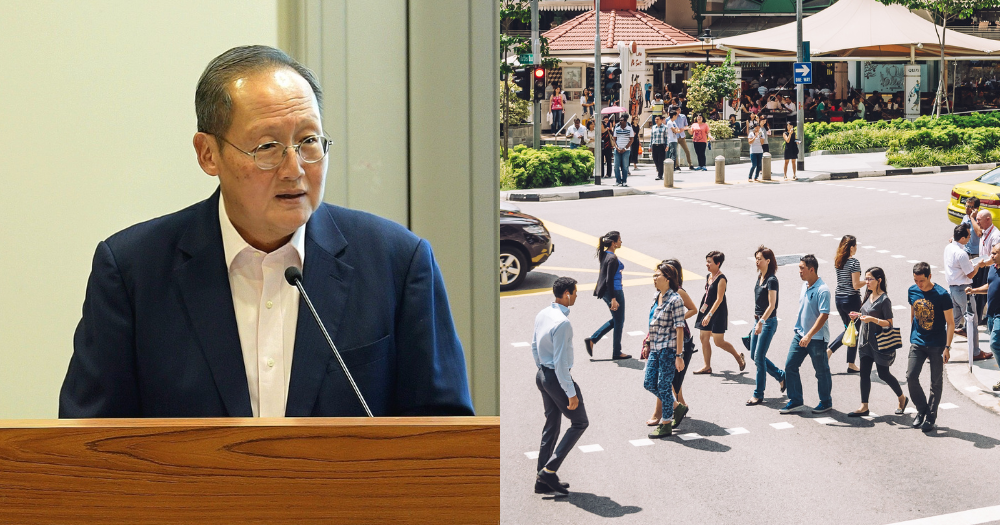
Singapore's next phase of growth cannot be achieved through expanding land usage, increasing workforce, or increasing carbon emissions, stated Minister for Trade and Industry (Energy and Industry) Tan See Leng. To create more value from what the country has, Tan emphasized the need for raising productivity and transitioning into innovative, higher value-added activities.
At the MTI Economic Dialogue 2026 on August 26, Tan addressed Singapore's economic strategy in the face of changing global conditions. He highlighted that Singapore's economic foundation must evolve alongside these changes.
Tan pointed out that the challenges of staying open have become more difficult, and the country faces domestic constraints such as land scarcity, an aging population, and the shift away from carbon. Singapore's next phase of growth will be harder, he said, but by remaining clear-eyed about constraints, deliberate and purpose-driven in value creation, and disciplined in decision-making and adaptation, Singapore can build a thriving economy that generates good jobs and opportunities.
Tan proposed three main changes proposed by the Economic Strategy Review's report, released in June 2026. The first is to sharpen Singapore's value proposition by being deliberate about where the country can create the most value and build hard-to-replicate capabilities. In advanced manufacturing and services, this means going beyond attracting investments and anchoring higher-value capabilities like R&D, regional leadership, and deep talent pipelines.
These activities will make Singapore integral to global goods and services development. The deeper these activities are rooted in Singapore, the greater their potential benefits for all and the economy.
The second change is to enhance Singapore's agility and adaptability to shifting circumstances. This involves creating an environment for new companies and ideas to emerge and scale, and improving workers' skills to handle redesigned and new jobs. Tan stated that AI and automation may lead to fewer workers, prompting Singapore to adopt human-centric AI and provide early support for workers.
Lastly, Tan emphasized the balance between resilience and efficiency. Maximizing efficiency alone may leave Singapore vulnerable to shocks and externalities. To strengthen resilience, Singapore needs to diversify, build buffers in critical areas like energy and supply chains, and deepen partnerships to keep vital flows open. However, Tan cautioned against overly buffering against every conceivable risk, which would be costly and impractical.
Balancing resilience and efficiency requires difficult choices under uncertainty, and Singapore must refine its decision-making skills to handle these trade-offs. Tan expressed confidence in the economists in the audience to contribute to better policy decisions for Singapore.
Written by urgent.news from Mothership's reporting — not their text. Machine-written — may contain errors; check the original before relying on it.