SpaceX reta a la física con sus centros de datos en el espacio
La compañía de Elon Musk se enfrenta a desafíos de enorme magnitud para lanzar millones de satélites al espacio que impulsen la IA. Leer
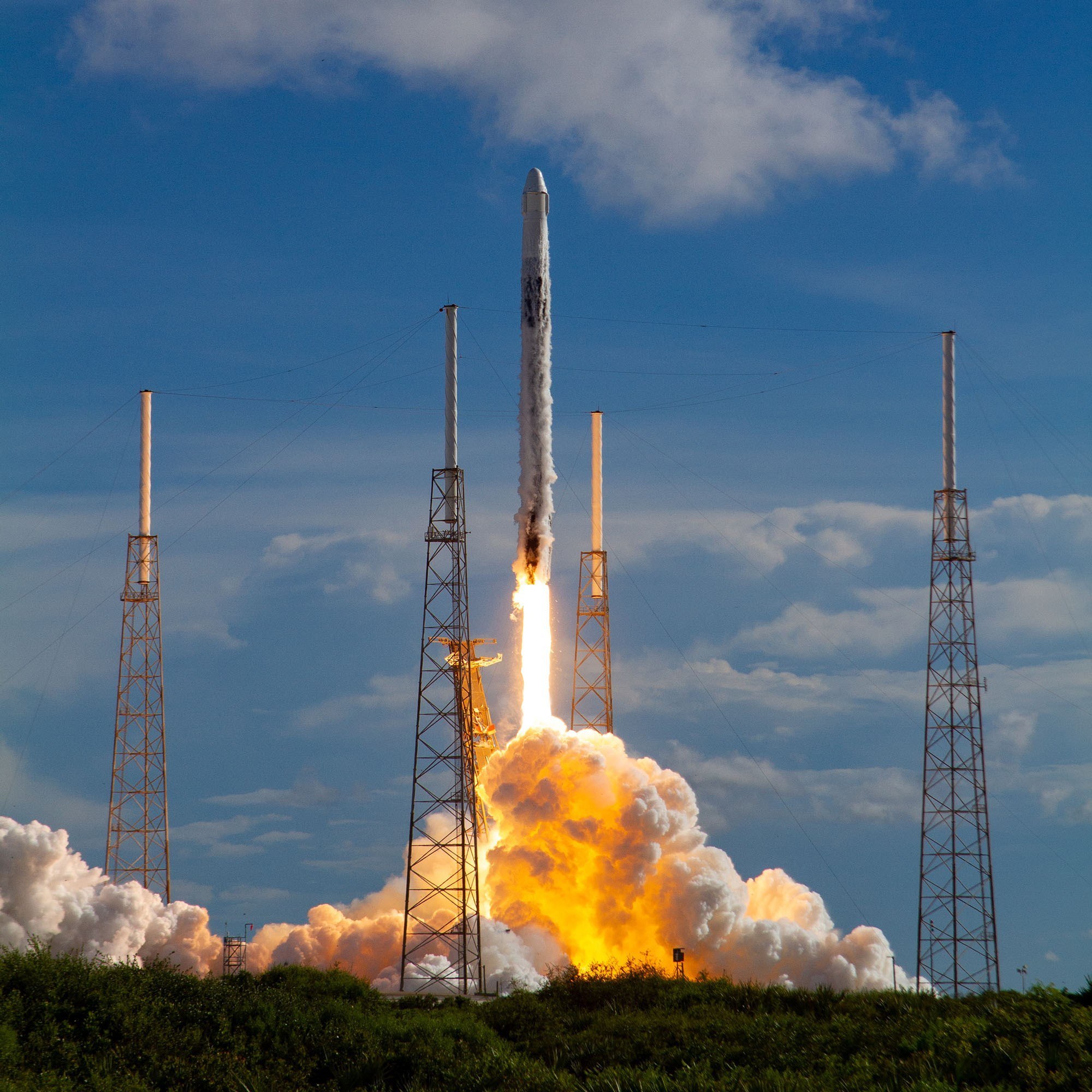
SpaceX has convinced investors with a $1 billion plan to launch millions of solar-powered satellites equipped with AI chips into space. The goal is to create a new market for orbital data centers and dominate a key sector of the AI economy. SpaceX, which went public in June, plans to start launching orbital data centers next year using its 124-meter high Starship rocket.
CEO Elon Musk told investors this month that launching orbital data centers is not a distant or future concept. However, company reports, technical documents, and interviews with aerospace engineers suggest the company needs to solve three interrelated problems to achieve this on a large scale: launching rockets economically and with unprecedented frequency, cooling high-energy computers in the vacuum, and periodically replacing them with the latest chip technology.
The company's IPO prospectus makes clear how speculative its bet remains: Many of our plans, including those to develop large-scale orbital AI, involve significant technical complexity, untested or non-existent technologies, and may not be commercially viable. Logistics problems for such an enterprise are enormous, says Christopher Smith, an aerospace engineer at UC Berkeley's Space Sciences Laboratory.
To maintain a constellation of one million satellites, dubbed Starmind by SpaceX, Smith calculates the company would need to launch more than nine Starship rockets a day, assuming the chips in its orbital data centers would need to be replaced every five years and each rocket could carry 60 satellites. Starship was designed to carry many more satellites and significantly larger ones than previous launch vehicles, reducing the cost of transporting cargo into space.
However, it has not yet demonstrated its full reusability and has failed in several test flights. So far, only eight launches have been successful, while SpaceX's most prolific rocket, the Falcon 9, has made 165 launches last year, one every two days. SpaceX indicated in its IPO prospectus that it could eventually reach thousands of Starship launches per year, but did not specify when it would achieve that figure.
An initial constellation of AI-equipped satellites could be deployed as early as 2028. The question is how many satellites, says George Lordos, a space systems architect and professor at MIT. On Monday, Musk posted on X that the first AI satellites, equipped with Nvidia chips, would launch in the fourth quarter of 2027, with plans for a significant number in 2028.
Lordos believes SpaceX would need to dramatically reduce the time it takes to replace reusable rocket boosters and the upper stages of the Starship to create a large network of satellites in the coming years. Another problem is finding a way to keep orbital data centers cool. While space is very cold (around -27°C), it is also a near-perfect vacuum with very little particles to conduct or convect heat.
SpaceX's satellite plan shows radiators with a total surface area of 160 square meters, about the size of two badminton courts. Previous Starlink satellites have used passive cooling systems to dissipate heat, but the magnitude of the power generated by each of its AI data centers (up to 250 kilowatts) requires a much stronger configuration.
SpaceX plans to use pumps and a liquid cooling circuit to transport heat from the central processing unit to the radiators. This is similar to the system used on the International Space Station, which circulates ammonia through its cooling system. However, the magnitude of the heat generated by each of its AI data centers requires a much stronger configuration.
The company's proposal is to distribute the chips over the entire surface of the radiators, but this is feasible, says McKenzie Sandberg, a thermal engineer at Advanced Cooling Technologies who previously worked for SpaceX. Sandberg says the most efficient way to cool orbital data centers would be to distribute the chips across the entire surface of the radiators.
SpaceX has concentrated the chips in a central processing unit, likely to protect components from cosmic radiation. Electronic components in space are susceptible to damage from high-energy particles, which can cause problems such as bit flipping, where 0s and 1s stored by electric circuits become disordered. This can have serious consequences, such as data confusion, computer failures, or navigation issues.
Engineers believe shielding against radiation will likely be the primary way to protect electronic components, and confining these circuits to a single unit would reduce the amount of material needed. Another challenge SpaceX will face is replacing satellites to keep up with technological advancements on Earth and to remove failed satellites during their service.
So far, in its Starlink program, SpaceX has replaced satellites after about five years of service, deorbiting them and allowing them to burn up in the atmosphere. However, there is growing concern that the incineration of satellites could create a significant amount of space debris.
Written by urgent.news from Expansion ES's reporting — not their text. Machine-written — may contain errors; check the original before relying on it.