Urgent.News

What's breaking now, across thousands of outlets.

Science

Rules of the Road: Engineers Have Built a Traffic Control System for the Moon

The saying “cleared for takeoff” has a whole different meaning in space.
Rules of the Road: Engineers Have Built a Traffic Control System for the Moon

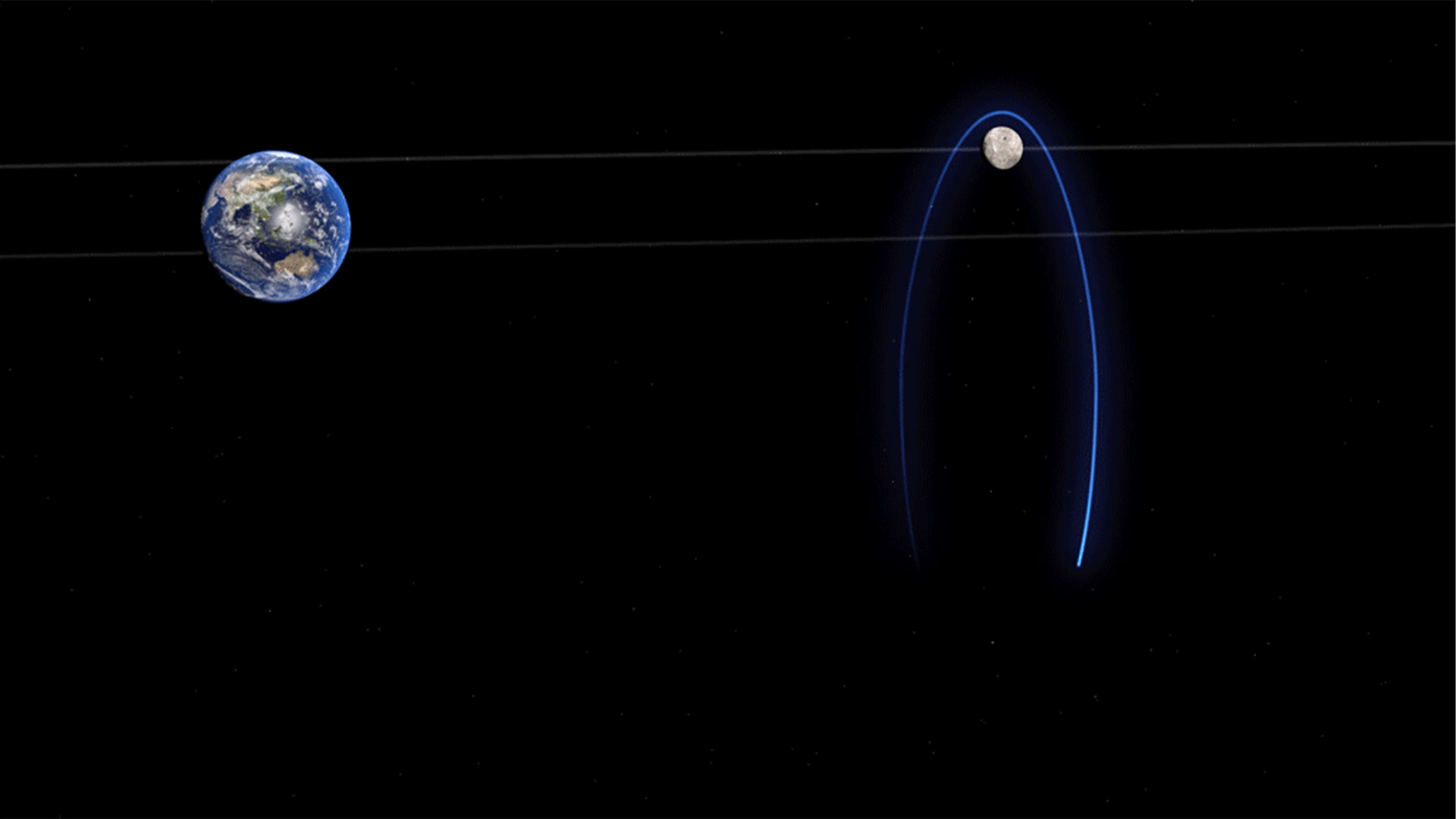
Engineers have developed a traffic control system for the moon to manage increasing spacecraft traffic at the planned lunar base. NASA's Gateway and other spacecraft will use the near-rectilinear halo orbit (NRHO) to orbit both poles of the moon in this new arrangement, which is more complex than managing a single space station.

With multiple spacecraft sharing the same orbit, the risk of collisions and serious damages increases, so effective traffic management is crucial. Diane Davis, associate professor of space engineering at Texas A&M, emphasizes that crew safety and mission success depend on it. "The future of lunar explorations depends as much on the traffic management as it does on the rocket science," she said.

The control system functions similarly to Earth's air traffic control, managing spacecraft's paths, orbits, and rendezvous points. Managing spacecraft loitering in orbit and planning their return trips to Earth is essential to avoid fuel waste and collisions. Unlike Earth, the moon has no physical airport or ground-based navigation system. Engineers had to devise ways to "park" spacecraft moving in space without GPS assistance.

The NRHO offers a balance between proximity to the lunar surface for cargo deliveries and sufficient distance to minimize fuel consumption. The system successfully simulated multiple spacecraft operating in the same orbit without colliding. This innovative traffic control system will be tested with the upcoming Capstone 02 mission.

Written by urgent.news from CNET's reporting — not their text. Machine-written — may contain errors; check the original before relying on it.

Read the original at cnet.com →

More in Science

Neanderthal gene that builds muscle well, do I have it? The lower jaw is a clue 네안데르탈인은 현생 인류인 호모 사피엔스보다 근육이 더 많았던 것으로 알려져 있다. 그런데 이 근육 차이를 만드는 유전자 가운데 하나가 네안데르탈인의 아래턱에 있다는 연구 결과가 나왔다. Neanderthals are known to have had more muscles than modern humans, Homo sapiens. However, research has found that one of the genes that makes this muscular difference is in the Neanderthal's lower jaw. 미국 매사추세츠 공과대학(MIT) 연구팀은 2일 국제학술지 '네이처 커뮤니케이션스(Nature Communications)'에 네안데르탈인의 아래턱에서 근육과 관련한 유전자 'TBX1'을 발견했다고 밝혔다. A team of researchers at the Massachusetts Institute of Technology (MIT) announced on the 2nd that they have discovered the muscle-related gene 'TBX1' in the lower jaw of a Neanderthal in the international academic journal 'Nature Communications'. 연구팀은 4만~5만년 전 독일의 샤니딩겐에서 발견된 10개 네안데르탈인의 아래턱 화석을 분석했다. 이 가운데 9개에서 'TBX1'의 활성화를 나타내는 유전적 변이를 확인했다. The research team analyzed the lower jaw fossils of 10 Neanderthals found in Schöningen, Germany, 40,000 to 50,000 years ago. They identified genetic variations indicating activation of 'TBX1' in nine of them. 네안데르탈인은 현생 인류와 같은 '호모' 속에 속하지만 다른 종으로 분류된다. 두 종은 40만~50만년 전 아프리카에서 공통 조상으로부터 분리된 것으로 추정된다. Neanderthals belong to the same genus 'Homo' as modern humans but are classified as a different species. The two species are thought to have separated from a common ancestor in Africa 400,000 to 500,000 years ago. 네안데르탈인은 키가 작고 근육이 많이 발달한 것으로 알려져 있다. 반면 현생 인류는 근육이 적고 키가 크다. Neanderthals are known to be short and have well-developed muscles. On the other hand, modern humans have less muscle and are taller. 연구팀은 이번 연구로 두 종의 신체적 차이가 아래턱에서 발견된 유전자에 의해 결정되는 것으로 추정했다. The research team estimated that the physical differences between the two species are determined by genes found in the lower jaw. 연구팀은 이번 연구는 네안데르탈인 유전자가 현대인의 근육량에 영향을 미치는지 여부를 결정하는 데 도움이 될 것이라고 했다. The research team said this study will help determine whether Neanderthal genes affect the muscle mass of modern humans. 이번 연구에는 서울대 치과병원 오승환 교수와 고려대 안암병원 정진우 교수도 참여했다. Seoul National University Dental Hospital Professor Oh Seung-hwan and Korea University Anam Hospital Professor Jung Jin-woo also participated in this study.

More from Wednesday 26 August →