Ratcliffe Visits Moscow
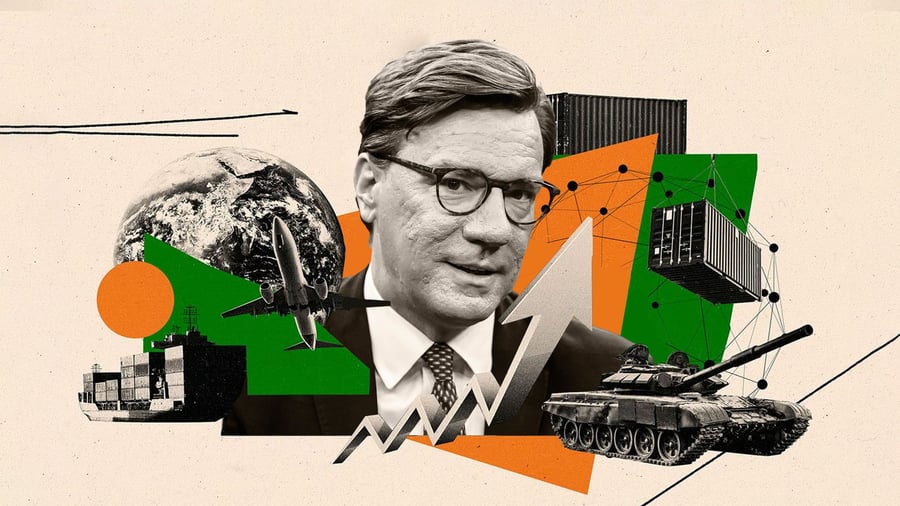
With Russia refusing to negotiate in earnest and helping Iran against the US, CIA director John Ratcliffe traveled to Moscow. The unexpected visit was intended to cool the rapidly overheating engine driving the world to all-out war.

On Tuesday morning, the Kyiv Post reported that the United States has declined to join a United Nations statement condemning Russia's attacks on Ukraine and calling for an immediate ceasefire. This decision, at least in part, was revealed later when social media circulated reports of a US Air Force C-17A landing at Moscow's Vnukovo Airport.
The aircraft, identified as RCH4555 with registration 07-7181, had departed from Charleston via Joint Base Andrews near Washington before arriving in Riga, where it departed without a publicly listed destination.
CIA Director John Ratcliffe was reportedly onboard the C-17. According to reports, the United States had asked Ukraine to halt drone and missile strikes in Moscow and other northern Russian cities prior to Ratcliffe's trip. The US suggested that a senior official would be traveling in Russia, offering an alternative approach to negotiations. The White House aimed to avoid "poisoning the well" ahead of the meeting.
Ukraine obliged, as President Volodymyr Zelensky had previously attempted to negotiate a ceasefire multiple times. In contrast, US Special Envoy Steve Witkoff and President Donald Trump's son-in-law Jared Kushner had other priorities – Witkoff was focused on Iranian negotiations, while Kushner was meeting with Representative Hakeem Jeffries (D-N.Y.) ahead of the November elections. Ratcliffe, with a background in KGB intelligence, was considered to bring a different skill set to the table.
The US intelligence assessment of Russia's situation may have been shared with Putin, potentially prompting him to reconsider his stance and return to the negotiation table. Meanwhile, US business interests, such as those pursued by Witkoff and Kushner, took a back seat as the risk of escalation in Ukraine grew. Russia responded to the technology transfer by threatening the United Kingdom, and the threat extended to involve Japan through the Kuril Islands.
The situation appeared to be setting the stage for a prolonged conflict that could rapidly expand, potentially involving NATO, North Korea, Belarus, and China. Ratcliffe's mission was to attempt to cool tensions and de-escalate the conflict, warning that America was delivering a message to Russia: "Cool the engines" or risk World War III.
Written by urgent.news from Kyiv Post's reporting — not their text. Machine-written — may contain errors; check the original before relying on it.