President Mahama calls for stronger health regulation to protect patients and advance universal health coverage
By: Celestine Avi and Seth Eyiah President John Dramani Mahama has called for stronger, responsive and coordinated health professional regulation across Africa to protect patients, strengthen public confidence and advance the continent’s goal of universal health coverage. Addressing the 28th Annual International Conference of the Association of Medical Councils of Africa (AMCOA) in Accra,…
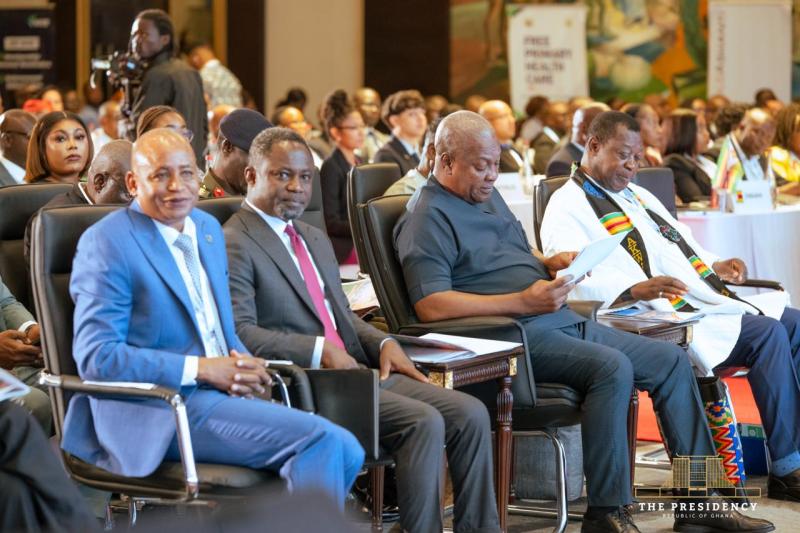
President John Dramani Mahama has urged for enhanced, adaptable, and coordinated medical professional regulation across Africa to safeguard patients, boost public trust, and progress towards universal health coverage. During the 28th Annual International Conference of the Association of Medical Councils of Africa (AMCOA) in Accra, Mahama emphasized that universal health coverage should extend beyond hospitals, insurance, medicines, and the quantity of trained health professionals.
He stressed that "coverage without safety is incomplete, access without quality can cause harm, and health systems without public trust cannot endure."
Mahama argued that regulation should not be viewed as a bureaucratic hurdle but as a vital tool for safeguarding public health, ensuring patient safety, and fostering trust in healthcare. He clarified that each professional license granted by a regulator embodies a promise to the public that the practitioner has undergone proper training, fair assessment, rightful registration, and adherence to stringent professional and ethical standards.
Africa's healthcare landscape is rapidly evolving due to expanding populations, shifting disease patterns, rising non-communicable diseases, increased health professional mobility, and the rapid growth of digital health, telemedicine, and artificial intelligence. While these advancements present new opportunities, they also introduce new risks that regulators need to address proactively.
In this context, Mahama called on regulators to enhance their responsiveness, ensuring that regulation adapts to technological changes, emerging health threats, and the movement of health professionals across borders.
Key challenges that necessitate stronger regulatory cooperation across Africa include patient protection during conflicts and humanitarian crises, health workforce migration, digital health and artificial intelligence, fraudulent qualifications and impersonation, and health security. In the realm of digital healthcare, Mahama cited Ghana's experience with a digital medical records provider that abruptly terminated service after repeatedly demanding additional payments.
This incident highlighted the risks associated with digital dependence and raised crucial questions about data ownership, system continuity, and accountability.
Mahama also underscored the importance of using artificial intelligence to support, rather than replace, professional judgment and human responsibility. He emphasized that Africa must actively participate in establishing standards and developing technologies that are tailored to African populations. To counteract forged qualifications, fake licenses, professional impersonation, and unlawful medical practice, Mahama advocated for stronger collaboration among African regulators.
He stressed that no country should become a sanctuary for practitioners sanctioned in other jurisdictions and emphasized secure, legal, and timely information sharing among regulatory authorities.
Regarding Ghana's healthcare agenda, Mahama detailed the country's efforts to expand the National Health Insurance Scheme, which currently covers about 76% of the population with the goal of reaching 90%. He also highlighted the Free Primary Healthcare Programme, which has been initiated in approximately 160 districts, with the remaining districts set to be included.
This program focuses on preventive healthcare and underserved communities, offering free services at Community-Based Health Planning and Services (CHPS) compounds, mobile health kiosks, and other designated facilities. Additionally, Mahama introduced the Ghana Medical Trust Fund, aimed at protecting individuals with chronic and high-cost conditions from financial hardship.
He reiterated his call for African health sovereignty, emphasizing that it does not imply isolation but rather the development of the capacity to meet the health needs of African populations through collaborative partnerships.
Written by urgent.news from GBC Ghana's reporting — not their text. Machine-written — may contain errors; check the original before relying on it.
This story
This is one outlet's version. Read the fullest account.