Modern cowboys are saddling up in the US West. And they’re on a whole new mission
In states like Montana, range riders can play a key role in a wild landscape where livestock and predators navigate life together For most people, the word “cowboy” still summons a figure from Western folklore – a rough rider with a weathered face and a steely gaze, a self-reliant loner who answers to nobody, is fearless in the face of danger, and protects his lands from predators – animal and…
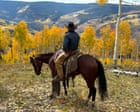
The image of the classic cowboy has long been a symbol of rugged individualism and self-reliance in the American West. However, in recent years, a new type of "cowboy" has emerged – one who embraces a different mission altogether. These modern range riders are tasked with finding a way to coexist with predators and wildlife in an increasingly wild landscape.
In states such as Montana, Idaho, Oregon, Wyoming, Washington, Arizona, and Colorado, the role of range riding has evolved beyond the traditional cowboy stereotype. Now, range riders may be cattle producers, wildlife technicians, or ranch hands, utilizing a variety of methods to manage livestock and monitor environmental threats. Their responsibilities include setting up electric fences, handling animal carcasses, and reporting information back to ranchers.
The return of predators like wolves and grizzly bears to the American West has brought about a new set of challenges for ranching communities. These animals, once on the brink of extinction due to conservation efforts, have sparked fear and uncertainty among some ranchers. The loss of a single calf can have devastating consequences for a rancher's livelihood. This has led to a shift in attitudes towards predators and the environment.
Modern range riders play a crucial role in bridging the gap between ranchers and wildlife. They serve as eyes and ears on the ground, monitoring for environmental threats and signs of conflict. By working collaboratively with producers, they help manage the new reality of living alongside returning predators. This approach emphasizes proper livestock management and non-confrontational methods of conflict resolution.
Techniques such as regenerative grazing, electric fencing, and low-stress livestock handling are employed to minimize the risk of predator attacks.
The success of modern range riding programs relies heavily on the skills and expertise of the riders themselves. They must possess backcountry skills, proficiency in technology like telemetry and virtual fencing, and excel in communication. Building trust with ranchers is essential for accurate information exchange. However, scaling these programs presents challenges due to their labor-intensive nature and reliance on seasonal funding.
Despite the skeptics, modern range riding represents a significant shift in how humans and wildlife can coexist in the American West. By embracing a new mission and adopting innovative methods, these range riders are helping to create a more sustainable and harmonious relationship between livestock, wildlife, and human communities.
Written by urgent.news from The Guardian US's reporting — not their text. Machine-written — may contain errors; check the original before relying on it.