Maui residents face health struggles 3 years after wildfires
Just over three years ago, the deadliest U.S. wildfire in more than a century devastated the Hawaiian island of Maui. New research suggests the toll of the disaster may be far greater than the lives lost and property burned. Stephanie Sy reports on a landmark study aiming to track how wildfires continue to affect survivors' health long after the flames are gone.
Three years after a catastrophic wildfire, residents of Maui, Hawaii, are grappling with a range of health challenges. The deadliest U.S. wildfire in over a century claimed lives and destroyed property, but new research reveals the disaster's impact extends far beyond the immediate aftermath. Stephanie Sy reports on a landmark study tracking the long-term effects of the disaster on survivors' health.
Every weekday, Lahaina's food bank opens its doors to those affected by the fire. Mario Acosta, a Lahaina resident, recalls the harrowing day of August 7, 2023, when he and his wife fled the advancing flames. The Acostas lost their rental home and now struggle to afford even basic living expenses, with prices escalating in the aftermath of the disaster. Mario expresses his ongoing struggles with the financial burden and the psychological toll of the harrowing experience.
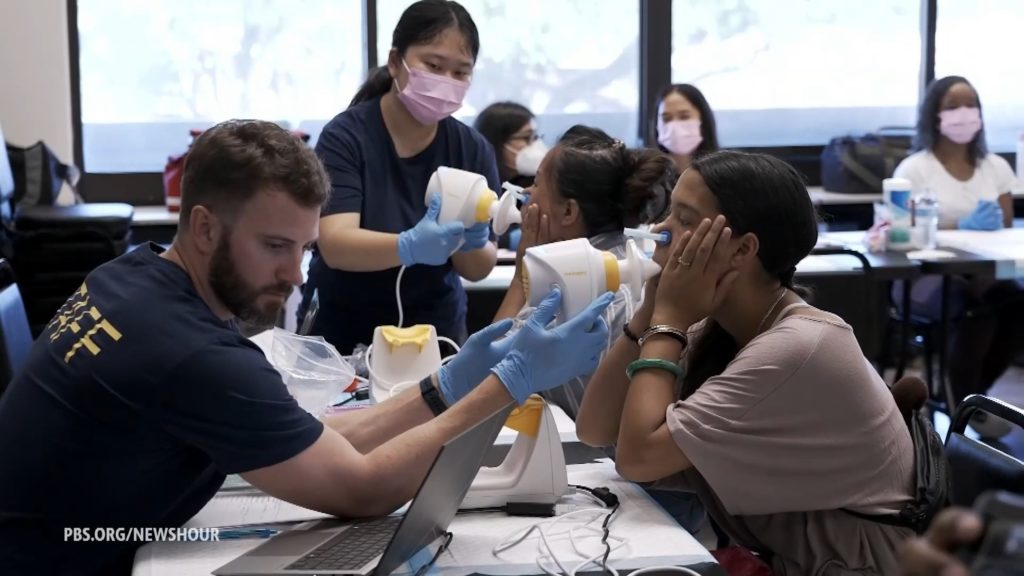
The University of Hawaii, led by researchers Ruben Juarez and Alika Maunakea, conducted a comprehensive study on the disaster's impact on physical and mental health. Known as MauiWES, it is one of the largest and most diverse studies of its kind in the country. The research indicates that recovery has been uneven, with housing security, food and income security, social support, and access to care proving critical factors in determining an individual's well-being.
Resident Nancy Garnett reported experiencing respiratory issues weekly for months after the fire. Now, three years later, one in five adults continue to have below expected lung function. In addition, participants were tested for exposure to heavy metals like arsenic and lead, which can be released during urban fires and pose potential health risks.
Native Hawaiian historian Ke eaumoku Kapu, who ran a cultural center destroyed in the fires, faced his own health concerns when searching through the rubble for precious objects and artifacts. He unwittingly exposed himself to toxic substances, including asbestos, arsenic, and lead paint, raising concerns about the long-term health implications of such exposure.
The study has shed light on the mental health toll of the disaster, with one in five survivors experiencing symptoms of post-traumatic stress disorder (PTSD). Artist Krista Woodward, whose home and art studio were destroyed, has been struggling to rebuild her life, her new house even unfinished as her contractor allegedly ran away with her money. This left her feeling overwhelmed and experiencing a sense of heaviness, likening her mental state to moving underwater.
Mental health lead Christopher Knightsbridge of the study team emphasizes that Maui is still in a crisis stage rather than a recovery stage. He notes that levels of anxiety and depression are more severe among those still struggling to meet their basic needs. Despite the challenges, the study highlights the resilience of the survivors and the importance of continued support in helping them rebuild their lives.
Written by urgent.news from PBS NewsHour Science's reporting — not their text. Machine-written — may contain errors; check the original before relying on it.
This story
This is one outlet's version. Read the fullest account.