Ifo-Barometer: Unternehmen in Deutschland bauen weniger Personal ab
Die Anzeichen mehren sich, dass sich der Arbeitsmarkt stabilisiert. Weniger Beschäftigte werden entlassen. Firmen stellen jedoch nicht signifikant mehr Menschen ein.
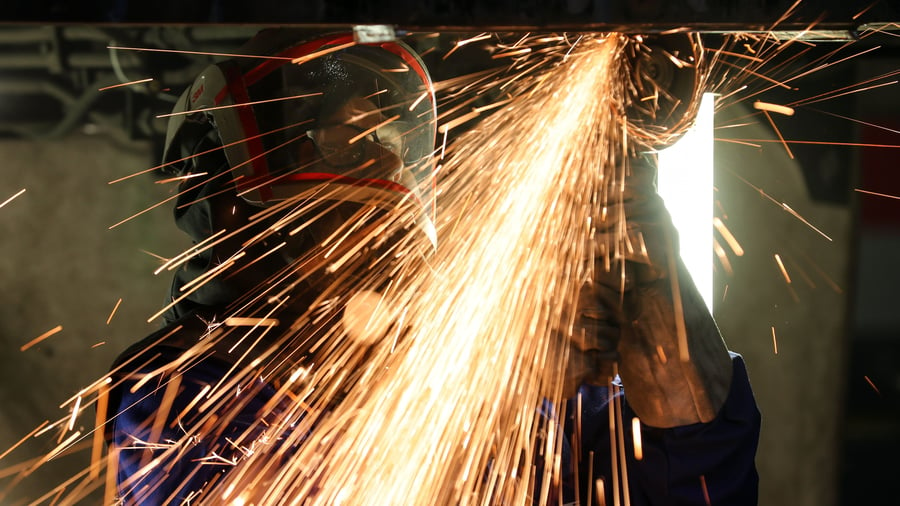
Bundeskanzler Friedrich Merz (CDU) recently recommitted to the priorities of "growth and employment" following his summer vacation. Recent labor market data indicates a stabilization, with signs emerging in the August figures from the Ifo Employment Barometer, calculated monthly by the Munich Institute of Economic Research. While firms continue to cut jobs, the pace has slowed compared to previous periods.
The barometer's value reached 94 – the highest since May of last year, with 100 marking a neutral trend. Klaus Wohlrabe, Ifo's chief statistician, told the Handelsblatt, "Companies are increasingly putting the brakes on job cuts." However, no signs of a hiring surge are apparent. The value is based on monthly surveys of around 9,000 firms in industry, services, trade, and construction.
The August survey shows the economic stabilization slowly infiltrating the labor market, Wohlrabe said. "It hasn't been enough to let employment grow again." After several years of job cuts mainly by industry firms, trade saw a marked decline in August. Construction and services are only slightly negative. A modest boost comes from the arms industry, which added around 4,700 positions across Germany in the first half of 2026, a 22% increase from the first half of 2025.
This is driven by better economic indicators: the German economy has stabilized. The Federal Statistical Office revised up GDP growth for the second quarter of 2026 to 0.3% compared to the previous quarter, driven by exports, which grew by 2%. Inflation, high oil prices, and a renewed Rhine low water continue to hinder recovery.
The Bundesbank states the third quarter may still grow "at most slightly." The Ifo business climate index surprisedingly rose to 88.8 in August, the fourth consecutive increase, well above the analyst expectation of 87.2. Ifo President Clemens Fuest said, "Confidence among German companies has risen." The manufacturing sector and service providers grew together.
Consumer power is improving too: tariff wages are expected to rise more than prices in 2026, a potential consumption boost that has not yet materialized. The Federal Employment Agency counted roughly three million unemployed in July 2026, 70,000 more than in June, but this increase is considered usual for summer. The unemployment rate sits at 11.4%, down from 11.8% a year earlier.
Overall employment in Germany has remained stable despite weak economic growth over recent years. However, in the manufacturing sector, it has been declining since 2022 due to the energy crisis since 2022, exacerbated by the Iran war, rapid technological change, globalization pressure, especially from China, and US trade policy.
Higher credit costs in the euro zone due to the tighter monetary policy of the European Central Bank (ECB) are another factor. Higher borrowing costs in the European Union due to stricter monetary policy by the European Central Bank (ECB) have led to employment declines mainly in highly indebted industries dependent on external financing, according to IAB experts Ahmet Ali Taskin and Enzo Weber.
The effect of interest costs on employment in the manufacturing sector is also evident, even when considering other relevant factors such as energy intensity and employment trends pre-coronavirus. A ten percentage point increase in debt levels is associated with a 5.4% drop in employment, the IAB experts write. Between 2022 and 2025, the employment decline in more indebted industries fell by 4.7 percentage points more than in less indebted ones, with 3.3 percentage points or 107,000 jobs attributable to debt levels themselves.
Written by urgent.news from Handelsblatt's reporting — not their text. Machine-written — may contain errors; check the original before relying on it.