Four cultures, one treatment: Malaysian massage takes local heritage to the world
PUTRAJAYA, Aug 26 — Massage is among the preferred methods for relieving body aches, with Thai and Balinese...
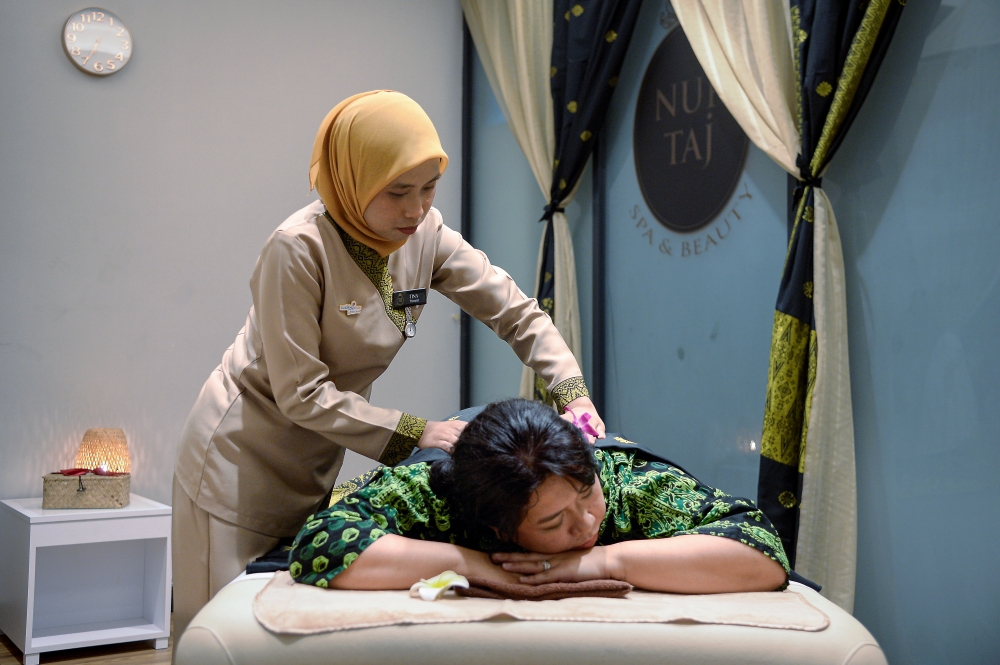
Putting aside traditional Thai and Balinese massages, Malaysian massage offers a unique blend of four cultural heritages in a single treatment. Nur Taj Spa & Beauty founder Selinastein Mohd Rashid explains that the massage incorporates techniques from Malay, Chinese and Indian massage, as well as those of the indigenous communities of Sabah and Sarawak.
This distinctive approach not only offers a refreshing change from conventional massages but also aims to revive practices of past generations in modern life. The Malaysian foot soak, for instance, starts with a ritual foot-soaking procedure using traditional ingredients like kaffir lime, betel leaves, and pandan leaves. Following this, clients experience Qigong breathing from the Chinese community, Indian head massage from the Indian community, and Malay and indigenous techniques from Sabah and Sarawak, which form a key part of Malaysian massage.
The Ministry of Tourism, Arts and Culture (MOTAC) introduced Malaysian massage as a tourism product in 2017, and it remains hands-on, relying on traditional techniques rather than machine-assisted methods. Practitioners must undergo six days of training with a MOTAC-accredited master trainer to earn a certificate. Selinastein highlights that Malaysian massage has gained greater appreciation in a digital age where many prefer machine-assisted techniques.
To promote the massage internationally, demonstrations are being held in cities such as New York, London, Berlin, and Guangzhou. Collaborations with the Malaysian Spa Association are also underway to train practitioners overseas, enabling Malaysian massage to be included in international spa menus. Despite not yet being officially gazetted, Malaysian massage is considered part of the country’s heritage, representing skills and knowledge passed down through Malay, Chinese, Indian, Sabah, and Sarawak communities.
National Heritage Department Director-General Mohamad Muda Bahadin emphasizes the importance of preserving and promoting this art, as incorporating it into the spa industry offers an opportunity to showcase Malaysian massage as a national tourism product.
Written by urgent.news from Malay Mail's reporting — not their text. Machine-written — may contain errors; check the original before relying on it.