Expert Explains | How India and China’s differing approaches to talks may hinder boundary resolution
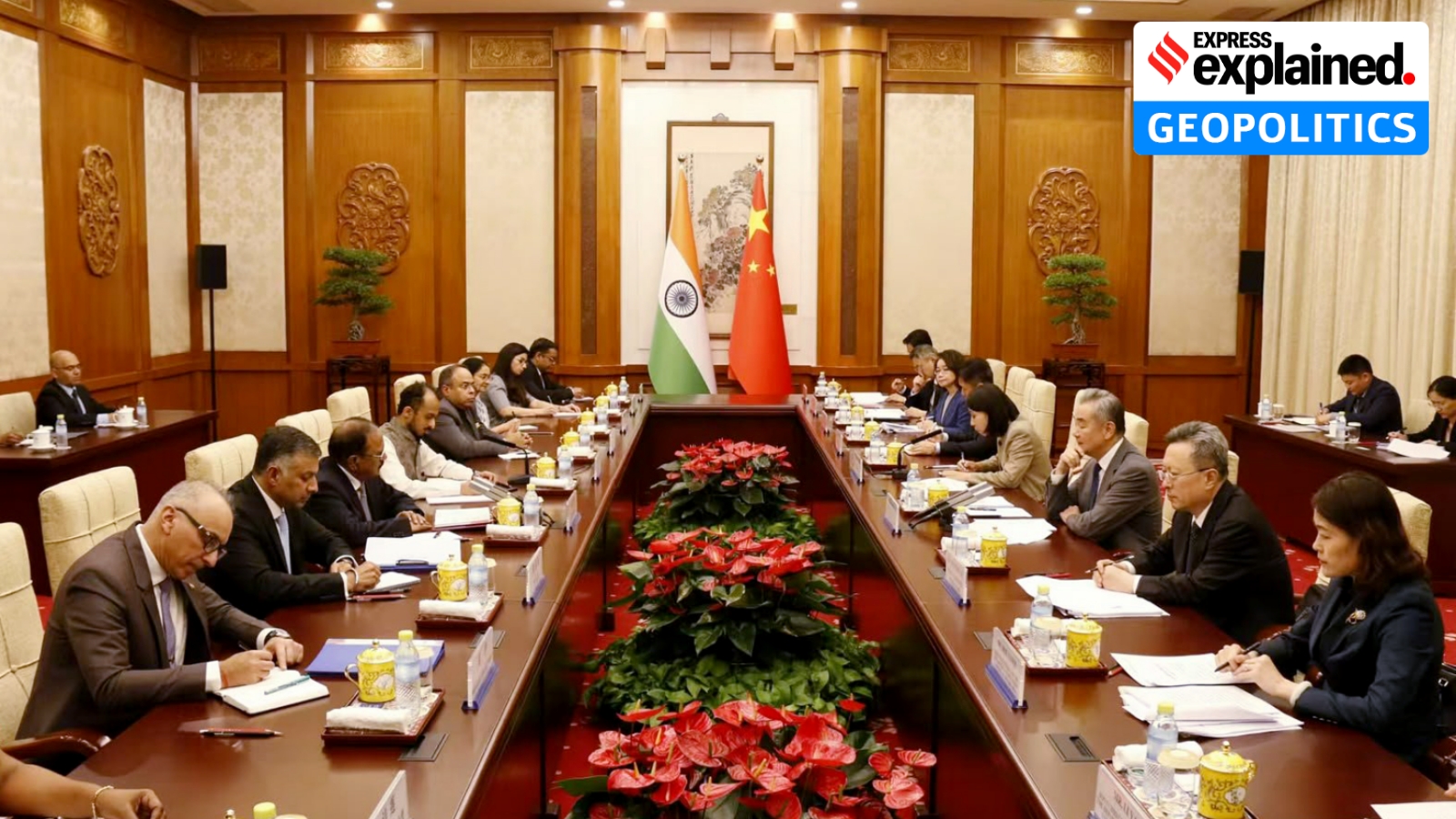
By Maj. Gen. G G Dwivedi (retd), National Security Adviser Ajit Doval and Chinese Foreign Minister Wang Yi met in Beijing on August 25 for the 25th round of India-China Special Representatives talks. Their discussions went beyond the boundary dispute and covered bilateral, regional, and international issues. The SR dialogue is crucial for rebuilding ties and overcoming the bitterness of the 2020 military confrontation.
Instituted in 2003 after the "Joint Working Group" failed to make progress, it aims to establish a political framework to resolve the border problem. Although unsettled, the SR dialogue has evolved as a critical channel for crisis management. In 2020, military conflict in eastern Ladakh's Galwan caught India's politico-military leadership off guard, despite the perceived effectiveness of the strategic guidance mechanism since the Modi-Xi meetings in Wuhan in April 2018 and Mamallapuram in October 2019.
It took multiple meetings for opposing forces to disengage, resulting in buffer zones and new patrolling modalities. The Depsang sector remains a sticking point. A breakthrough occurred after the Modi-Xi meeting at Russia's Kazan during the BRICS Summit in October 2024, leading to a cautious thaw. The 24th SR meeting in Delhi in August 2025 produced a 10-point consensus, including implementation of '2005 Political Parameters and Guiding Principles', border management strengthening, an 'Expert Group' for early harvest delimitation, a separate working group for border management, military-diplomatic mechanisms, cross-border river cooperation, and reopening of traditional border trade points.
Tangible outcomes included resuming direct flights, easing visa norms, and restarting the Kailash Mansarovar yatra. At the latest SR meeting, both sides reviewed bilateral ties positively, reaffirming their commitment to a fair, reasonable, and mutually acceptable settlement for the 3,500-kilometer un-demarcated Himalayan border.
They discussed preventing miscalculations along the Line of Actual Control (LAC) and gradual resumption of institutional exchanges and cooperation following military disengagement. India agreed to host the 26th SR meeting in 2027. The 25th SR meeting mainly served as consolidation rather than a breakthrough. India and China have shifted from post-2020 crisis management to a structured border stabilization mechanism and gradual political normalization.
While neither readout announced new measures, India frames the issue sequentially, prioritizing sustained peace and tranquillity along the LAC for a stable overall relationship. China, however, emphasizes a holistic approach, managing the boundary issue while the broader bilateral relationship continues to develop. This semantic difference is strategically important and remains a significant hurdle in resolving the border dispute.
Written by urgent.news from The Indian Express's reporting — not their text. Machine-written — may contain errors; check the original before relying on it.