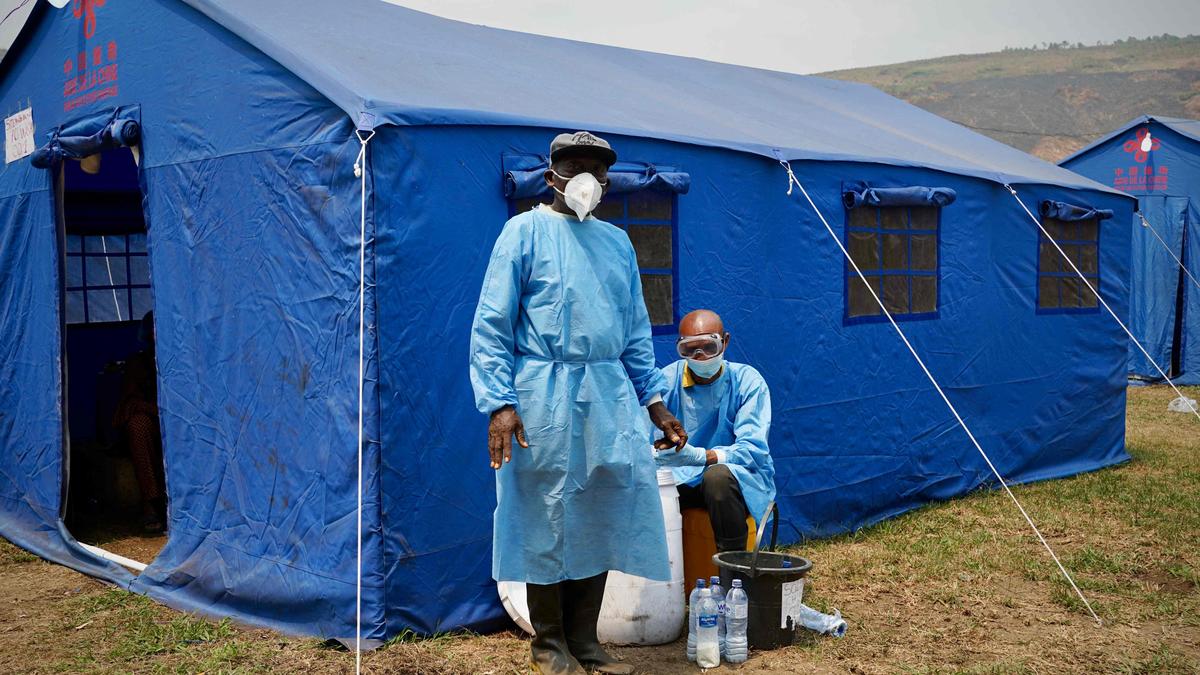
Ebola is still killing in Central Africa: These groups are working to save lives
Misinformation and distrust are among the challenges facing public health workers in the Democratic Republic of Congo as they confront the second-deadliest Ebola outbreak on record.

The ongoing Ebola outbreak in Central Africa continues to claim lives and pose challenges for public health workers. As of August 7, more than 5,200 cases of the Bundibugyo strain have been confirmed, resulting in over 2,500 deaths, according to the U.S. Centers for Disease Control and Prevention. Neighboring Uganda has reported 20 cases and two deaths, with no new cases since June 21.
The current outbreak, the third of the Bundibugyo strain in central Africa, has a reported 44% fatality rate, with no available vaccine. Military conflict in eastern Congo has complicated the medical response. Despite this, key organizations are still providing medical care and training to counter the spread of the disease.
The International Medical Corps, Doctors Without Borders, and Africa CDC are among the organizations working to save lives. The Africa CDC, a subagency within the Congolese Ministry of Public Health, is responsible for monitoring and documenting the virus. They have stepped up detection and monitoring of the virus's evolution through genomic surveillance, which is crucial for containing the virus and vaccine development.
Doctors Without Borders, with over 1,400 workers in the region, provides emergency medical aid and disease surveillance. They plan to reinforce their existing programs to prepare for any additional spread of the Ebola virus. Meanwhile, the International Medical Corps focuses on case management, community education, and the continuity of primary health care in high-risk regions. They also emphasize the importance of training local health professionals to boost capacity for future outbreaks.
SOFEPADI, a Congolese nonprofit organization, works to protect women during the outbreak, addressing gender-based violence and promoting women's health. Their efforts aim to improve community health and resilience against future outbreaks.
Written by urgent.news from Medical Xpress's reporting — not their text. Machine-written — may contain errors; check the original before relying on it.
This story
This is one outlet's version. Read the fullest account.