Dolly Parton Was One of the Biggest Stars in the History of Country Music. She Wanted to Be Remembered as a Songwriter
After growing up in poverty, she became famous for her legendary songs, big heart and larger-than-life style. But the iconic musician insisted that "the songs lead to everything else"
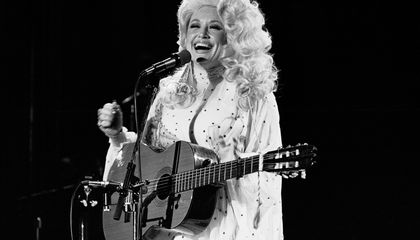
On a wintry day in 1946, a medical professional ventured into the Great Smoky Mountains of Tennessee on horseback to aid the delivery of a newborn baby girl. The parents, financially struggling, provided him with a bag of cornmeal in return for the infant. Years later, this child, Dolly Parton, often reminisced about her formative years, attributing her character to her humble upbringing.
Though her parents seldom verbally expressed their love, it was abundantly clear in their actions. Singing hymns, recounting biblical tales, and crafting toy cars from wooden thread spools, they instilled in Parton and her 12 siblings a deep familial bond. "There's a funny thing about mountain folks," Parton later recounted, "an awful lot that is never said out loud."
Rather than explicitly expressing love, a father might give his son a slight shoulder bump, a silent yet profound demonstration of affection. Parton was well-versed in this form of communication but yearned to hear the words spoken. Upon confessing her love to her father, she met his evasive nonverbal response with frustration. She forcefully grasped his head and demanded, "Tell me you love me!"
Like many artists, Parton was unafraid to communicate her feelings through her music. Her songs frequently centered on intimate family moments, such as baking gingerbread and crafting homemade toys, or depicted the struggles of working-class life. She deftly crafted verses about lost love and steadfast devotion, resonating deeply with listeners.
Renowned for her vibrant persona, extensive wig collection, humorous anecdotes, philanthropy, and ability to bridge genres, Parton's legacy was deeply rooted in her ability to pen lyrics that transcended musical boundaries. In her book, "Dolly Parton, Songteller," the singer herself emphasized her unwavering aspiration to be a songwriter: "The songs lead to everything else.
Everything that I am starts with that song." Her mother introduced her to hymns and traditional ballads, teaching her to rhyme and compose music from a young age. At five, Parton penned her first composition, "Little Tiny Tasseltop," a story about a doll made from a corn cob. By her teenage years, her musical prowess had significantly matured.
She penned a song titled "Life Doesn’t Mean Much to Me," inspired by tales of young soldiers losing their lives in combat. By ten years old, she was performing on local radio and television, performing at the Grand Ole Opry at thirteen. At her graduation, she declared her intention to move to Nashville and pursue stardom, a declaration met with laughter from the audience.
However, just the following day, she embarked on a journey aboard a Greyhound bus, her guitar, song lyrics, and three paper bags containing her belongings. "I cried all the way," she wrote, yearning to return home but determined to fulfill her dream of becoming a Nashville singer. Shortly after settling in the city, Parton crossed paths with Carl Dean, a proprietor of an asphalt-paving business.
After serving a brief stint in the military, they wed in 1966. Dean's reserved nature offered Parton a stabilizing influence amid her burgeoning music career. (When Dean passed away in 2025, they had maintained one of the longest-lasting marriages in the entertainment world.) In 1967, Parton joined "The Porter Wagoner Show," a popular country music television program, and released her debut album, "Hello, I’m Dolly."
The title encapsulated her approach to music: she aimed to connect with her audience and share her experiences—ultimately, their experiences as well. Over a six-decade career, Parton composed an estimated 3,000 songs, drawing inspiration from her own life and rural Tennessee roots. Many of her chart-topping hits were born from personal experiences, often referencing her childhood in the countryside.
"Having a humble background and being willing to share it—through song—is what has made her so relatable," notes Krystal Klingenberg, a curator at the Smithsonian’s National Museum of American History. Parton's most beloved song, "Coat of Many Colors," emerged during a 1969 tour; she sketched the lyrics on a dry cleaning receipt.
The narrative recounted her mother sewing her a coat from disparate rags, a poignant moment paralleling the biblical tale of Joseph and his multicolored coat. Yet, when she wore the improvised coat to school, her peers taunted her, revealing the challenges inherent in blending authenticity with societal scrutiny.
Written by urgent.news from Smithsonian's reporting — not their text. Machine-written — may contain errors; check the original before relying on it.
This story
This is one outlet's version. Read the fullest account.