Commentary: NDR 2026 – if Singapore can plan 50 years ahead for infrastructure, can it do the same for nature?
Long-term plans for Singapore’s western islands offer something precious: time to get it right, says NUS’ Melissa Low.
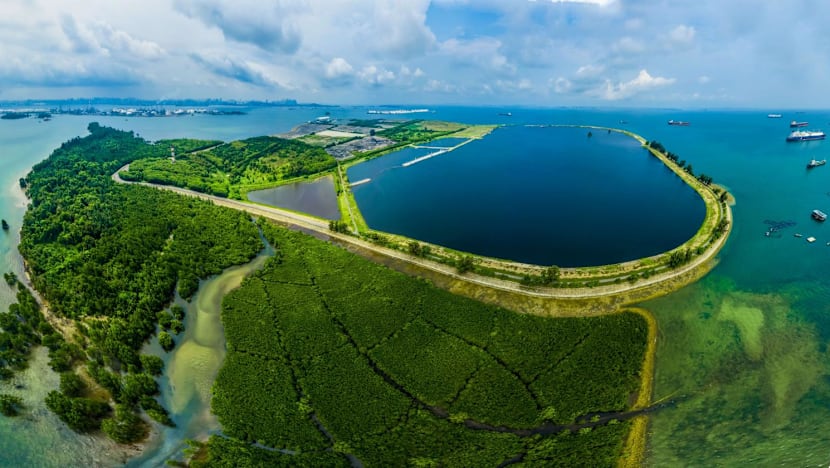
Singapore, a city-state comparable in size to New York City, announced in July its intention to clear two-thirds of the Maju Forest, a 23-hectare green area in the western part of the island, to construct more public housing. The proposal sparked widespread criticism with more than 49,000 individuals signing petitions advocating for the development of brownfield sites like golf courses and former commercial or institutional locations, as well as the densification of existing public housing estates.
Approximately 700 residents penned a letter to their local MP, urging the preservation of Maju Forest. A gathering of around 2,000 people took place on Sunday, demonstrating solidarity for both the environment and biodiversity. One petition read, "Stop spending the land (Singapore) can never get back."
Following a public feedback period on the proposal, the government revealed plans to retain more greenery than initially proposed, though it refrained from disclosing specifics. Responding to inquiries from Reuters regarding the plan, the Ministry of National Development released a video featuring Alvin Tan, a junior minister, stating, "We will determine the precise extent of the additional greenery, but we must accept that this will mean fewer homes."
Singapore faces the challenge of accommodating its rapidly growing population amid soaring property prices. As an island nation of 744 square kilometers, it lacks additional land for expansion. According to the Urban Redevelopment Authority, 14% of Singapore's land is designated for housing, while 9.3% is allocated to parks and nature reserves. The city-state's population reached a record high of 6.11 million people in June of last year, with projections indicating a range of 6.5 million to 6.9 million by 2030.
Maju Forest, formerly a rubber plantation and fruit orchard, later housed a railway line transporting goods and heavy materials from a nearby shipyard to another station. Since the cessation of train services in 1992, the forest has naturally regenerated, transforming into a picturesque hiking destination featuring abandoned rail tracks and a tunnel.
A commissioned environmental study revealed that Maju Forest is home to 113 species of animals, including the critically endangered straw-headed bulbul, with a population of just 600 to 1,700 worldwide, and the Sunda pangolin. The government's urban plans estimate that Singapore will clear 7,331 hectares of secondary forests for development, representing a loss 1.2 times the size of all parks and nature reserves in the city-state, as reported in a 2023 paper published in the science journal MDPI.
Singapore has maintained its status as a "garden city" since 1967, with its founding father, Lee Kuan Yew, and political leaders frequently planting trees. Nature Society Singapore President Leong Kwok Peng expressed concern over the government's conflicting messages, stating, "They wanted to plant a million trees and yet at the same time they're removing hundreds and thousands of trees in wild areas."
Rachel Oh, a conservation researcher at the National University of Singapore, emphasized the importance of mature forests in mitigating heat stress, particularly in the face of climate change-driven temperature increases. She noted that mature forests possess a greater structural complexity and height, rendering any newly planted park unlikely to replicate their benefits within the next 40 to 50 years.
Singapore's residents, nearly 80% of whom live in government-built flats, are facing an unrelenting demand for public housing. The housing board acknowledges that not all housing needs can be met through the development of brownfield sites alone.
Written by urgent.news from VnExpress International's reporting — not their text. Machine-written — may contain errors; check the original before relying on it.
This story
This is one outlet's version. Read the fullest account.