Commentary: China is betting on spreading AI faster than the US can contain it
China is showing it can pursue frontier AI while deploying it widely in the real world. For Asia, that may matter more than who has the smartest new model, says Enodo Economics’ Diana Choyleva.
China is making strides in artificial intelligence, showing it can both develop cutting-edge models and widely deploy them across various industries. The country's AI model, Kimi K3, gained immense popularity so quickly that it strained the computing capacity of its developer within just 48 hours of its release in July. Major tech companies like Alibaba and start-up Z.ai have recently announced new models that compete with leading Western counterparts on several benchmarks.
However, the most significant recent development in Chinese AI might not be a new large language model, but a domestically produced chipmaking machine in Shanghai.
China currently depends on foreign equipment to manufacture advanced chips. But in late July, a state-backed company reportedly began producing the nation's first domestically developed immersion deep-ultraviolet (DUV) lithography machines. These machines are a step below the most advanced extreme-ultraviolet (EUV) systems made by Dutch company ASML, which remain essential for creating cutting-edge semiconductor chips.
EUV systems have been inaccessible to China for years due to a Dutch export license restriction imposed amid US pressure.
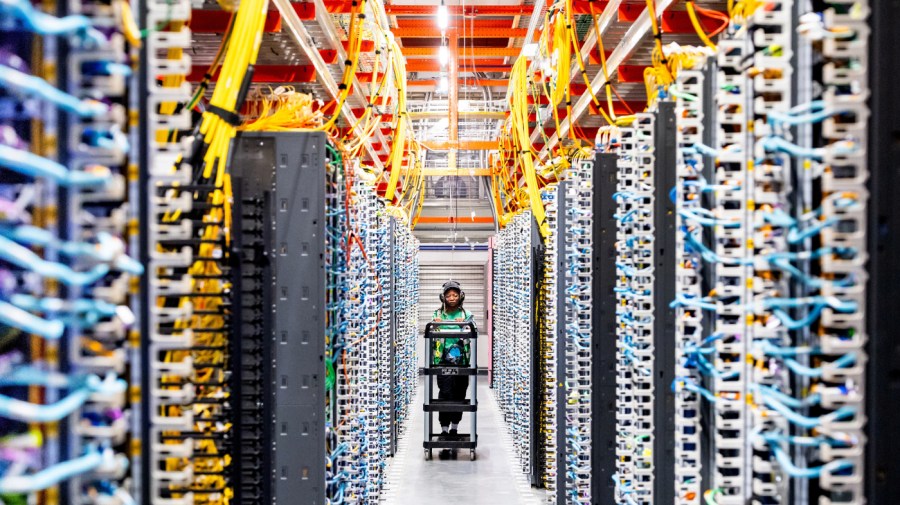
While the US-China AI competition is often viewed as a race to create the most powerful model with the most advanced chips, China's strategy seems to be focused on making AI widely accessible. The United States and China have different areas of focus in AI. America is concentrated on developing more powerful models trained on immense amounts of cutting-edge compute.
China, on the other hand, has placed greater emphasis on diffusion. If China can produce capable AI technology affordably, open it up, and make it ubiquitous, it can spread through the real economy.
China's AI progress is not separate from its efforts to make it more widespread. According to Artificial Analysis, DeepSeek's new V4-Flash model is by far the cheapest well-known model to run on its benchmark tests, costing only $0.03 per test, which is over 100 times cheaper than Anthropic's Claude Fable 5 at $3.16. By making capable AI models cheaper, China can increase their usage across various applications, such as factory systems, logistics, robots, and countless other mundane business processes that don't typically appear on AI leaderboards.
This broad AI diffusion serves strategic value as it becomes easier to embed AI in everyday devices and processes.
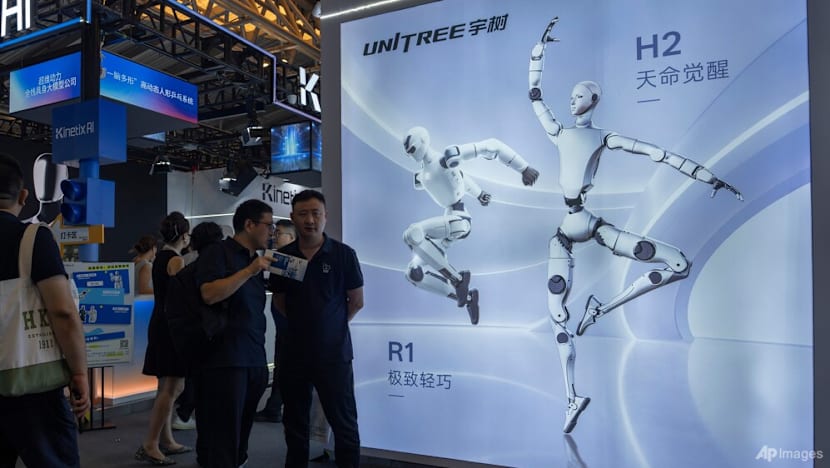
A recent test of a robot on a pig farm in Hebei demonstrated the potential of AI in a seemingly simple yet essential task - administering a needle-free vaccine to pigs with a 93.3% success rate. While this may not be the pinnacle of artificial intelligence, it illustrates how AI can become economically valuable when it stops being remarkable and becomes a routine part of various industries.
China is also working on reducing its dependence on foreign tools for chip production. The Shanghai lithography machine mentioned earlier is a crucial step towards achieving this goal. Although domestic machines still need to prove their precision, throughput, and yields to meet commercial demands, clearing this hurdle will significantly reduce one of Beijing's deepest vulnerabilities: reliance on foreign equipment.
China is simultaneously building up its domestic ecosystem for chip production, with companies like CXMT raising capital and considering new fabrication plants in Beijing.
While the US has attempted to limit China's access to advanced AI hardware through export controls, these restrictions have increased China's costs and limited access to the most cutting-edge compute. However, they have not completely stopped China from making progress on both the frontier and diffusion fronts. As AI spreads through the economy, the range of hardware, infrastructure, and software needed to support it grows exponentially, making it increasingly difficult to block all of these targets, especially as Chinese alternatives improve.
Written by urgent.news from CNA - Business's reporting — not their text. Machine-written — may contain errors; check the original before relying on it.
This story
This is one outlet's version. Read the fullest account.
- Commentary: China is betting on spreading AI faster than the US can contain it channelnewsasia.com