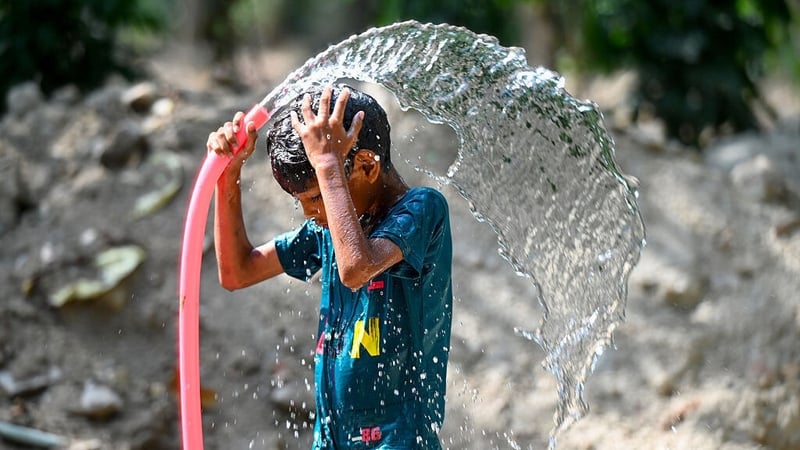
Climate change exposes up to 560 million children globally to at least one additional month of dangerous heat per year
New research by Vrije Universiteit Brussel (VUB) shows that globally, up to 560 million children ages 0–9 (43% of all children in this age group) experience at least one additional month (30 or more days) of heat stress per year because of human-induced climate change. This exposure outpaces that of any other age group and is nearly triple the 190 million people (30%) ages 60–69 experiencing this…

According to a new study published in Science Advances, up to 560 million children aged 0-9, or 43% of all children within this age group, are now exposed to at least one additional month per year of dangerous heat due to human-induced climate change. This exposure disproportionately impacts children compared to any other age group, with nearly three times the number of individuals aged 60-69 experiencing this health risk.
The study, led by researchers at Vrije Universiteit Brussel, projects that if current climate change trends continue, the number of affected children could rise to 620 million (49%) and 650 million (59%) by 1.5°C and 2°C of global warming, respectively. The main threat comes from humid heat, which is more dangerous as it hampers the body's natural cooling mechanisms, potentially leading to severe health issues like heatstroke, dehydration, and organ failure.
Children's vulnerability stems from their inability to regulate body temperature as effectively as adults, their lower sweat production, and their reliance on caregivers for protection. The research underscores the urgent need for governments to drastically reduce fossil fuel emissions in line with the Paris Agreement to mitigate the escalating heat risks faced by younger generations worldwide.
Written by urgent.news from Phys.org's reporting — not their text. Machine-written — may contain errors; check the original before relying on it.
This story
This is one outlet's version. Read the fullest account.