China's waistline war: When health campaigns become stealth ads
WEIGHT-LOSS drugmakers, vying to tighten the belts of Chinese consumers, are promoting obesity awareness in metro stations, exercise studios and soccer stadiums as local restrictions prevent direct advertising of prescription medicines in the world’s second-largest drug market.
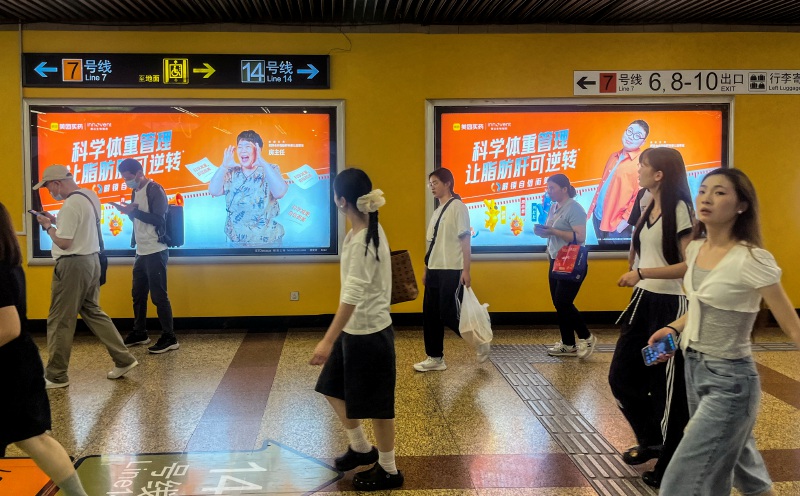
China's weight loss campaign is taking a stealth advertising approach as drugmakers promote obesity awareness in public spaces. With local restrictions preventing direct promotion of prescription medicines, companies like Novo Nordisk, Eli Lilly, Pfizer, and Innovent Biologics are turning to alternative methods. These include weight loss injections, GLP-1 therapies, and public health messages.
For instance, Lilly led GLP-1 sales on Alibaba's Tmall e-commerce platform, while Innovent touts "scientific weight management" at football stadiums. Despite the ban on direct ads, drug companies are providing information on the risks of obesity and encouraging patients to seek medical help. Some ads even go as far as encouraging "healthy weight loss parties."
This approach is seen as a potential growth area for the GLP-1 therapies, with sales projected to reach 30 billion yuan in the next five to seven years. However, medical and legal experts warn that these campaigns could cross a line into direct advertising, potentially misleading consumers.
Written by urgent.news from New Straits Times's reporting — not their text. Machine-written — may contain errors; check the original before relying on it.