China’s steel sector must avoid US rust belt’s fate: party journal
As geopolitical tensions intensify, China’s steel sector – the world’s largest – is facing trade-restrictive measures in overseas markets and shrinking margins, but the country must strive to avoid the mistakes of America’s rust belt, according to an article in the Communist Party’s top theoretical journal. The piece, published in the latest issue of the Qiushi Journal and written jointly by the…
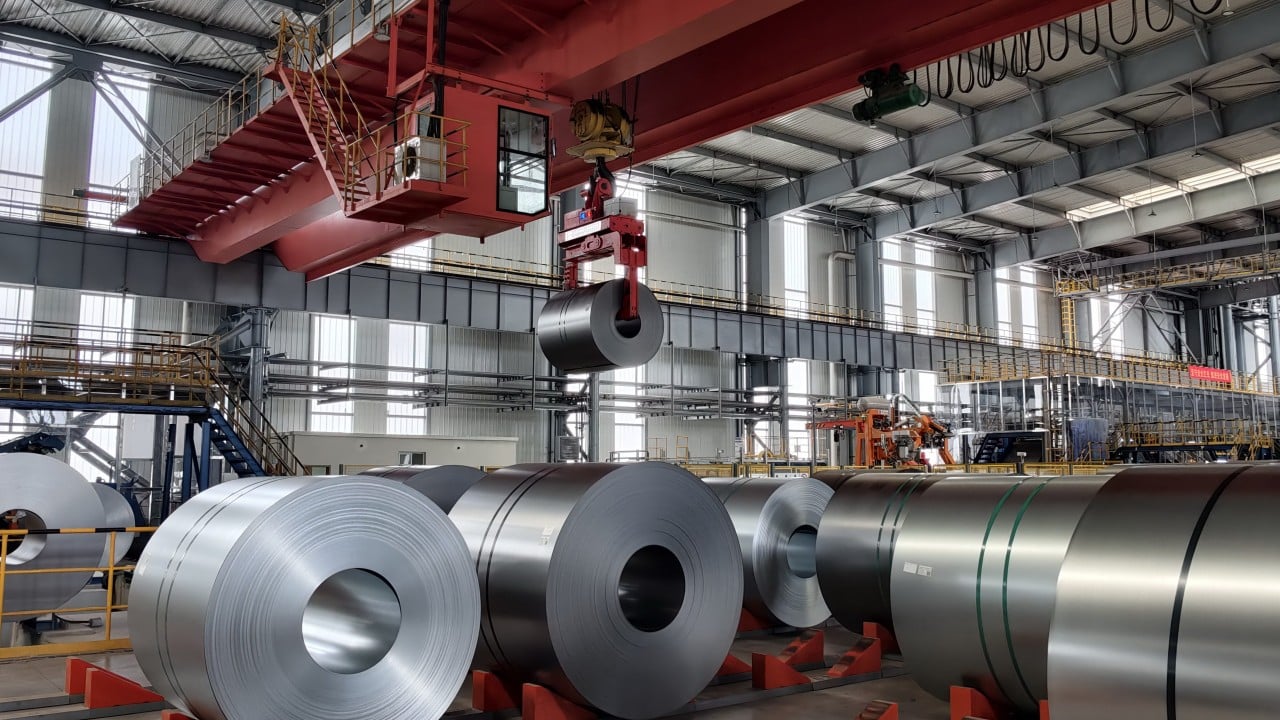
China's steel industry, the world's largest, confronts trade restrictions and shrinking margins while striving to avoid the pitfalls of the United States' rust belt, according to a recent article in the Communist Party's top theoretical journal, the Qiushi Journal. The piece, co-authored by the journal and the China Iron and Steel Association, warns that allowing the steel sector to contract in pursuit of redirecting resources to emerging industries could have dire consequences.
The rust belt, a once-industrialized region of the United States, saw severe de-industrialization in the late 20th century, leading to regional economic slowdowns, job losses, and stifled innovation.
China currently holds the top spot in crude-steel production for three decades, with output exceeding 960 million tonnes in 2025, accounting for more than half of the global total. The sector has transformed from a barely functional manufacturing base into a comprehensive system offering diverse products, superior quality, and competitive pricing.
However, the industry has faced increasing challenges domestically and internationally in recent years. From 2020 to June this year, Chinese steel products faced over 110 trade-remedy investigations. These trade restrictions have expanded from low-end construction steel to high-value-added grades for new-energy vehicles, aerospace, and intelligent applications.
Domestic steelmakers continue to experience depressed profit margins, with Washington's Section 337 investigation targeting carbon-steel and alloy-steel exports to the US exacerbating the issue. The investigation alleges that Chinese firms are deliberately dumping steel products to depress prices, dealing a direct blow to China's steel exports.
Industry experts predict that trade frictions in the steel sector will become the new normal, with developed economies deploying various instruments to shield their domestic steel industries. China's steelmakers face this evolving global business environment, with the UK's nationalization of British Steel serving as a concerning example.
Another significant challenge lies in the persistent export profit margins being squeezed due to domestic oversupply and aggressive price competition. In 2025, the average export price for Chinese conventional steel products stood at just US$694 per tonne, a 18% drop from 2020. This decline can be attributed to slowing infrastructure construction in Southeast Asia and the Middle East.
Some Chinese producers are even scheduling planned maintenance shutdowns to limit losses, reflecting the depressed profit margins faced by the domestic steel industry. Despite these challenges, the Qiushi article emphasizes that preserving foundational industries does not mean retaining outdated capacities. China's efforts to upgrade the steel industry signify a fundamental departure from the US experience, marking a crucial shift in the nation's approach to industrial development.
Written by urgent.news from South China Morning Post's reporting — not their text. Machine-written — may contain errors; check the original before relying on it.