Carbon crossroads: Chinese firms’ investments reshape Indonesia’s petrochemical ambitions
China is pouring investment into Indonesia’s petrochemical industry. But will its stricter environmental standards at home apply abroad? The post Carbon crossroads: Chinese firms’ investments reshape Indonesia’s petrochemical ambitions appeared first on Dialogue Earth .
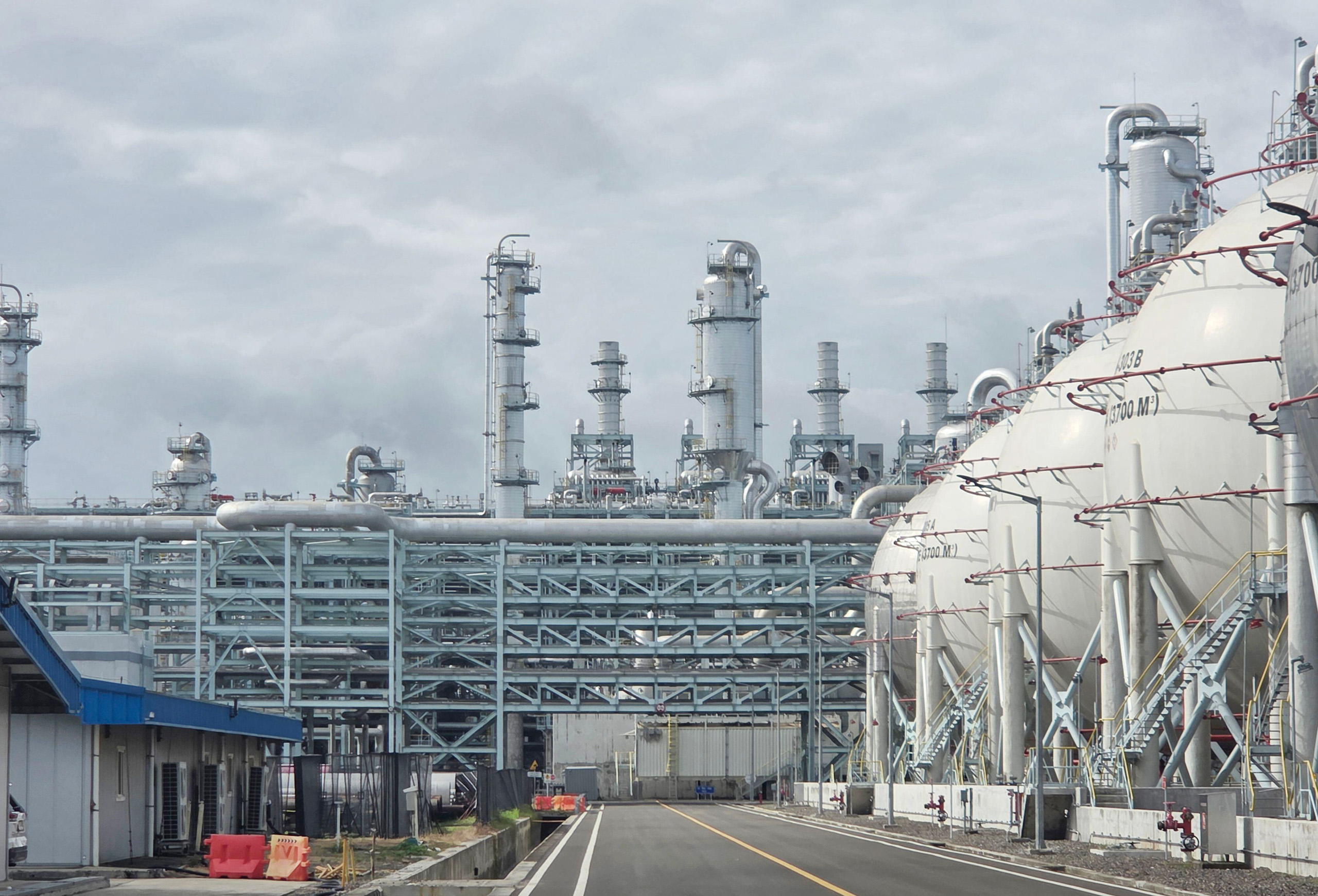
As China enforces stricter environmental regulations on its carbon-intensive industries, Chinese firms are pouring billions into petrochemical production in Indonesia. In June, Beijing launched a three-year drive to boost energy efficiency and cut emissions in key sectors, including oil refining and ethylene manufacturing. This campaign mandates inefficient plants to either upgrade or shut down, as the nation aims to peak carbon emissions by 2030 and hit carbon neutrality by 2060.
The petrochemical sector is a burgeoning part of Indonesia's economic ties with China, alongside investments in nickel processing, electric vehicles, and infrastructure under the Belt and Road Initiative (BRI). One of the most ambitious projects is a USD 6 billion integrated complex in North Kalimantan, a joint venture of Chinese firms, designed to add millions of tonnes of capacity for basic chemicals like ethylene and propylene.
These compounds are used to create plastic resins in food packaging, textiles, household goods, electronics, and automotive parts.
Chinese investments in Indonesia's petrochemical industry have surged, reaching USD 2.2 billion in the first quarter of 2026 and totaling USD 34.4 billion from 2021 to 2025, according to the Ministry of Investment and Downstream Industry. Mohammad Faisal, executive director of the Centre of Reform on Economics, notes that if the aim is to cater to Indonesia's domestic market, the investment is economically sound due to the country's growing demand for petrochemical products, which far exceeds domestic production.
If the objective is also to supply global markets, Indonesia may become an attractive low-cost production hub for China, especially as Western markets impose tariffs.
Economists emphasize that while Chinese investments can provide short-term employment relief by addressing rising production costs, the benefits may wane if global demand pivots towards lower-carbon alternatives. Bhima Yudhistira, executive director of the Centre of Economic and Law Studies, warns that such investments risk entrenching Indonesia in an extractive economy reliant on fossil imports, potentially worsening the oil and gas trade deficit and devaluing the rupiah.
Environmental concerns loom large, as the petrochemical sector is a significant source of global emissions due to its heavy reliance on fossil fuels for both feedstock and energy. Large-scale projects could complicate Indonesia's efforts to meet climate targets. Most petrochemicals are derived from oil-and-gas-based feedstocks like naphtha and natural gas liquids, requiring substantial heat and electricity, often sourced from coal-fired power plants.
Indonesia's government has been piloting decarbonisation initiatives within the petrochemical industry to mitigate these impacts.
Written by urgent.news from Dialogue Earth's reporting — not their text. Machine-written — may contain errors; check the original before relying on it.