Blast fishing destroys reefs. Underwater microphones can help detect it
When he went for a dive between the tiny islands off the coast of South Sulawesi, Indonesia, marine biologist and AI researcher Ben Williams could often hear as many as three fish bombs detonate. “But the thing is, because sounds travel so far underwater, the bombing is often happening quite far away,” he said. “So […]
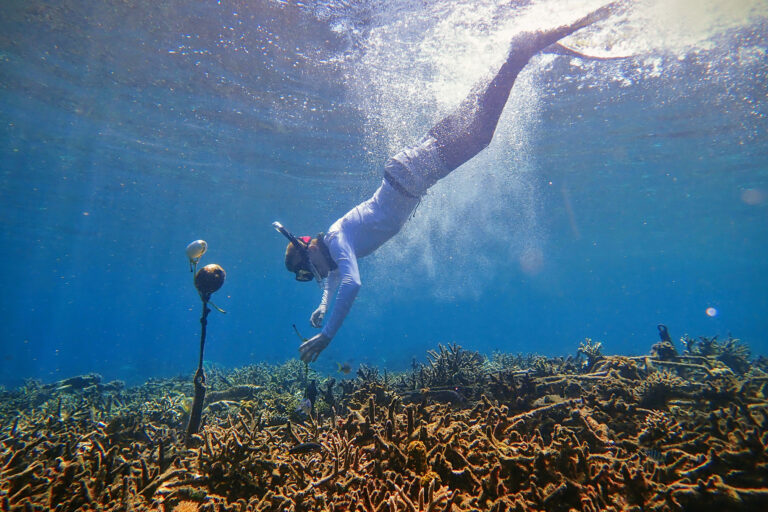
In the Spermonde Archipelago off the coast of South Sulawesi, Indonesia, marine biologist and AI researcher Ben Williams often heard the detonation of fish bombs during his dives. These explosives, used in the illegal blast fishing practice, caused the death of three-quarters of the coral reefs in the area between 1990 and 2022.
The sound of these explosions could travel far underwater, often reaching Williams even when the source was far away, making it difficult to pinpoint the exact location. The aftermath of blast fishing was similar to the devastation seen in the wreckage of a war zone, with underwater rubble scattered across the seabed. In 2013, local communities, conservation organizations, and scientists began collaborating on the Mars Coral Reef Restoration Project to restore the damaged reefs.
Williams joined researchers studying the effectiveness of these efforts in 2019, focusing on the marine soundscape of the Spermonde Archipelago. Healthy reefs were found to produce a lively, alien-like sound, while dead reefs produced a crackling noise, similar to a smoldering forest after a wildfire.
Written by urgent.news from Mongabay's reporting — not their text. Machine-written — may contain errors; check the original before relying on it.