AI boom counters Iran war energy shock, but risks mount, says IMF
AgenciesThe global economy has weathered the Iran war energy shock better than feared, International Monetary Fund Managing Director Kristalina Georgieva said on Tuesday, but she r...
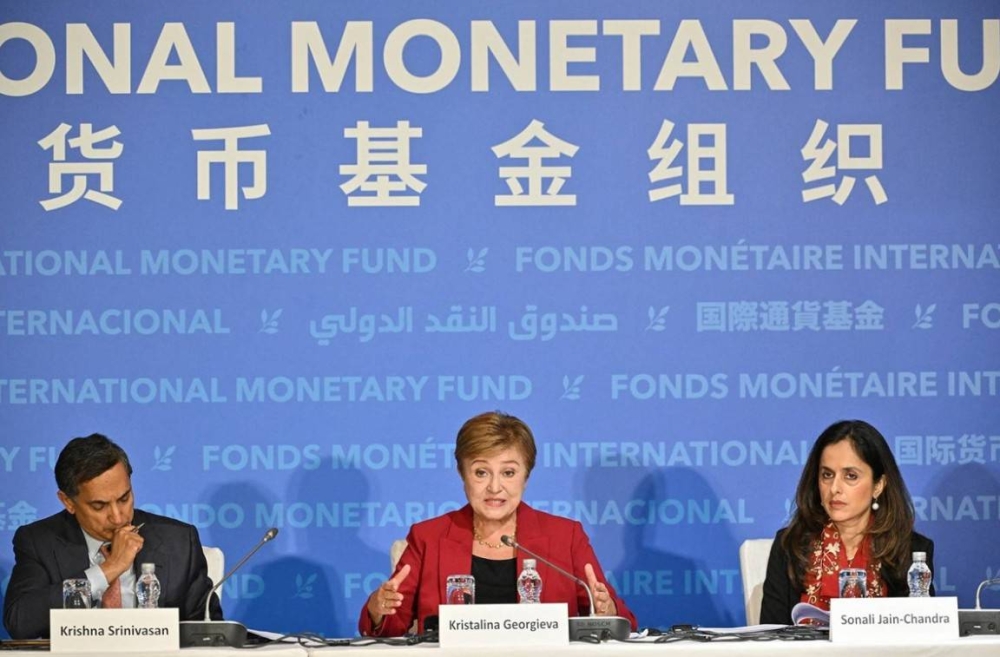
The global economy has managed the Iran war energy shock better than anticipated, according to International Monetary Fund Managing Director Kristalina Georgieva. However, she expressed concerns over deteriorating fiscal conditions in certain countries, as evidenced by rising bond yields and a slowdown in disinflation. Georgieva spoke ahead of the Group of 20 finance leaders meeting in Asheville, North Carolina.
She highlighted a "tug of war" between the negative Gulf energy supply shock and growth benefits from the artificial intelligence investment boom that is spreading beyond the US. While global risks are more balanced than in April, they still favor the downside due to increasing fiscal pressures and the possibility that central banks may need to keep tight monetary policy to curb inflation.
Despite this, Georgieva noted that global growth has been resilient against high debt levels, persistent inflation, and trade tensions, thanks to factors such as oil and gas reserve depletion, increased non-Gulf energy supplies, lower energy demand, expanding renewable energy capacity, and the return to coal power in some regions.
Moreover, AI investment in the US is bolstering corporate earnings and consumer spending. Other nations are also boosting data-center construction and AI hardware production. However, Georgieva cautioned against complacency among policymakers, emphasizing that the energy shock is far from resolved. A potential increase in oil prices could reignite inflation, compelling central banks to maintain a tight monetary stance and impacting debt service costs and economic activity.
All countries must address their fiscal issues and devise credible plans to ensure sustainable debt and deficit trajectories. Georgieva did not single out any specific countries for fiscal consolidation, but her remarks echo recent calls for the US to reduce its growing fiscal deficits, which would also help diminish US trade and current account deficits.
She urged central banks to remain laser-focused on their price stability mandate despite ongoing inflation risks, while also calling for a resolution of excess global imbalances that are driving trade tensions. Though she did not name particular countries, Georgieva has previously urged China to shift its growth strategy from export-driven to one focused on internal consumer demand.
She believes that a more balanced economy would strengthen the global economy, which would be beneficial for all. The IMF is currently refining its model for evaluating external balances and will delve deeper into the factors driving these imbalances in upcoming papers.
Written by urgent.news from Qatar Tribune Business's reporting — not their text. Machine-written — may contain errors; check the original before relying on it.