6,500-year-old human tooth found in Serbian museum collection
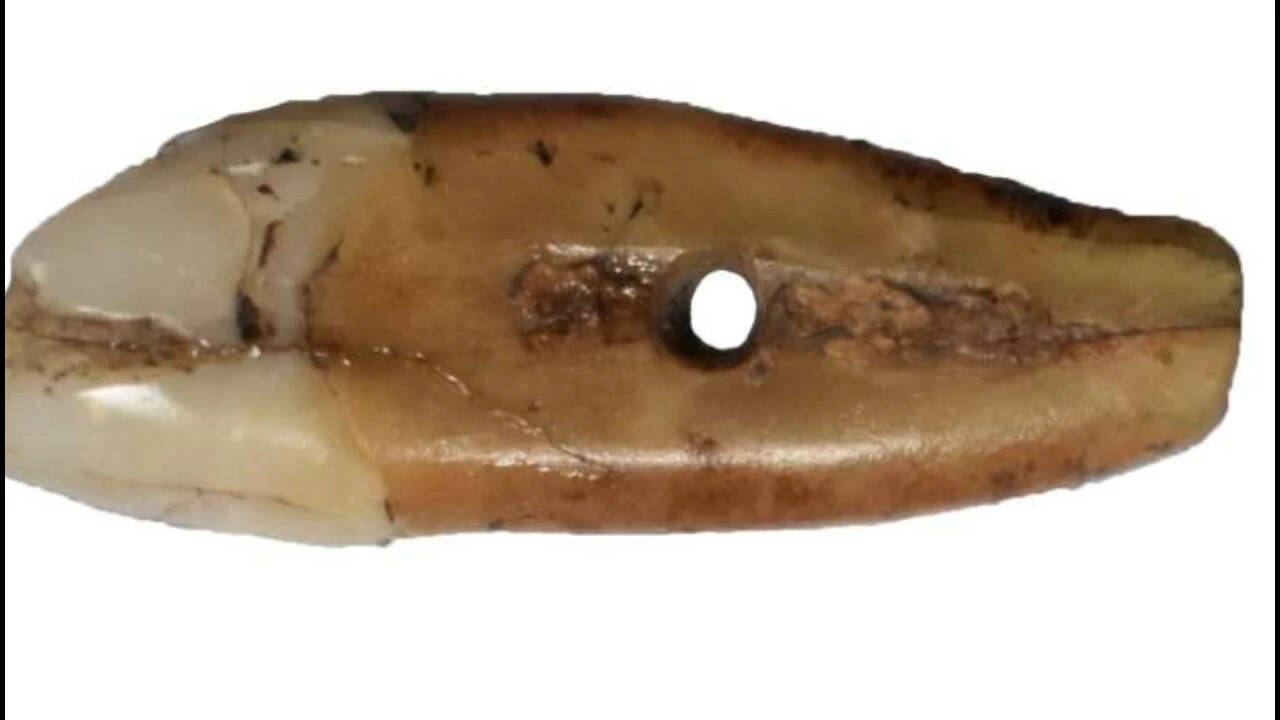
A 6,500-year-old human tooth, once overlooked in a Serbian museum collection, has provided archaeologists with intriguing insights into the customs of Neolithic people in the Balkans. Discovered at the Neolithic site of Jablanica, Serbia, the tooth was initially mistaken for a common bead, but upon closer examination, it was revealed to be a unique human tooth ornament.
Drilled through and threaded onto a cord, the tooth pendant suggests that the deceased may have been remembered or honored through this unusual form of personal adornment. The tooth, which belonged to a middle-aged adult, has been dated to around 4700 B.C., placing it firmly within the Neolithic period. The craftsmanship evident in the drilled hole and smooth surfaces indicate that the pendant was made with great care.
While the exact significance of this unusual ornament remains unclear, its discovery sheds light on the complex relationship between the living and the dead in Vinča society and challenges our understanding of ancient burial practices.
Written by urgent.news from Times of India's reporting — not their text. Machine-written — may contain errors; check the original before relying on it.