UPSC Mains Answer Practice — GS 3: digital financial services and AI in healthcare research (Week 168)
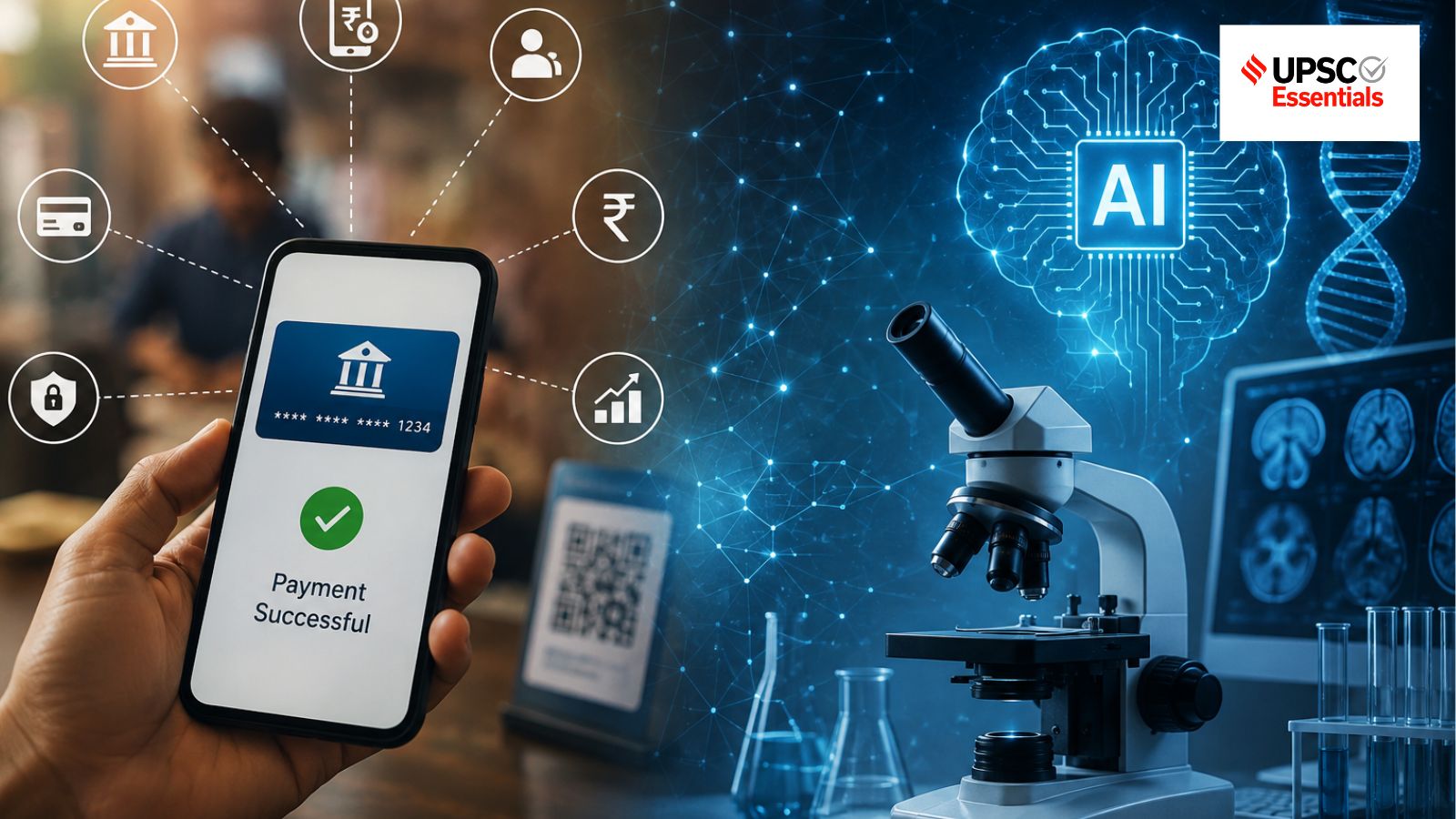
UPSC Mains Answer Practice — GS 3: digital financial services and AI in healthcare research (Week 168)
UPI's success demonstrates how zero-cost access can rapidly promote adoption of digital financial services, but may also raise concerns about long-term financial sustainability. Discuss.
The Unified Payments Interface (UPI) has become India's dominant digital payments system, with over 55 crore users and processing more than 24,000 crore transactions worth ₹314 lakh crore in 2025-26. Its success illustrates how eliminating transaction costs can significantly accelerate the adoption of digital financial services. By removing the Minimum Dollar Value (MDR), UPI made digital payments more appealing to small businesses and individuals, especially for low-value transactions.
Zero MDR made digital payments particularly attractive to small enterprises and merchants, enabling them to participate in the formal digital economy. The ease of use, rapid settlement, and interoperability of UPI allowed it to expand beyond metropolitan users to reach a much larger population. The government's support for low-value UPI transactions further incentivized widespread adoption.
However, the sustainability of this model presents a challenge. The zero-MDR approach creates a revenue-cost mismatch, as banks, payment service providers, and fintech startups incur significant infrastructure and operational costs without generating transaction fees. Concerns include the potential difficulty in maintaining government assistance as transaction volumes increase, the need for a stable income source to invest in cybersecurity, dependability, and capacity, and the government's goal of expanding UPI to rural and semi-urban India, which necessitates ongoing investment.
To ensure the long-term viability of UPI, India must find a balance between keeping the service free for ordinary users and establishing a properly calibrated, market-based revenue model for high-value transactions and commercial participants. This would allow UPI to remain inclusive, competitive, innovative, and financially viable as it continues to expand.
The success of UPI also highlights the potential of digital financial services in transforming the Indian economy, particularly in the realm of financial inclusion. As the country moves forward, it is crucial to address the sustainability challenges associated with maintaining a free-at-the-point-of-use digital infrastructure while ensuring its competitiveness and ability to support innovation.
Written by urgent.news from The Indian Express's reporting — not their text. Machine-written — may contain errors; check the original before relying on it.