UK envoy: Africa must close funding gap to commercialise bioeconomy research
NAIROBI, Kenya, Aug 25 — Africa’s bioeconomy is being held back less by a shortage of scientific ideas than by the failure to turn research into businesses capable of attracting…
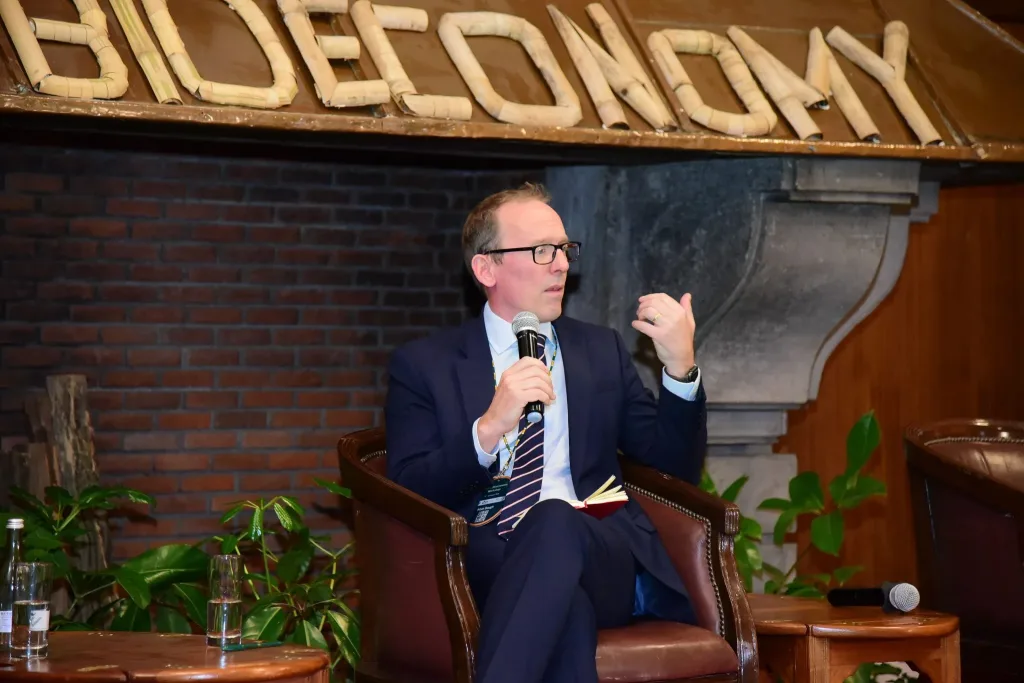
NAIROBI, Kenya — Africa's bioeconomy is constrained not by a lack of research ideas but by the inability to transform research into commercially viable businesses, according to British High Commissioner Matt Baugh. At the Africa Bioeconomy Workshop in Nairobi, Baugh highlighted that while Africa possesses growing research and innovation capabilities, it lacks essential financing pipelines, industry connections, and institutional frameworks to move discoveries from laboratories to commercial products and employment opportunities.
"The critical barrier we identified is transforming research into an investment-ready proposition," Baugh stated at the two-day event that gathered policymakers, scientists, investors, entrepreneurs, and development partners to discuss accelerating the commercialization of Africa's biological resources and scientific capabilities.
He emphasized that the bioeconomy holds significant potential for economic growth, but African countries must actively link universities and research institutions with government bodies, investors, and industry. Baugh noted that the UK's bioeconomy, valued at around £200 billion and supporting five million jobs, demonstrates the economic potential of connecting research with investment and industry.
To unlock greater potential, African governments need to create ecosystems that unite researchers, companies, investors, and incubators. He stressed the importance of attracting and unlocking capital, both for initial investments and for subsequent growth. The UK is supporting this effort in Kenya through initiatives like Forge Africa, an investment facility developed with Kenya's Green Investment Fund to help businesses become investment-ready and attract further private capital.
Forge aims to build a pipeline of Kenyan businesses capable of driving future economic growth. The UK's approach has shifted from traditional development assistance to partnerships aimed at mobilizing investment and fostering commercially sustainable enterprises. Kenya's State Department for Science, Research, and Innovation has also partnered with the UK to map the country's bioscience and bioeconomy sectors, providing policymakers with a clearer understanding of existing capabilities and potential investment opportunities.
However, Baugh emphasized that mapping the sector alone will not generate economic value unless institutions can move discoveries through commercialization. He advocated for a deliberate, systemic approach to building the bioeconomy ecosystem, involving government, academia, industry, and investors. He cited the decades-long partnership between the UK's Wellcome Trust and the Kenya Medical Research Institute as an example of how sustained international collaboration can enhance research capacity and build globally competitive institutions.
Baugh called on governments to eliminate barriers that hinder promising businesses from developing and scaling, including reducing bureaucracy, creating investment incentives, providing seed financing, and establishing regulatory systems that protect consumers without stifling innovation. Regulators should "enable, not disable innovation" while maintaining necessary standards for market access.
He stressed the importance of entrepreneurs willing to take risks, investors ready to back emerging technologies, and research institutions working closely with industry. Africa should avoid treating the bioeconomy as isolated national projects and instead pursue regional cooperation to combine research capabilities, production capacity, markets, and investment, creating larger value chains for bio-based products.
However, Baugh cautioned that national or regional strategies would have limited impact without the necessary institutional framework to implement them. "Strategies alone do not deliver change," he said. "Success also depends on the strategy, system, and institutional framework that turns that strategy into action." Development partners can support this process by providing capital, technical expertise, research partnerships, and access to international markets.
Written by urgent.news from Capital FM Kenya's reporting — not their text. Machine-written — may contain errors; check the original before relying on it.
This story
This is one outlet's version. Read the fullest account.
- Future of Energy Conference: Africa cannot industrialise in the dark – ECOWAS Bank President adomonline.com
- Future of Energy Conference: Africa cannot industrialise in the dark – ECOWAS Bank President myjoyonline.com
- Africa must define and build its own future - Veep Opoku-Agyemang tells African leaders 3news.com
- Mbeki says African leaders should be legitimately elected sabcnews.com