The Roman Space Telescope will reveal the universe in a way the JWST and Hubble cannot
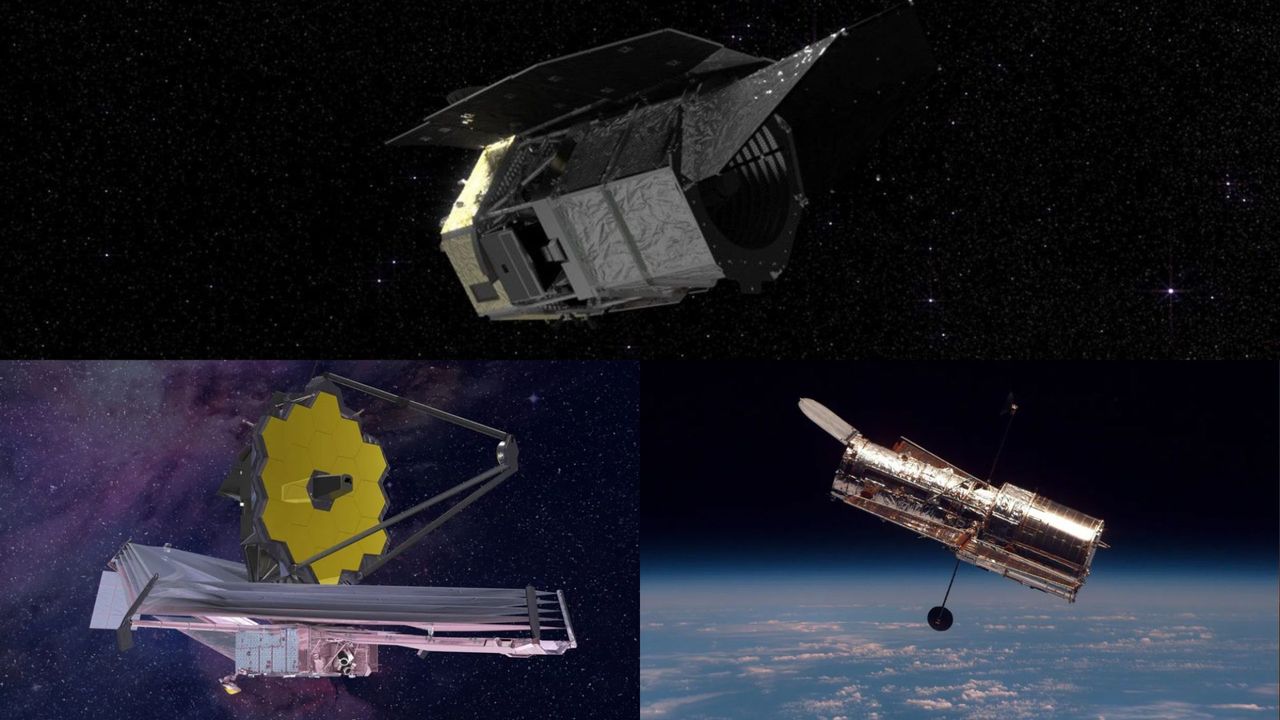
The Nancy Grace Roman Space Telescope, set to launch from NASA's Kennedy Space Center in Florida, promises a new level of astronomical exploration. Scheduled for an Aug. 30 launch aboard a SpaceX Falcon Heavy rocket, Roman will spend a five-year mission peering at the cosmos with two powerful instruments: the Wide-Field Instrument (WFI) and the Coronagraph Instrument.
Designed to tackle critical questions, Roman will help scientists unravel the mysteries of dark matter and dark energy, directly image exoplanets, and witness stellar explosions in supernovas. However, when compared to the James Webb Space Telescope (JWST) and the Hubble Space Telescope, Roman stands out in several ways. Firstly, Roman boasts a processing power that allows it to generate 500 terabytes of data annually, a significant increase over Hubble's 400 terabytes over 35 years.
Moreover, Roman's surveying capabilities are 1,000 times faster than Hubble's and can chart 200 times more sky in a single image. This capacity is due to Roman's primary mirror, which, although the same size as Hubble's, is 80% lighter. Additionally, Roman's Wide-Field Instrument (WFI) has a field of view 100 times greater than Hubble's infrared instrument, enabling Roman to detect light from a billion galaxies and other cosmic phenomena over its five-year mission.
Written by urgent.news from Space.com's reporting — not their text. Machine-written — may contain errors; check the original before relying on it.


