The future of work: Why AI won't replace jobs but will change how we work
Experts stress that the true corporate battleground is not job eradication, but the urgent cultivation of AI literacy and human orchestration.
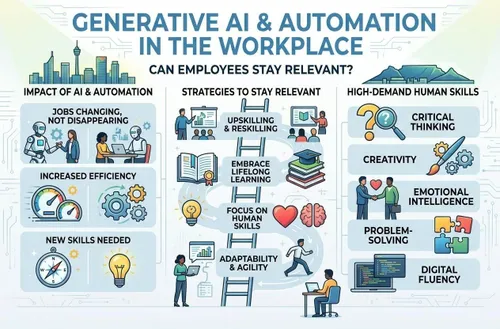
The evolving landscape of work is being reshaped by artificial intelligence, with experts emphasizing that this wave will not eliminate jobs but rather redefine the nature of employment. South African organizations are increasingly recognizing the need to adapt to this change, leveraging initiatives like the International AI Readiness Accelerator to develop more advanced systems.
While certain sectors, such as hospitality, have started to incorporate AI into their operations, the focus is on enhancing rather than replacing human roles. AI is seen as a tool to streamline processes, improve personalized services, and foster meaningful interactions that build customer loyalty. Sectors like banking, insurance, financial services, call centres, professional services, and healthcare are among those most likely to be impacted by AI's capabilities.
While the nature of employment may change, many roles are expected to become more complex, requiring professionals to focus on judgement, strategy, relationships, and complex decision-making. The biggest hurdle to AI adoption often lies in an organization's readiness to support the technology, including modernizing legacy systems, ensuring data quality, and enhancing security and integration capabilities.
To effectively navigate this transformation, individuals must become proficient in evaluating AI-generated output, understanding the underlying data, and recognizing trends, biases, and errors. Collaboration between computer scientists, industry experts, and professionals from various fields is crucial to building a workforce capable of harnessing AI's potential while avoiding displacement.
Written by urgent.news from IOL's reporting — not their text. Machine-written — may contain errors; check the original before relying on it.