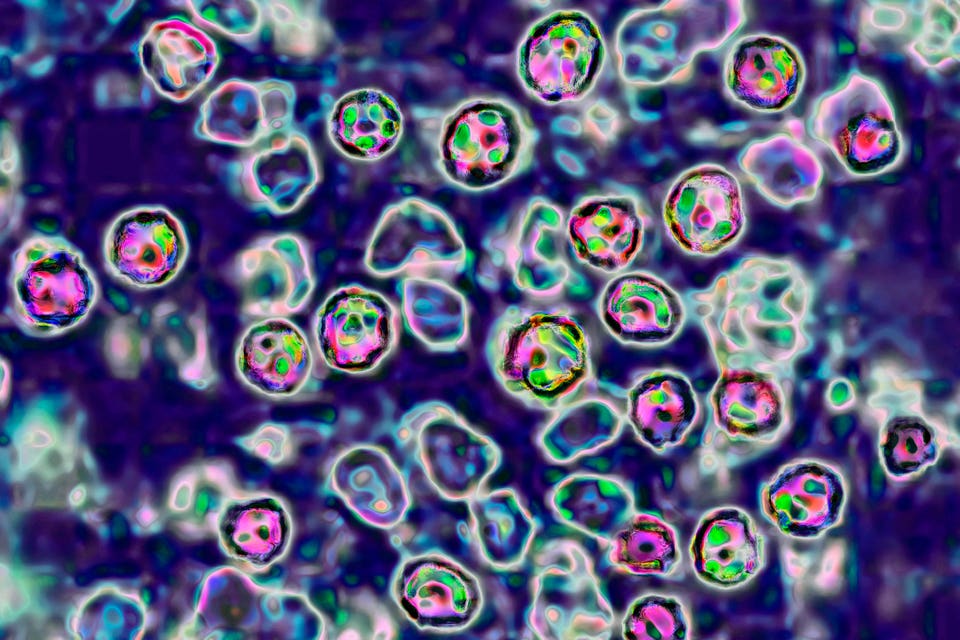
'Teacher cells' coated with tumor fragments train T cells to attack cancer in lab tests
The immune system possesses legions of T cells that, if primed, could hunt down and destroy tumors. Now, a UC San Francisco team has invented a way to do this by combining immune cells grown in the lab with samples from a patient's tumor. Like giving a scent to a hound dog, it shows the immune system how to go after the cancer.

Immune cells known as T cells have the potential to identify and eliminate tumors when properly trained. Researchers at the University of California, San Francisco (UCSF) have developed a method to train T cells to target cancer by combining immune cells grown in a lab with samples from a patient's tumor. To overcome the challenge of obtaining rare dendritic cells from cancer patients, the UCSF team created dendritic cells from induced pluripotent stem cells (iPSCs).
They stripped the iPSCs of identifying information, matured them into dendritic cells, and then coated them with tiny membrane bubbles derived from tumor cells. These dendritic cells were able to train T cells to recognize and attack tumors in laboratory experiments using samples and cells from patients with leukemia and ovarian cancer.
In mouse models, the treatment also slowed tumor growth. The researchers believe that this combination of iPSC-derived dendritic cells with patients' own tumor signature could potentially work in the clinic. By breaking apart the membranes of tumor cells and forming them into tiny bubbles, the UCSF team coated the dendritic cells with tiny pieces of the patient's tumor.
This made the dendritic cells appear more like the patient's own cells while carrying a wide range of cancer targets, potentially making it harder for tumors to evade detection. The team demonstrated that the tumor membrane integrated into the dendritic cells and that the cells could prompt T cells to find and fight cancer. They tested the approach in Petri dishes using tumor samples and T cells from the same patients and found that it slowed the growth of human cancer cells in mice.
The method could be particularly useful for patients who have undergone surgery to remove tumors but still face a high risk of recurrence. The researchers envision dressing artificial dendritic cells with pieces of the biopsy, placing them back in the patient to educate T cells, and allowing the T cells to kill any remaining cancer cells in the body, potentially eliminating the risk of the tumor returning.
Written by urgent.news from Medical Xpress's reporting — not their text. Machine-written — may contain errors; check the original before relying on it.