PUB trial aims to halve energy used to pre-treat seawater for desalination
The trial is assessing whether ceramic membrane technology developed by Japanese firm Meiden can replace the three-stage pre-treatment process currently used to remove contaminants from seawater.
Singapore is piloting a new method for preparing seawater for desalination that could cut the energy required in the pre-treatment process by half. The trial at Tuas is examining whether ceramic membrane technology developed by Japanese firm Meiden can replace the conventional three-stage pre-treatment method. Singapore's national water agency, PUB, said the successful and cost-effective implementation of this technology could lead to its wider deployment in desalination plants across the island.
Desalination of seawater involves several stages, beginning with the removal of contaminants like dirt, algae, and grease to prevent clogging or fouling of the membranes used in later treatment. Currently, this pre-treatment process comprises three stages. The ceramic membrane system being trialed aims to integrate these stages into a single, more compact step.
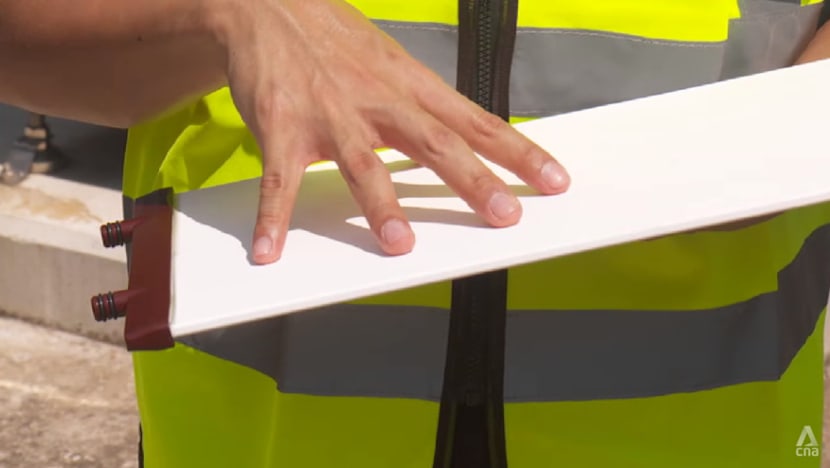
Dr Gurdev Singh, PUB's chief engineering and technology officer, stated that the new system could save 50% of the energy needed for seawater pre-treatment while maintaining the same high quality of the treated water. The ceramic membrane system, which consists of 24,000 sheets, can produce up to 6 million gallons of filtrate water daily for downstream treatment processes.
The trial, a collaboration between PUB, Meiden Singapore, and the National Research Foundation Singapore, began in June and will run for approximately six months to evaluate its stability and energy-saving potential. During the process, seawater flows over sheets of porous ceramic membranes, with channels in each sheet drawing water through the ceramic material, trapping contaminants on its surface.
PUB noted that ceramic membranes are more robust than conventional polymeric membranes and can withstand challenging seawater conditions, such as algal blooms or oil spills. While ceramic membranes are more expensive to install than the currently used polymeric membranes, their longer lifespan could offset the higher initial cost.
The ceramic membranes are expected to last about 20 years, compared to 5 to 7 years for polymeric membranes. Meiden anticipates that the additional initial expense will be recouped within about a decade, after which the system could generate savings for the remainder of its operational life.
Written by urgent.news from Channel News Asia's reporting — not their text. Machine-written — may contain errors; check the original before relying on it.
Also reported by 1 other outlet
- PUB trial aims to halve energy used to pre-treat seawater for desalination channelnewsasia.com