NASA’s $4 billion Roman telescope to map 2 billion galaxies and uncover secrets of the universe
This Sunday marks the launch of Nasa's Nancy Grace Roman Space Telescope, a groundbreaking observatory aimed at enhancing our understanding of dark energy and dark matter in the universe. Additionally, it will explore exoplanets beyond our solar system. By conducting expansive wide-field surveys, it will work alongside Hubble and James Webb to map billions of galaxies and cosmic structures,…
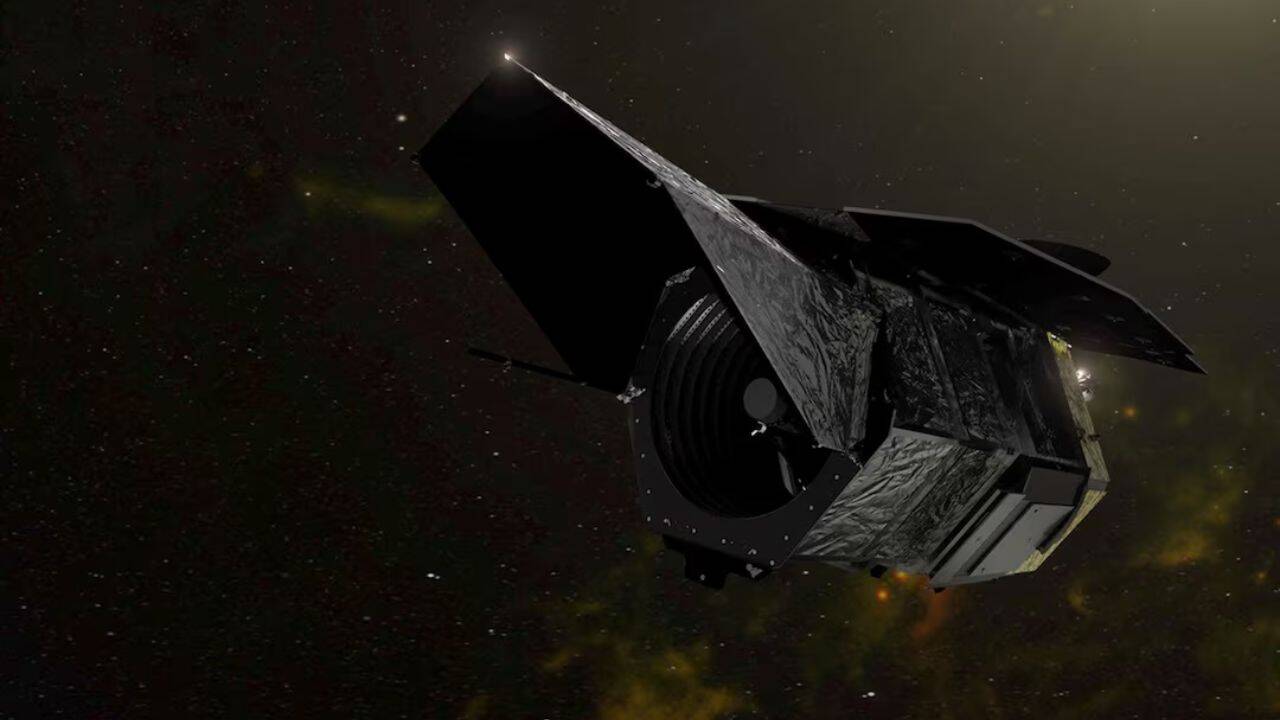
NASA's $4 billion Nancy Grace Roman Space Telescope is set to embark on a mission to map an unprecedented two billion galaxies and unravel the mysteries of dark energy, dark matter, and distant planets. The Roman telescope will launch on Sunday aboard a SpaceX Falcon Heavy rocket from NASA's Kennedy Space Center in Florida.
The Roman Space Telescope will complement the capabilities of Hubble and James Webb space telescopes by conducting wide-field surveys of the universe. Its primary mission is to survey over two billion galaxies, providing scientists with crucial insights into the universe's expansion, galaxy formation, and the nature of dark matter and dark energy.
Unlike the Hubble telescope, which focuses on detailed observations of small areas, the Roman telescope boasts a much wider field of view. This wider coverage allows the telescope to capture vast sections of the sky in a single observation, making it a powerful tool for large-scale surveys.
NASA's senior project scientist, Julie McEnery, expressed excitement about the telescope's potential to discover "weird, rare, and unusual" phenomena in the universe. The Roman telescope's main instrument combines high sensitivity with the ability to survey large areas of the sky quickly and efficiently, enabling scientists to track the formation and evolution of stars, galaxies, and clusters of galaxies, as well as measure the universe's expansion over time.
The telescope's observations will help scientists unravel the nature of dark energy and dark matter, two of the most puzzling aspects of our universe. By studying the gravitational lensing caused by dark matter, Roman will map its distribution and shed light on its influence on galaxy formation.
Beyond its scientific objectives, the Roman Space Telescope will also search for planets outside our solar system. By monitoring numerous stars and detecting brief changes in their brightness, the telescope will help identify distant planets orbiting other stars.
It is important to note that the Roman Space Telescope is not intended to replace Hubble or James Webb. Instead, it will complement these existing telescopes by focusing on large-scale surveys rather than providing highly detailed observations of small regions. The Roman telescope's combination of high-resolution imaging with a wide field of view allows scientists to efficiently survey vast areas of the sky, providing both detailed and large-scale data for understanding the evolution of the universe.
Written by urgent.news from Times of India's reporting — not their text. Machine-written — may contain errors; check the original before relying on it.
This story
This is one outlet's version. Read the fullest account.
- New NASA telescope to probe dark energy, dark matter and exoplanets channelnewsasia.com