Meet Leon Wang, teen who found 2 drugs that may reduce Alzheimer's damage
A young student's research explored existing medicines for Alzheimer's disease protection. He identified two drugs, nintedanib and pirfenidone, showing protective effects in cell models. This drug repurposing approach offers a faster, less expensive research starting point. Wang's work highlights targeting APOE4 and brain blood vessel cell changes. His findings suggest further investigation into…
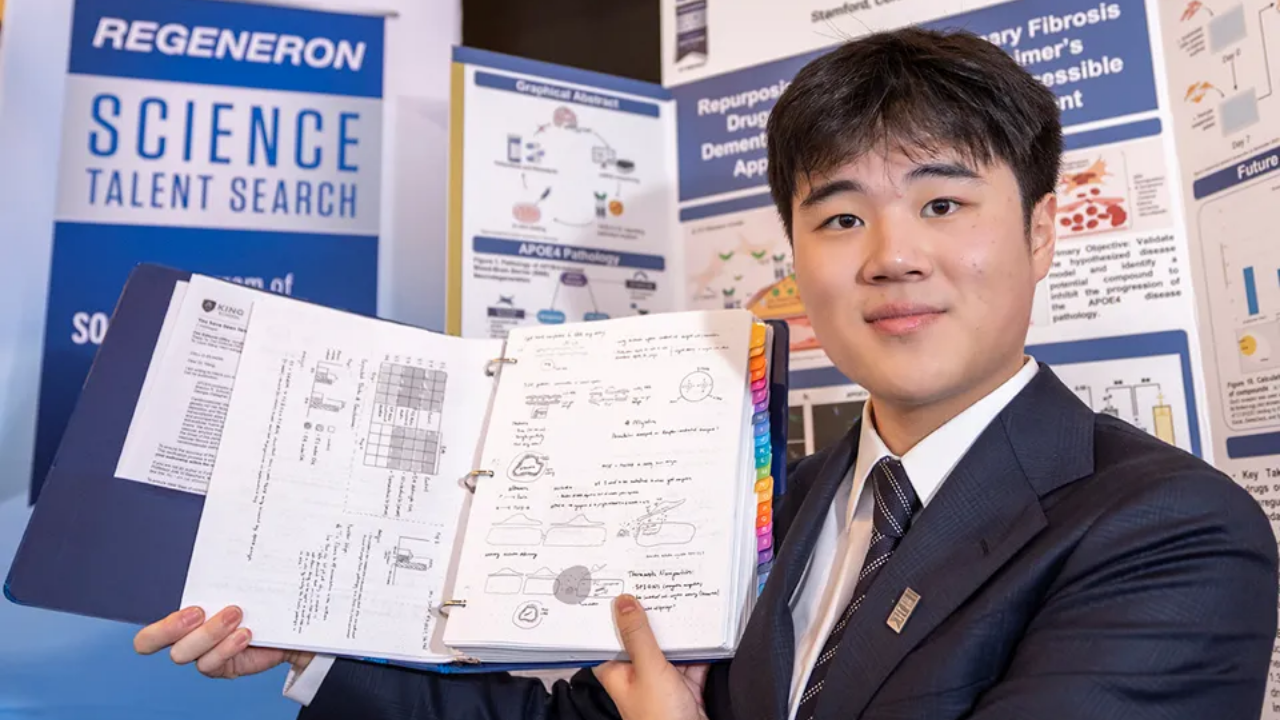
Seventeen-year-old Connecticut student Leon Wang has attracted attention for his project investigating whether FDA-approved drugs could help protect brain cells from damage linked to Alzheimer's disease. According to the Society for Science, Wang's research earned him eighth place and a $60,000 award at the 2026 Regeneron Science Talent Search.
His study focused on APOE4, a gene variant linked to a higher risk of developing Alzheimer's, and examined how it may affect brain blood vessel cells. Wang identified two drugs, nintedanib and pirfenidone, which are already approved for treating lung scarring and have been shown to reduce TGFβ-related activity. He tested these drugs in lab-grown versions of brain blood vessel cells and found that they reduced signs of cellular damage associated with an overactive TGFβ pathway.
However, he noted that this does not prove the medicines are now proven treatments for Alzheimer's disease, and further research would be needed. Wang's project highlights the potential of repurposing existing drugs and emphasizes the importance of understanding the role of APOE4 in Alzheimer's disease.
Written by urgent.news from Times of India's reporting — not their text. Machine-written — may contain errors; check the original before relying on it.