Ireland's famous 'Kerry cow' bones reidentified as ancient bear and wild boar
Ancient animal bones from Ferriters Cove are now identified as bear and wild boar. This reclassification challenges decades of evidence for early farming in Ireland. Previously thought to be cattle, these remains are now understood differently. Modern scientific techniques revealed the true identity of these ancient specimens. This discovery prompts a reconsideration of Ireland's prehistoric…
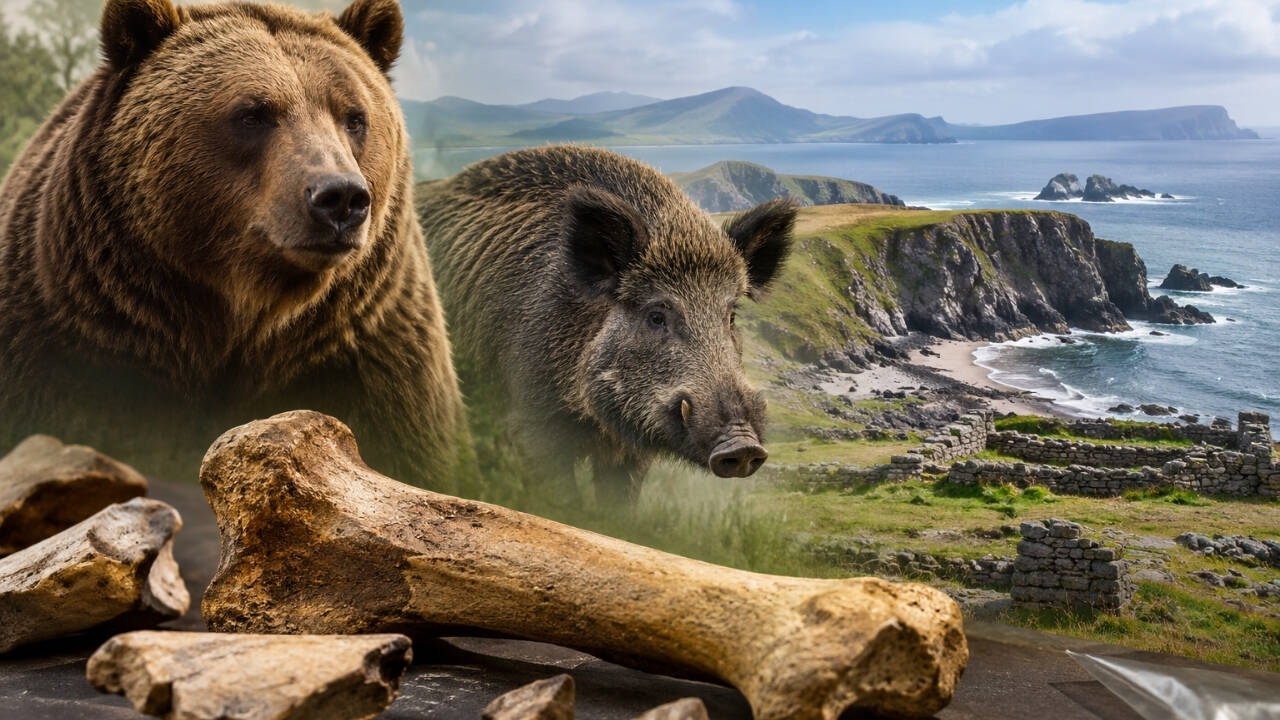
For over three decades, animal bones discovered in Ireland's Ferriter's Cove were considered some of the earliest evidence of farming on the island. However, new research from University College Dublin (UCD) and University College Cork has overturned this interpretation. The bones, previously identified as cattle, have been reassigned to belong to a bear and wild boar.
This finding challenges the traditional understanding of Ireland's transition from hunter-gatherer societies to farming communities. The original identification was based on the physical appearance of the bones, but modern Zooarchaeology by Mass Spectrometry (ZooMS) revealed the actual animal species. The discovery highlights how advanced scientific techniques can provide new insights from archaeological remains that were studied decades ago.
The bones, found during excavations in the 1980s and 1990s, were initially significant as they suggested early interaction between Mesolithic communities and Neolithic farming societies. The new findings mean there is currently no archaeological evidence suggesting domesticated cattle or early farming communities reached Ireland before 4000 B.C.E.
This shift could require a reevaluation of the timeline for the transition from hunting and gathering to farming on the island. The mystery of the "Kerry cow" bones stems from their discovery in the 1980s and 1990s at Ferriter's Cove, a small bay on the Dingle Peninsula in County Kerry. Initially, the bones were thought to be cattle, indicating potential contact between Ireland's Mesolithic communities and Neolithic farming societies.
However, the new analysis shows that the "Kerry cow" remains are actually from a bear and wild boar, changing the narrative of Ireland's prehistoric history.
Written by urgent.news from Times of India's reporting — not their text. Machine-written — may contain errors; check the original before relying on it.