Inside the amphibious history and identity of Tenochtitlán-Mexico City
Over the course of more than five centuries, Tenochtitlán transformed from an aquatic land to the amphibious identity of modern Mexico City. The post Inside the amphibious history and identity of Tenochtitlán-Mexico City appeared first on Mexico News Daily
Mexico City, known in pre-Hispanic times as Tenochtitlán, has long been a captivating and multicultural metropolis. Although modern Mexico City displays diverse hotspots, languages and cultural exchanges, it maintains a connection to its past. Prior to Spanish colonization, Tenochtitlán was already an essential city in the Americas and remained so after the conquest.
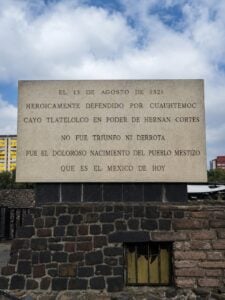
A commemorative plaque at Tlatelolco states, "On August 13, 1521, heroically defended by Cuauhtémoc, Tlatelolco fell to Hernán Cortés. It was neither a triumph nor a defeat; it was the painful birth of the mestizo people that is the Mexico of today."
During the rainy season, Mexico City’s inhabitants face unique weather conditions; however, the city's architecture and infrastructure have evolved over time. The foundation of Tenochtitlán, an island settlement in a lake, necessitated the development of innovative technologies, including chinampas and a complex freshwater system.
These conditions enabled the cultivation of crops, fostering trade between neighborhoods and fostering harmony between humans and nature. 600 years ago, what we now consider "bad weather" was welcomed: storms that promoted crop growth and increased lake levels.
Extensive research by Drs. Antonio Rubial and Jessica Ramírez revealed that Tenochtitlán, despite its conquest by the Spanish, possessed an impressive organization that made it one of the most desirable urban centers in the Americas for the Spanish. Unlike Lima and Cuzco, Tenochtitlán's integration of a Spanish center and an Indigenous periphery created a dual society within the same space.
The city's unique grid layout, featuring hierarchically planned neighborhoods, markets, schools, and workshops, facilitated transport via canals and causeways, stitching the city together.
However, this amphibious city has undergone significant transformations since the Spanish conquest. The dramatic shift in ecosystem dynamics resulted from massive logging for colonial construction, which weakened the soil and altered the landscape. A crucial dam, the Nezahualcóyotl dike, was destroyed, leading to a disruption in water management and a subsequent change in food production.
Despite these drastic changes, elements of Tenochtitlán's identity persist. Chinampas still survive on the city's outskirts, markets brim with diverse languages, and the city still thrives amidst urban expansion.
Written by urgent.news from Mexico News Daily's reporting — not their text. Machine-written — may contain errors; check the original before relying on it.