India Drops Colour-Coded Food Warning Labels After Industry Pushback; Supreme Court Scrutinises Move
India's food regulator has abandoned a push for colour-coded health warnings on the front of packaged foods after resistance from major consumer companies, even as public health activists seek greater transparency over sugar, salt and fat content. The Food Safety and Standards Authority of India (FSSAI) said in August that warning labels did not account for the stronger flavours common in Indian…
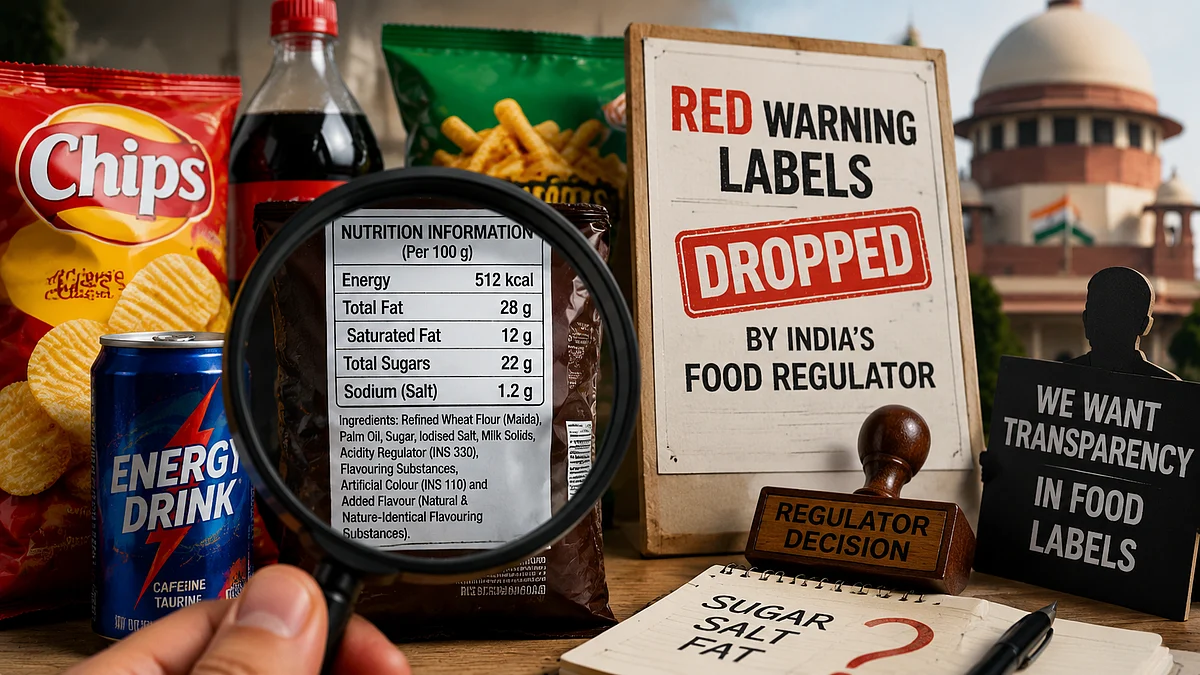
India's food regulator has abandoned plans for colour-coded food warning labels following pushback from major consumer companies, according to wire service reports. The Food Safety and Standards Authority of India (FSSAI) previously proposed a black-and-white table showing sugar, fat, and salt content instead of colour-coded labels, citing cultural differences in flavor intensity compared to Western cuisine.
However, the Supreme Court is now examining the decision after a petition by public health activists. A recent study predicts that 450 million Indians could be obese or overweight by 2050, prompting health experts to argue that clearer labels could encourage healthier eating habits. While about 20 countries have adopted front-of-pack labels with red warnings for high sugar levels and green indicators for low fat content, industry executives at a recent FSSAI meeting argued that warning labels are confusing and ineffective.
They urged authorities to focus on portion control and emphasized that consumers already familiar with ingredient lists would not be significantly informed by symbols or icons. Coca-Cola India's senior executive stated that warning labels are "very simplistic" and would not change consumer behavior. Industry groups like PepsiCo and Nestle have voluntarily introduced traffic-light-style labels in some markets, but oppose red warning labels on Indian products, fearing they would cover too much of the packaging.
Written by urgent.news from Free Press Journal's reporting — not their text. Machine-written — may contain errors; check the original before relying on it.