In Bhutan, a philosophy of happiness guides a push for food self-sufficiency
Bhutan is a Himalayan kingdom sandwiched between China and India. Forty percent of its 800,000 citizens work in the agriculture sector. The mountainous country is famous for its breathtaking landscapes and its unique policy of “Gross National Happiness,” instituted in 1972 by Jigme Singye Wangchuck, the fourth king of Bhutan. My guests on the Newscast […]
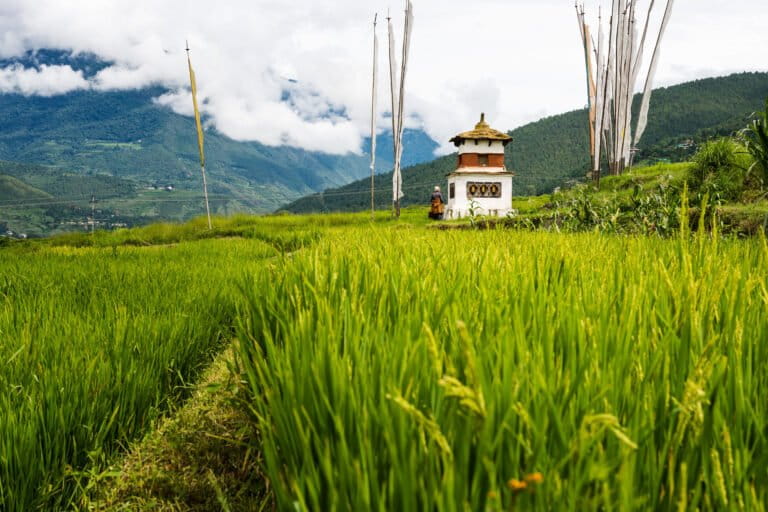
Bhutan, a Himalayan kingdom nestled between China and India, is renowned for its breathtaking landscapes and its distinctive policy of "Gross National Happiness." This philosophy, established in 1972 by the fourth king of Bhutan, Jigme Singye Wangchuck, serves as the foundation of the nation's food system and its ambitious plan for achieving full food self-sufficiency by 2029.
Bleu Tshering Dorji, a celebrated chef and restaurateur in Bhutan's capital, Thimpu, emphasizes that the country's food system extends beyond mere food production. It encompasses the preservation of landscapes, communities, and cultural heritage. Dorji owns two restaurants in Thimpu and highlights the unique challenges farmers face in this landlocked, mountainous nation.
One significant challenge is the limited arable land. With only a small percentage of Bhutan's terrain suitable for agriculture, farmers must make the most of the land they have. Another issue is the scarcity of labor as young people migrate away from rural areas, where farming remains the primary occupation. Dorji also points out the difficulties posed by wildlife conflict, unpredictable weather patterns, and the logistical challenge of delivering produce to markets.
The outflow of young Bhutanese from rural regions, where the majority of the population resides, further complicates efforts to maintain a robust agricultural workforce. Dorji stresses the importance of inspiring younger generations to view farming as a viable and fulfilling career path, thereby supporting Bhutan's vision of achieving full food self-sufficiency by 2029.
Written by urgent.news from Mongabay's reporting — not their text. Machine-written — may contain errors; check the original before relying on it.