IMANI calls for shift from natural resource dependence to diversified economy
The IMANI Centre for Policy and Education has urged the government to move Ghana away from its heavy dependence on natural resources and raw-material exports and pursue a more productive and diversified economic model. Economist Professor Godfred Bokpin said economies that rely extensively on natural resources struggle to achieve sustainable growth and development, arguing that Ghana must rethink…
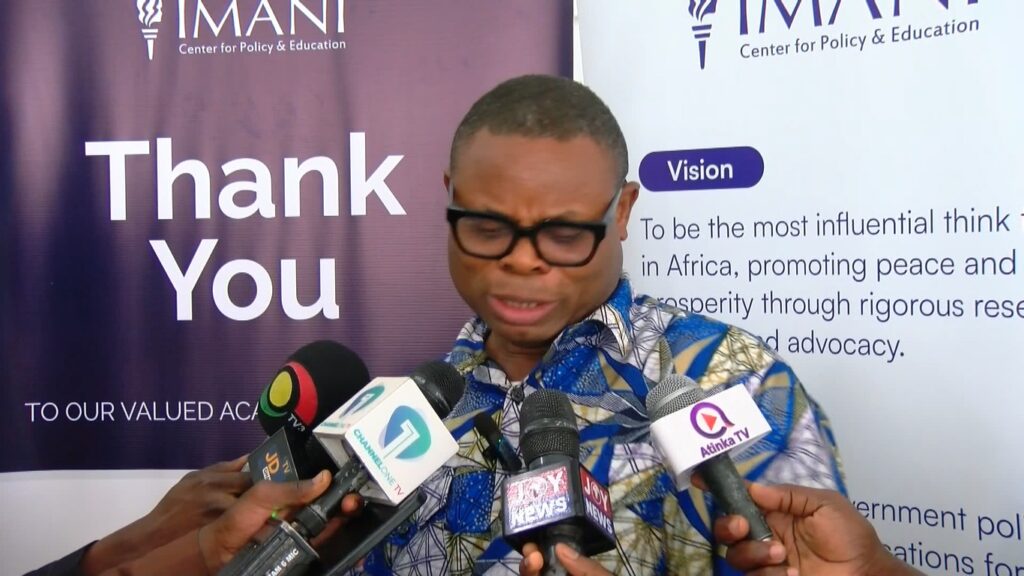
The IMANI Centre for Policy and Education has called on the government to transition Ghana away from its heavy reliance on natural resources and the export of raw materials, advocating for a more robust and diversified economic approach. Economist Professor Godfred Bokpin highlighted that economies excessively dependent on natural resources face significant obstacles in attaining sustainable growth and development.
Addressing the 2026 Students and Young Professionals African Leadership Academy organized by IMANI, Professor Bokpin asserted that no country has successfully realized sustainable development by solely depending on natural-resource growth. He stressed that Africa's historical integration into the global economy has predominantly seen countries concentrate on producing and exporting raw materials, thereby restricting their capacity to establish resilient and varied economies.
IMANI President Franklin Cudjoe criticized the country's policy coherence, alleging that misaligned government policies obstruct progress towards a resilient economy. He pointed to public financial management reforms and fiscal responsibility measures as examples, which, according to him, have not consistently achieved their intended outcomes due to inconsistent implementation.
Cudjoe emphasized the necessity for stronger, locally-driven policies and better coordination among government interventions. Participants at the leadership academy proposed various solutions to Ghana's economic challenges, such as offering tax exemptions to startups to foster capital accumulation. The academy underscored the importance of investing in evidence-based policymaking, suggesting that government decisions should be based on empirical research and statistical analysis to develop interventions with measurable impacts.
IMANI's vision for Africa's economic future revolves around productivity, innovation, sound policies, and the transformation of ideas into sustainable economic opportunities, advocating for a shift from raw-material extraction and exportation towards developing industries and institutions that can support sustainable growth and resilience.
Written by urgent.news from Joy Business's reporting — not their text. Machine-written — may contain errors; check the original before relying on it.
This story
This is one outlet's version. Read the fullest account.