Humanoid Robot Breaks Usain Bolt’s 100-Meter Record
Humanoid robotics has once again achieved a milestone that, until a few years ago, seemed confined to science fiction. Chinese robot Tiangong Ultra completed the 100-meter sprint in 9.39 seconds during a preliminary race at the second World Humanoid Robot Games in Beijing, surpassing the human world record of 9.58 seconds set by Jamaican sprinter […]
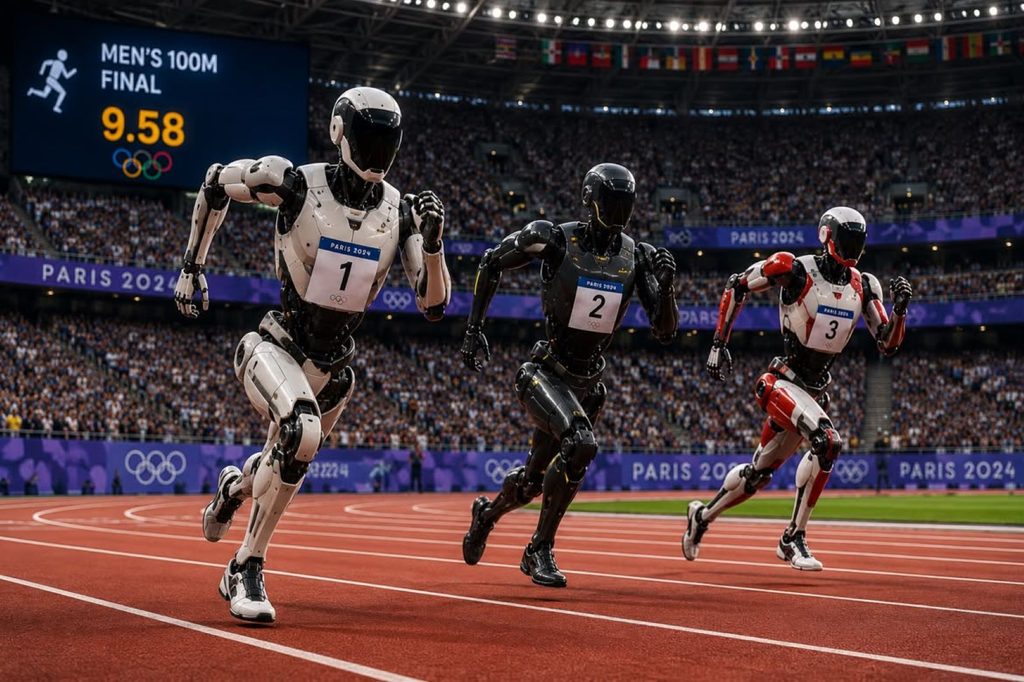
A humanoid robot named Tiangong Ultra has broken the 100-meter sprint record, completing the distance in just 9.39 seconds. This achievement surpasses the previous record set by Usain Bolt, who ran the 100 meters in 9.58 seconds at the 2009 World Athletics Championships in Berlin. The record-breaking event took place on August 22 at the second World Humanoid Robot Games in Beijing, where robots from various countries showcased their physical, technological, and artificial intelligence capabilities.
Tiangong Ultra, part of the Tianzhuo team, not only achieved the new record but also improved upon its time from the previous edition of the games, which was 21.50 seconds. The robot's performance is significant as it demonstrates the potential of bipedal locomotion and the ability of these machines to coordinate movements requiring balance, power, and speed.
Tiangong Ultra was not the only robot to beat Bolt's record; Shandian, developed by technology company Honor, finished second with a time of 9.47 seconds. A robot from Unitree secured third place with a time of 12.41 seconds. The competition highlighted the challenges faced by humanoid robots in maintaining high speeds while ensuring balance and coordination.
Despite these achievements, the record-breaking performance should not be considered an official human athletics record, as it was achieved in a robot competition. However, the development of bipedal locomotion in these machines is a major step forward, as running on two legs is one of the most complex challenges in robotics. The World Humanoid Robot Games, which took place from August 22 to 26, 2026, featured over 2,000 robots from 666 teams representing 16 countries competing in 51 events.
These competitions not only showcase the future of humanoid robots but also serve as technological laboratories, testing solutions that could eventually be applied in various real-world environments, including factories, warehouses, hospitals, and other settings.
Written by urgent.news from Colombia One's reporting — not their text. Machine-written — may contain errors; check the original before relying on it.