Florida scientists found mosquito blood meals could help locate hidden pythons
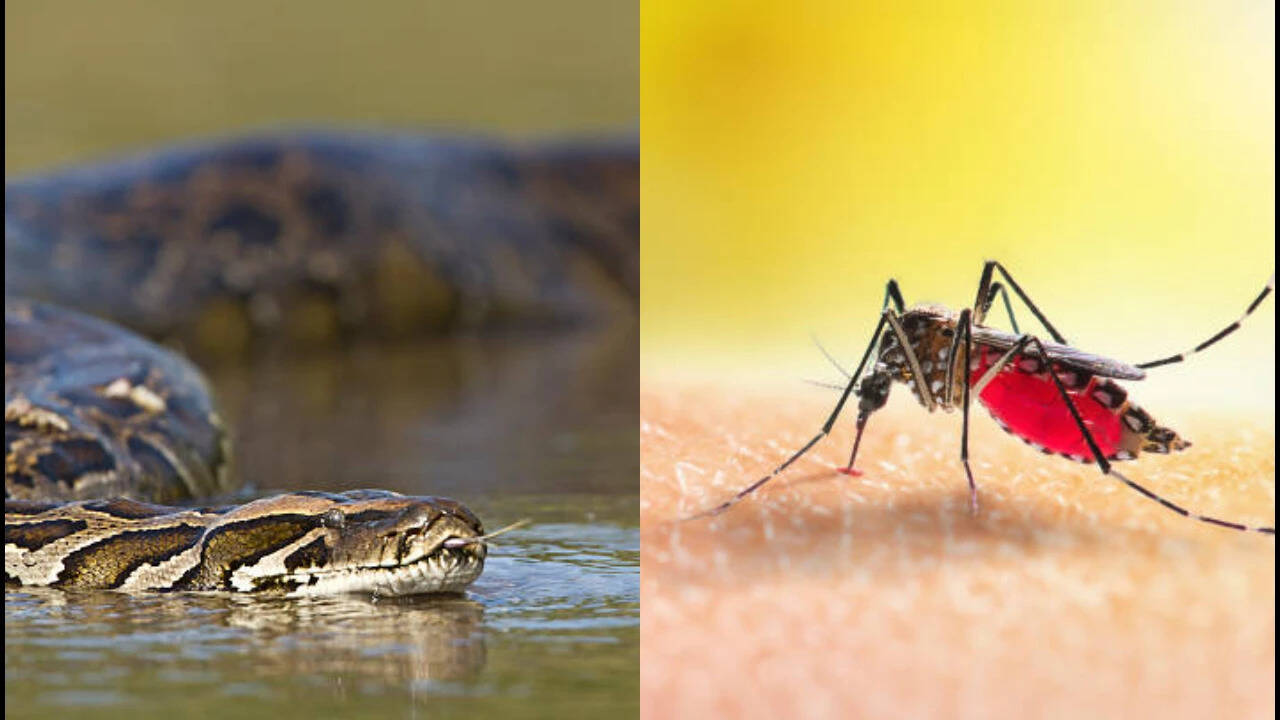
In a surprising revelation, scientists in Florida have discovered that mosquitoes feeding on Burmese pythons may hold key clues in tracking down these elusive invasive predators. The research, published in the journal PLOS ONE, delves into the interactions between Burmese pythons, local mosquitoes, and the everglades ecosystem.
Lawrence E. Reeves, a post-doctoral researcher at the University of Florida Institute of Food and Agricultural Sciences Florida Medical Entomology Lab, led the study. Reeves and his team examined blood meals from three different species of mosquitoes caught near a Burmese python facility in Florida. They found traces of Burmese python DNA in the ingested blood of these mosquitoes, suggesting they could possibly serve as "python detectives".
The method is based on the principle that when a mosquito feeds on its host, it ingests its blood. By analyzing the DNA from this blood meal, researchers can identify what animal the insect was last feeding on. Thus, mosquitoes captured in the wild could provide valuable information about the presence of Burmese pythons in a specific area. This method could potentially transform these common insects into biological surveillance devices, enabling scientists to detect python populations with greater ease.
Burmese pythons are notoriously difficult to locate due to their ability to blend in with dense vegetation and inhabit hard-to-reach wetlands. Traditional methods of detection, such as manual searches, trained detection dogs, and experienced snake hunters, have proven time-consuming and often ineffective. This new mosquito-based detection technique could provide an additional tool for researchers to narrow down potential python habitats and ultimately aid in controlling the invasive species.
However, the implications of this discovery go beyond just python tracking. Testing mosquitoes for python DNA could also help scientists monitor the invasive snakes and conduct broader biodiversity surveys. Mosquitoes, being mobile creatures, can potentially gather information from areas inaccessible to humans. Nonetheless, it is essential to consider the potential ecological impact.
The study raises the question of whether mosquitoes could potentially transmit diseases from pythons to other animals. Further research is needed to understand the broader implications of this unique interaction between mosquitoes and Burmese pythons.
Written by urgent.news from Times of India's reporting — not their text. Machine-written — may contain errors; check the original before relying on it.