Custom home gives outback family 'billion-dollar view'
Warumungu man Norman Frank Jupurrurla, who grew up in a tin shed, says his family's new Tennant Creek home makes him feel like he is where he is supposed to be.
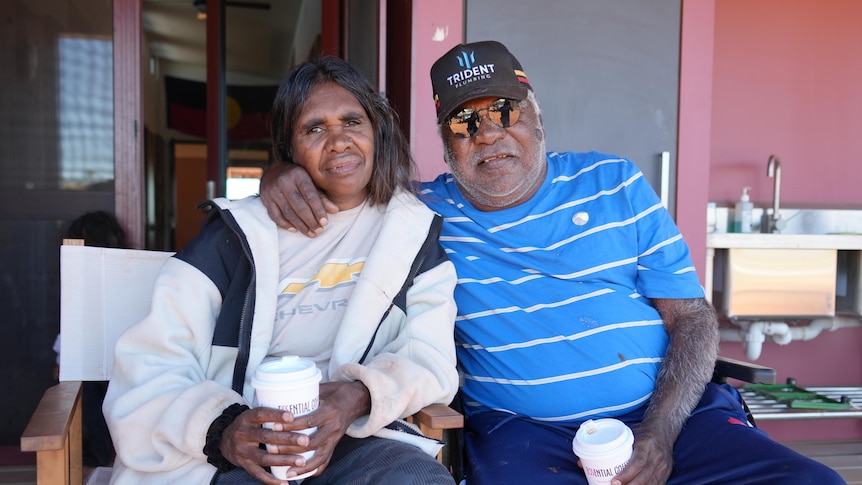
Norman Frank Jupurrurla, a Warumungu man, stands on the verandah of his newly constructed home, taking in the view of Tennant Creek and the surrounding Barkly scrubland. Frank grew up in a cramped and unhygienic tin shed, suffering through the extreme heat of Central Australia's summers and the leaking roofs during the rainy season.
After moving through several government-provided homes, Frank, his wife Serina Morton and their three young daughters finally settled in their new, spacious home, built at a cost of around $1 million. The prefabricated house was constructed for them specifically, placed atop a hill on Frank's grandmother's land, just a few kilometres north of Tennant Creek.
The government's $4 billion remote housing initiative, unveiled in 2024, aims to build 2,700 homes over a decade. However, Frank's home was not funded by the government, but rather built by Wilya Janta, an organization dedicated to creating climate and culturally appropriate housing for Indigenous communities. Simon Quilty, the chief operating officer of Wilya Janta, expressed disappointment in the government's current housing designs, claiming they were not suitable for remote Indigenous residents due to their inability to handle extreme temperatures, crowding, and large family sizes.
Wilya Janta worked closely with Frank and Morton to ensure their home met their cultural and practical needs. Morton, an Alyawarre Wakaya woman, played a significant role in the design, incorporating elements that respected the family's heritage and traditions. The house features two kitchens, two toilets, and thermally efficient mud bricks made from crushed termite mounds.
Sacred objects and cultural items are kept in a designated room, and campfires at the house's ends serve to cleanse the space spiritually. The strategic location and design features, including breezy placement, high ceilings, wide windows, and an accessible bathroom, ensure the home remains cool in summer while providing off-grid solar power.
Frank, who uses a wheelchair, praised the home's accessible features and expressed gratitude for the thoughtful design. Morton was equally emotional, stating that she had achieved her goal of creating a home she had always envisioned. While the new home is a dream come true for Frank and Morton, many Indigenous families across the Northern Territory continue to live in substandard housing characterized by frequent maintenance, overcrowding, and poor air quality.
Dr. Quilty called on the federal and Northern Territory governments to provide operational funding for organizations like Wilya Janta, or adopt the organization's design approach for future builds. He urged Prime Minister Anthony Albanese and Lia Finocchiaro to acknowledge the housing crisis and its far-reaching consequences for education, health, policing, and youth justice.
Local Member for Lingiari and Special Envoy for Remote Communities Marion Scrymgour emphasized the importance of community-driven housing projects, as they foster better outcomes and lower levels of destruction or neglect. Frank concluded by expressing his hope for more homes like theirs to be constructed across the country.
Written by urgent.news from ABC News AU's reporting — not their text. Machine-written — may contain errors; check the original before relying on it.