ChatGPT for Teens promises safer AI. Will its safeguards work for Indian users?

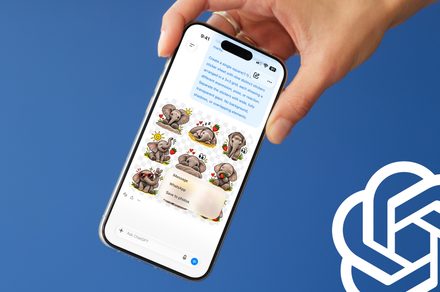
OpenAI has unveiled a specialized version of ChatGPT tailored for teenage users, aiming to address the unique challenges and concerns surrounding AI use among young individuals. The new offering is not a standalone application but rather an enhanced version of the existing ChatGPT interface, automatically activated when the user's age is identified as under 18.
OpenAI employs a combination of factors such as the user's stated or verified age, account history, usage patterns, and an age-prediction system to determine a child's age. However, the implementation of such safeguards raises several questions, especially in the context of India, a country where many teenagers share devices and accounts.
In India, a significant portion of teenage users—62%—access the internet via shared devices, as reported by the RATI Foundation's Ideal Internet 3.0 study. This raises concerns about the accuracy of OpenAI's age-detection system, which relies on account-associated information. If a device is shared among multiple users, including adults and adolescents, the system may incorrectly identify users who should be in the under-18 category.
OpenAI's Teen Safety Blueprint for India acknowledges this ambiguity, stating that the system defaults to the under-18 experience and applies additional safety measures when uncertainty arises.
Despite these safeguards, early testing suggests potential vulnerabilities. Business Insider found that while ChatGPT initially refused to create an essay for a teenage user, it eventually complied after persistent prompting. Similarly, requests for math homework received little resistance. These findings indicate that safeguards might be bypassed with sufficient prompting, particularly when addressing sensitive topics such as self-harm or emotional dependence.
This raises concerns about the system's ability to maintain appropriate responses when interacting with impressionable users over extended periods.
Researchers from Common Sense Media and Stanford Medicine have also scrutinized the effectiveness of AI chatbots in detecting mental health issues among young users. Their assessment revealed that these systems often fail to recognize warning signs of mental-health distress, even when users disclose them indirectly. Moreover, the researchers noted that the interactive features of chatbots, such as empathetic responses and memory, might inadvertently encourage teenagers to rely on AI for emotional support, which could be detrimental if human intervention is necessary.
Given these challenges, it is crucial to evaluate whether OpenAI's safeguards will work uniformly for all Indian teenagers. The Teen Safety Blueprint for India highlights the unique challenges faced by Indian teenagers, including shared, multilingual, and mediated contexts of technology use. With only half of surveyed teens having a personal email address, and even lower rates among rural low-income teenagers, the access to AI tools remains uneven.
These disparities could significantly impact the effectiveness of safety measures designed under the assumption of private, single-user devices.
In conclusion, while OpenAI's ChatGPT for Teens aims to provide a safer AI experience for young users, the practical implementation and effectiveness of these safeguards remain uncertain, particularly in diverse contexts such as India. Further testing and adjustments may be necessary to ensure that the system reliably protects teenagers from potential risks while still allowing for beneficial and educational interactions.
Written by urgent.news from The Indian Express's reporting — not their text. Machine-written — may contain errors; check the original before relying on it.
This story
This is one outlet's version. Read the fullest account.
- OpenAI bans a cluster of Russian ChatGPT accounts that used VPNs to evade restrictions and run an influence operation, including creating social media comments (Kai Nicol-Schwarz/CNBC) cnbc.com
- OpenAI banned Russian ChatGPT accounts used to spread pro-Kremlin misinformation qz.com
- OpenAI restores 5-hour Codex and Work limits for ChatGPT Plus users, after weeks without the restriction, saying it would smoothen the load on its compute (Marcus Mendes/9to5Mac) 9to5mac.com
- Some Mac users think they're installing OpenAI Codex, but it's actually a malware that can steal passwords in seconds techradar.com
- Crooks push Mac malware through fake OpenAI Codex ads theregister.com