Autoindustrie: Schwäbischer Logistiker lässt Terminal für BYD und Co. in Wilhelmshaven bauen
Mosolf wickelt bereits heute rund 70 Prozent der Autoimporte aus China ab. Unter dem neuen Chef Patrick Oestreich setzt das Unternehmen nun auf Expansion – in mehrfacher Hinsicht.
Patrick Oestreich, 46, recently took over as the leader of the Schwäbische automotive logistics company Mosolf, succeeding his longtime family mentor Jörg Mosolf, 69. Just days after assuming his role in Kirchheim unter Teck, Oestreich announced a major project: a new terminal for importing vehicles from Far East in Wilhelmshaven, located north of the Jade-Weser Port.
Mosolf will not build the terminal itself, but rather lease it from the state-owned port company NPorts. The long-term lease is expected to span 900 meters, according to Oestreich. The site selection process is expected to commence by the end of the year. The terminal will primarily handle vehicles from China arriving on Roll-on/Roll-off ships, with additional storage areas for vehicles between other parking spaces.
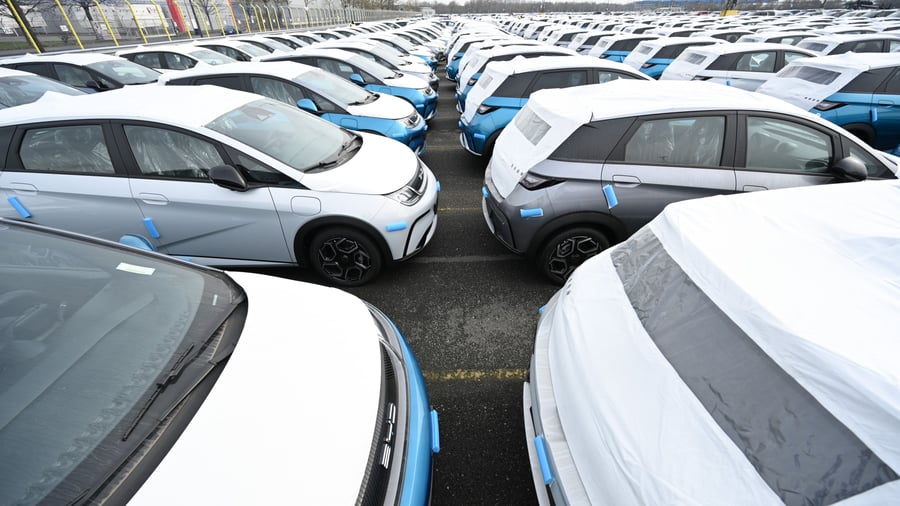
The company also plans to prepare vehicles for the European market with necessary certification papers and road equipment at the terminal. Oestreich emphasizes that the terminal will offer multipurpose services, including handling off-shore wind turbine blades and military goods. Mosolf currently handles significant vehicle imports from China, accounting for about 70% of Germany's Kfz imports from China, including brands like BYD, MG, and Geely.
However, the high export demand from the Middle Kingdom has led to the existing 35,000 parking spaces being insufficient. Chinese vehicles arriving in Wilhelmshaven are currently supplied to fleet operators like Sixt or long-term rental company Finn. With the new project twelve kilometers north in the Jade-Weser Port, Mosolf aims to provide additional capacity for Chinese vehicle manufacturers and increase competition against the semi-state competitor BLG in Bremen.
This marks a significant growing market. Dataforce reports that BYD, SAIC, Chery, Geely, Leapmotor, and other Chinese manufacturers sold 141,545 vehicles across Europe in June 2026, representing 10% of the market. This was up from just 4.9% in the previous year. The terminal at Jadebusen is not the only port project on Oestreich's agenda.
He is also considering a site in Marseille and is looking into Italy. Geopolitical shifts are pressuring Mosolf to act. Chinese shipping companies using ports in the Persian Gulf have a competitive advantage due to avoiding the Gulf war disruptions and navigating through the Suez Canal. Mosolf's company had previously established a vehicle turnaround facility in Dubai's Jebel Ali Free Trade Zone, but the war has forced the company to explore alternatives like a potential move to Fujairah or a focus on India. Mosolf believes in the long-term viability of these regions for the company's future.
Written by urgent.news from Handelsblatt's reporting — not their text. Machine-written — may contain errors; check the original before relying on it.